
Last updated November 16, 2026
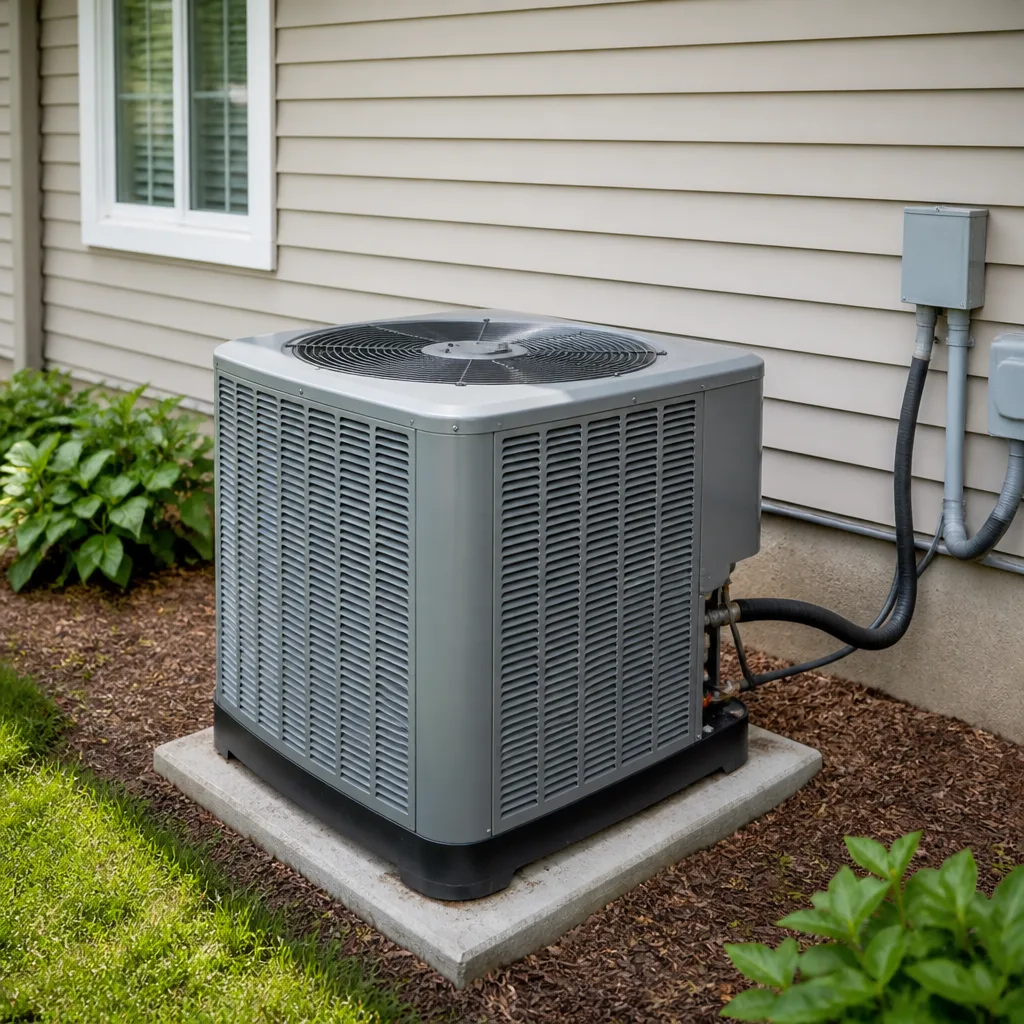 AC repair
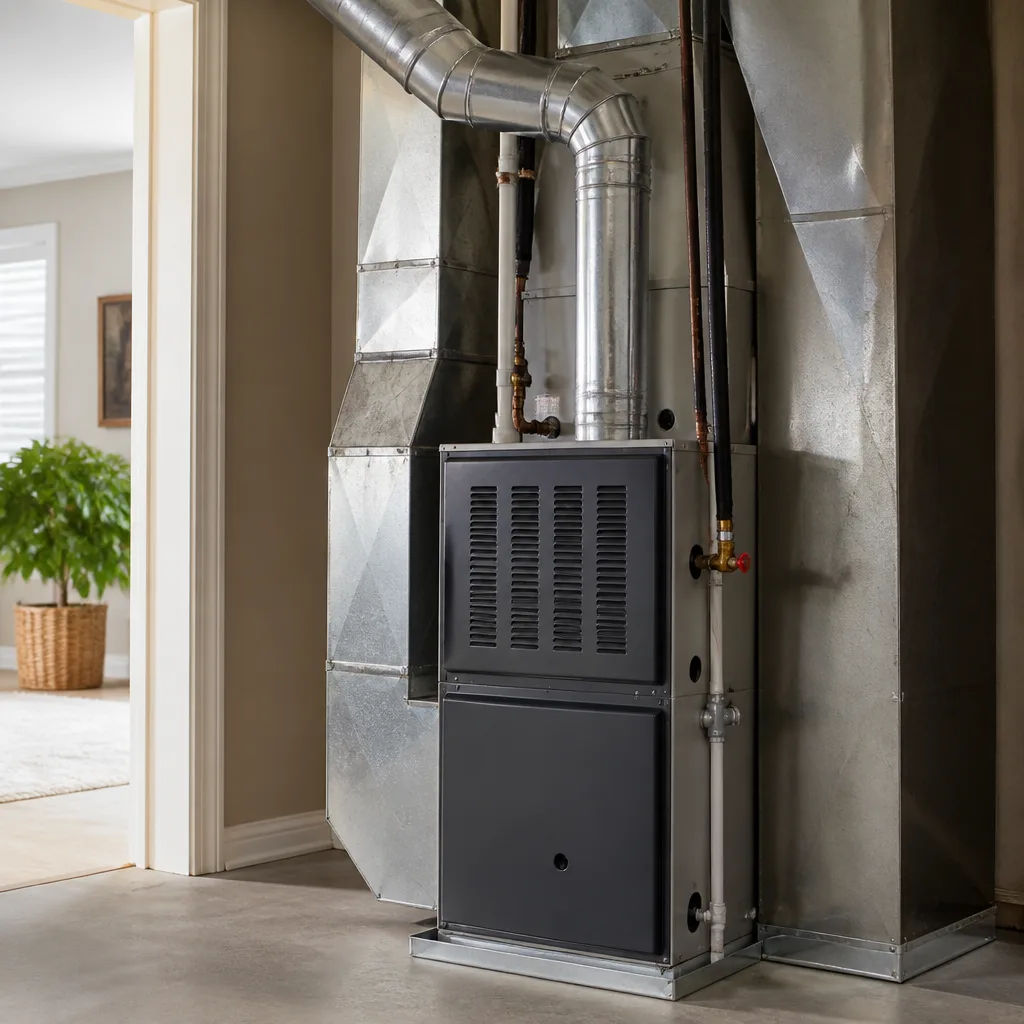 Furnace & heating
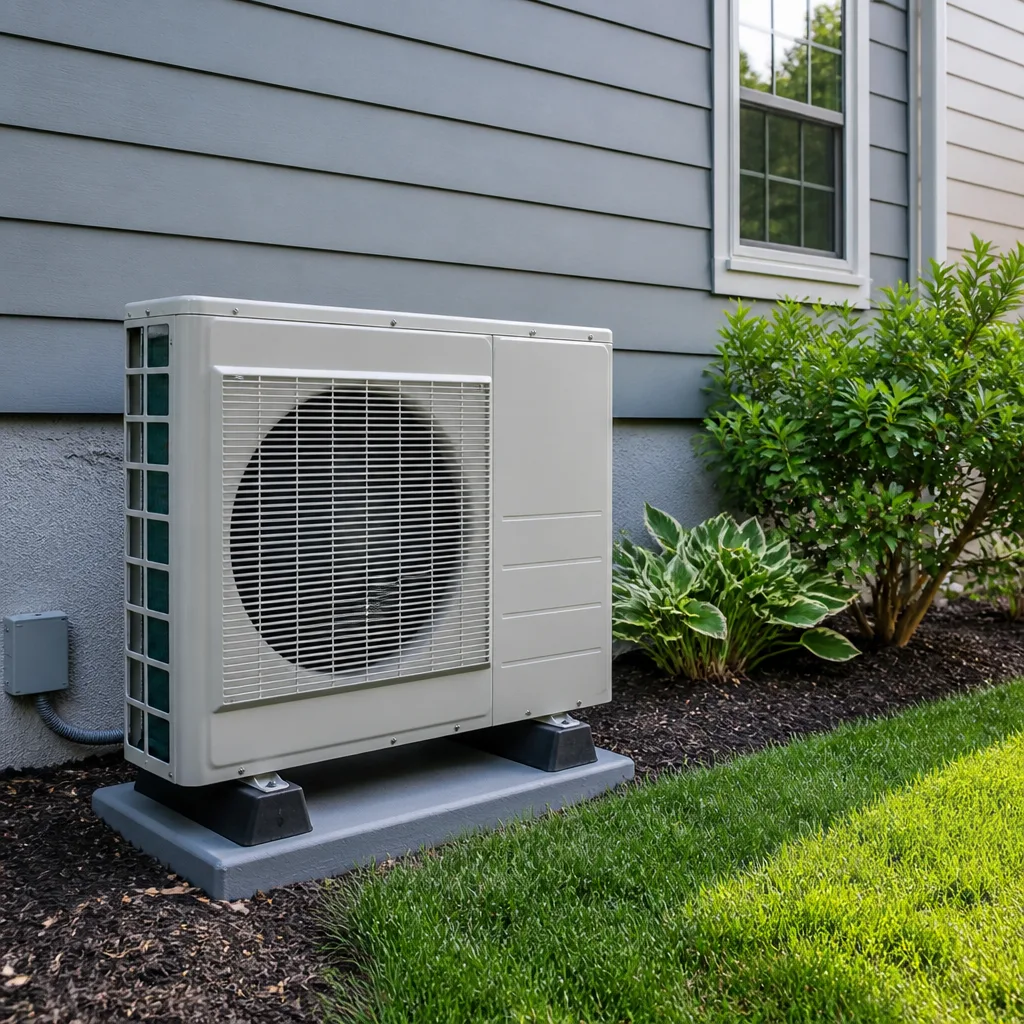 Heat pumps
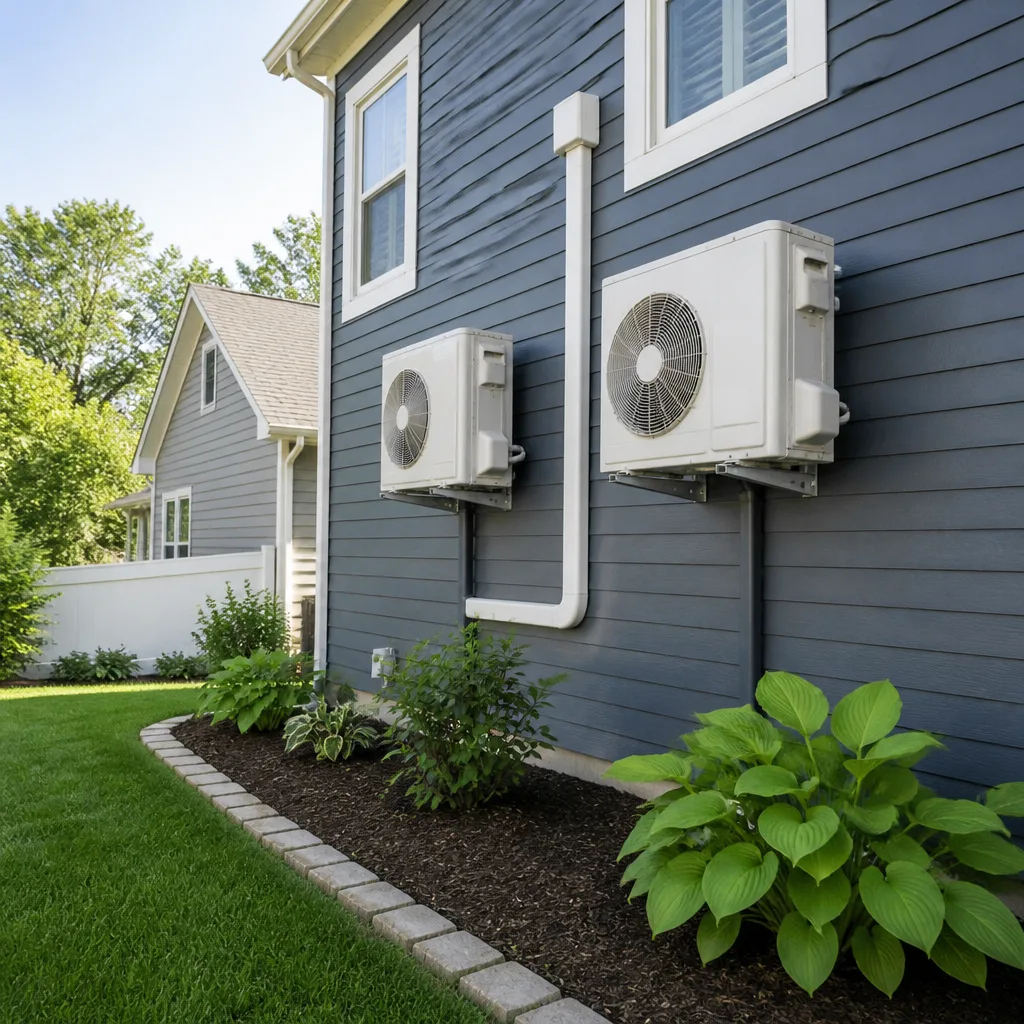 Ductless mini splits
 Carrier
 Trane
 Goodman
Seasonal tune-up and full diagnostic on your Carrier, Trane, or Goodman system - readings shown to you before any repair is proposed
Diagnosis first, numbers second - you approve the repair price before a single part goes in.
Get your free estimateHow to Hire an HVAC Contractor in East Los Angeles: A Step-by-Step Guide
One of the most common HVAC complaints in California isn’t bad repair work. It’s being told a system needs full replacement when a qualified technician familiar with that specific brand could have repaired it for a fraction of the cost. In a neighborhood like East Los Angeles, where homes hold everything from older Bryant furnaces to newer Carrier and Trane systems, the contractor you choose matters more than the price on the estimate. This guide walks you through a screening process: how to verify a license in minutes, why brand coverage tells you more than references, how to spot red flags specific to this neighborhood, and how to write a scope of work that protects you if the job goes sideways.
Quick Answer
To hire an HVAC contractor in East Los Angeles, verify an active C-20 (Warm-Air Heating, Ventilating and Air-Conditioning) license on the CSLB website before any work starts, ask which specific equipment brands the technician is certified to service, require a written scope of work that covers permits and a return-visit window, and get at least one estimate from a contractor who has actually entered the attic or measured the conditioned space. Skip any contractor who quotes over the phone without seeing the system, or who recommends replacement without diagnosing the existing equipment first.
Styles & brands we work with
- AC repair
- Furnace & heating
- Heat pumps
- Ductless mini splits
- Carrier
- Trane
- Goodman
Table of Contents
- Step 1: Verify the License Before Anything Else
- Step 2: Ask About Brand Coverage, Not References
- Step 3: Watch for East Los Angeles-Specific Red Flags
- Step 4: Ductwork and Attic Access Are Non-Negotiable
- Step 5: Write a Scope of Work That Protects You
- Step 6: Ask About Permit-Pulling Up Front
- Step 7: Get a Real Repair-vs-Replace Answer
- Questions to Ask Before You Sign
Step 1: Verify the License Before Anything Else
In California, the license you’re looking for is the C-20 classification: Warm-Air Heating, Ventilating and Air-Conditioning. It is issued by the Contractors State License Board (CSLB), and it covers the installation, repair, and replacement of HVAC systems in residential and commercial buildings. A general B license does not automatically authorize HVAC work. If a contractor can’t tell you they hold a C-20, that’s your signal to stop the conversation and move on.
The check itself takes under two minutes:
- Go to the CSLB website (cslb.ca.gov) and open the “Check a License” tool.
- Enter the contractor’s license number or the business name.
- Confirm three things: the license status says “Active,” the classification includes C-20, and the business name matches what you were quoted.
- Look for any disciplinary disclosures or bonds listed. An active license with a clean record and a current bond is what you want.
- Ask for a certificate of insurance (general liability) and confirm the policy is current – the CSLB record will not show you everything your contractor carries.
Asking for the license number up front does two things. It screens out unlicensed operators immediately, and it puts a licensed contractor on notice that you know the rules. In East Los Angeles, where a lot of work is done through word of mouth, this step still matters. An unlicensed contractor on your property leaves you holding the liability if something goes wrong – including during a resale, when a buyer’s inspector asks for permits and licensing on record.
Step 2: Ask About Brand Coverage, Not References
References are useful, but they tell you about a contractor’s past work with a system that may not match yours. Brand coverage tells you whether the technician standing in your hallway has worked on the equipment in front of them. That’s the question worth asking: “Which brands are your technicians certified to service?”
The answer you want is a specific list. When a contractor names brands readily – Carrier, Trane, Bryant, American Standard, and so on – it means the technician has been trained on those systems and won’t be learning your equipment on the job. Ask the follow-up: “Have your technicians worked on my specific model before?” A good answer includes what they know about the system’s known failure points, parts availability, and typical repair costs.
Why this matters more than references: brand-limited contractors often steer homeowners toward replacement because they’re uncomfortable servicing unfamiliar equipment. A technician who works across brands can tell you whether your existing system is repairable and what that repair should cost. That’s a different conversation than “we don’t work on those, let’s replace it.”
When you’re comparing options in East Los Angeles, brand coverage also tells you whether you’re dealing with a company that can handle both heating and cooling. A contractor who only services certain brands of AC but shrugs at furnaces will hand you off to someone else in January. Ask directly: “Do you handle both AC installation and furnace repair?” If the answer is yes, you have a single point of contact across seasons. We work on your system whatever brand it is, and we’re certified across nine of the industry’s leading brands, including Carrier, Trane, Lennox, Goodman, Rheem, York, Daikin, Bryant, and American Standard. That coverage is what lets us diagnose rather than guess.
Step 3: Watch for East Los Angeles-Specific Red Flags
Some hiring problems are universal. Others show up more often in East Los Angeles, where the housing stock mixes older single-family homes, duplexes, and multifamily buildings under one zip code. Here are the patterns to watch for:
- Quoting without entering the attic. A serious HVAC contractor needs to see the air handler, inspect the duct runs, and check insulation before quoting a repair or replacement. A quote given from the living room is a guess.
- No square footage measurement. Replacement quotes require a load calculation based on conditioned square footage, insulation, window exposure, and occupancy. If no one has measured your home, the sizing is a guess.
- No duct questions. In older East Los Angeles homes, the ducts are often the first real bottleneck. A contractor who never asks about duct condition is skipping half the diagnosis.
- Replacement pushed without a diagnosis. If the first visit leads straight to a replacement quote, ask what diagnostic steps were taken. A failing capacitor, a stuck contactor, or a low refrigerant charge can all look like “the system is dead” to a contractor who isn’t looking carefully.
- No permit conversation. Replacement and most major repairs require a permit in East Los Angeles. A contractor who says “we don’t bother with that here” is telling you to carry the liability.
- Pressure to sign today. A legitimate contractor will give you the estimate in writing and let you think. A hard close on the first visit is a sales script, not a diagnosis.
Climate matters here too. East Los Angeles summers run hot and dry, and homes built decades ago weren’t designed for the equipment load that modern summers put on them. That’s a reason to insist on a proper load calculation, not a reason to accept a rushed replacement quote. Our team has seen too many systems replaced for a $90 part that wore out after fifteen summers of running hard.
Step 4: Ductwork and Attic Access Are Non-Negotiable
Ask any experienced HVAC technician what causes the most disappointing AC installation, and you’ll hear the same answer: the equipment was fine, the ducts weren’t. In East Los Angeles, ducts routed through attics see extreme heat in summer. Sealed poorly, they lose capacity before the air reaches a register. That’s why a contractor who plans to replace only the condenser or furnace without inspecting the duct system is setting you up for a second disappointing summer.
Before you commit, ask these questions:
- Will you inspect the duct system in the attic before quoting the repair or replacement?
- Will you measure the conditioned square footage to confirm the system is correctly sized?
- How will you check for leakage or disconnected runs? (The answer should describe a test, not a visual glance.)
- If the ducts need work, will that be included in the written scope and estimate, or quoted separately?
A contractor who answers these without hesitating is doing the work properly. A contractor who waves past them is either shortcutting the diagnosis or planning to sell you a second visit before the first one is finished. Insist on attic access and a duct inspection before you agree to anything.
If the answer to these questions leads to a recommendation for full system replacement, that recommendation should be in writing, with the load calculation attached, and with a clear explanation of what failed and why repair isn’t a better path. If you want a second opinion before deciding, our AC installation team will walk through the diagnosis with you.
Step 5: Write a Scope of Work That Protects You
A verbal agreement protects nobody. Get everything in writing, and make sure the document covers the four things below. If the contractor won’t put these in writing, that’s your decision point.
- Specific diagnosis. What the technician found, which parts failed, and what test confirmed it. “Your system needs replacing” is not a diagnosis. “The compressor is drawing locked-rotor amps and the capacitor tested below spec” is.
- Itemized scope. Parts, labor, and any subcontracted work (ductwork, electrical, permits) listed separately with prices. The written estimate is what sets the final price.
- Recurrence window. Ask what happens if the same problem returns within 30 days. A qualified contractor will put something in writing about the repair, the warranty on parts, and what triggers a return visit at no additional charge. Get the exact terms.
- Change-order rule. If the job runs over the estimate, in what circumstances can the price change, and how will you be notified before additional work begins? The answer should be: no changes without your written approval.
Include a start date and an approximate completion window. If a replacement is ordered, note whether the equipment is in stock or on order. In East Los Angeles, where homes often share walls and equipment is in tight spaces, timing matters. Ask what the crew needs from you: parking access, attic clearance, power shutdown windows. All of that goes into the scope, not into a phone call the morning of the install.
Step 6: Ask About Permit-Pulling Up Front
Permits matter. A replacement without a permit can become the homeowner’s problem years later, at resale, when a buyer’s inspector flags the equipment and asks for documentation. In East Los Angeles, replacement of HVAC equipment typically requires a permit from the city’s building department, and the contractor doing the work is the party responsible for pulling it. Ask this question before the work starts, not after.
Specific questions to ask:
- Will you pull the permit, and in whose name?
- Who schedules the inspection, and when?
- What documentation will you leave with me at the end of the job? (You want the permit record and the signed-off inspection.)
- If a permit is not required for this repair, will you tell me that in writing and explain why?
A contractor who skips permits is saving money on the front end and pushing risk to you on the back end. The extra step adds time, but it protects the value of your home when you sell it, refinance, or file a claim. If a contractor tells you “nobody pulls a permit for that” in East Los Angeles, treat that as a red flag. Some work genuinely doesn’t require one; a qualified contractor will tell you which is which, in writing.
Step 7: Get a Real Repair-vs-Replace Answer
“Repair or replace?” is the question that separates a contractor from a salesperson. When the answer is delivered as a script, it usually leads to replacement. When the answer is delivered as a diagnosis, it usually leads to a repair, or to a replacement backed by specifics you can actually evaluate.
Here’s how a real repair-vs-replace conversation goes:
- Age and lifespan. The contractor should know your system’s age and where it sits relative to typical lifespan for that class of equipment. That’s context, not destiny.
- Failure pattern. One failed part is a repair. Multiple failures over the last few years starts to tilt toward replacement. Ask which pattern this is.
- Parts availability. Some older models have parts available; some don’t. That’s a factual question, not an opinion. Ask directly.
- Refrigerant type. If the system uses an older refrigerant that’s been phased down, future service costs matter. Ask how the refrigerant type affects long-term repair costs.
- Duct and load mismatch. If the ducts are undersized or badly leaking, sometimes replacing the equipment alone won’t fix the problem. Ask whether duct work is part of the answer.
- Total cost of ownership. Repair cost today plus expected future repairs versus replacement cost plus expected life of the new system. Get both numbers written down.
If the answer is replacement, get one from a company that also handles furnace repair. A heating contractor who only sells replacements will push you toward a new furnace when the draft inducer is the actual problem. A contractor who services both heating and cooling, and who diagnoses what’s in front of them, will tell you which is which.
Questions to Ask Before You Sign
Before you sign an estimate in East Los Angeles, ask these questions. The answers tell you which contractor is worth your business.
- What is your C-20 license number, and can I verify it on the CSLB right now?
- Which brands are your technicians certified to service?
- Have you placed your eyes and hands on the actual failed component, or are you recommending based on symptoms?
- Will you pull the permit, and what documentation will I receive at the end?
- Will you inspect the ducts before quoting a replacement?
- What’s the written scope of work, and what happens if the job runs over the estimate?
- What happens if the same problem recurs within 30 days?
- What’s the warranty on the parts and on the labor?
- Do you handle both AC and furnace service, or will I need a second contractor in the winter?
- Who actually shows up at my door, and which brand certifications do they carry?
If the contractor can answer all ten without flinching, you’re dealing with someone who takes the trade seriously. If they hedge on any of them, ask why. A short, specific answer is fine. A long, evasive one is not.
Common Mistakes to Avoid
- Hiring on price alone. A rock-bottom quote often means no permit, no insurance, or a diagnostic step skipped. The repair cost savings disappear when the same system fails a month later or the resale inspection flags unpermitted work.
- Skipping the license check. Every contractor in California should hold a C-20 for HVAC work. Verifying on the CSLB takes under two minutes and screens out the worst outcomes before they happen.
- Accepting a phone quote for a replacement. Any real replacement quote in East Los Angeles requires a load calculation and a duct inspection. A phone number without a home visit is a placeholder, not a price.
- Not asking which brands the technician knows. A contractor unfamiliar with your Carrier, Bryant, or American Standard system is more likely to default to replacement. Brand familiarity is what makes a repair possible.
- Leaving the permit to chance. A contractor who skips permits on an East Los Angeles replacement can leave you carrying the liability for years. Ask up front, in writing.
- Accepting a verbal warranty. Parts warranties and labor warranties belong in the scope of work. “We’ll take care of you” is not a warranty.
- Choosing a contractor who only handles one season. If your contractor only services AC, you’ll need a second one in January. Asking about furnace repair and replacement service before you hire avoids the handoff.
When to Call a Professional
Some HVAC problems are worth a technician’s visit. Others are worth waiting out. Here’s where we draw the line. A system that’s blowing warm air in the middle of summer is a same-day problem, not a tomorrow problem. Refrigerant lines, compressor failures, and anything that involves gas, high-voltage wiring, or the electrical panel are not jobs for a homeowner. Neither is anything involving the furnace’s heat exchanger, which is a carbon monoxide risk. If you smell gas near your furnace or see scorching at a disconnect, shut the system off and call a technician. If your system short-cycles, ices over, or trips a breaker repeatedly, those are diagnostic calls, not “wait and see” calls. A professional has the tools to test capacitors, check refrigerant charge, inspect duct leakage, and confirm the load calculation through a proper replacement. If you’re at the decision point, Prestige AC Repair offers free estimates in East Los Angeles – call (833) 997-6067.
See the difference
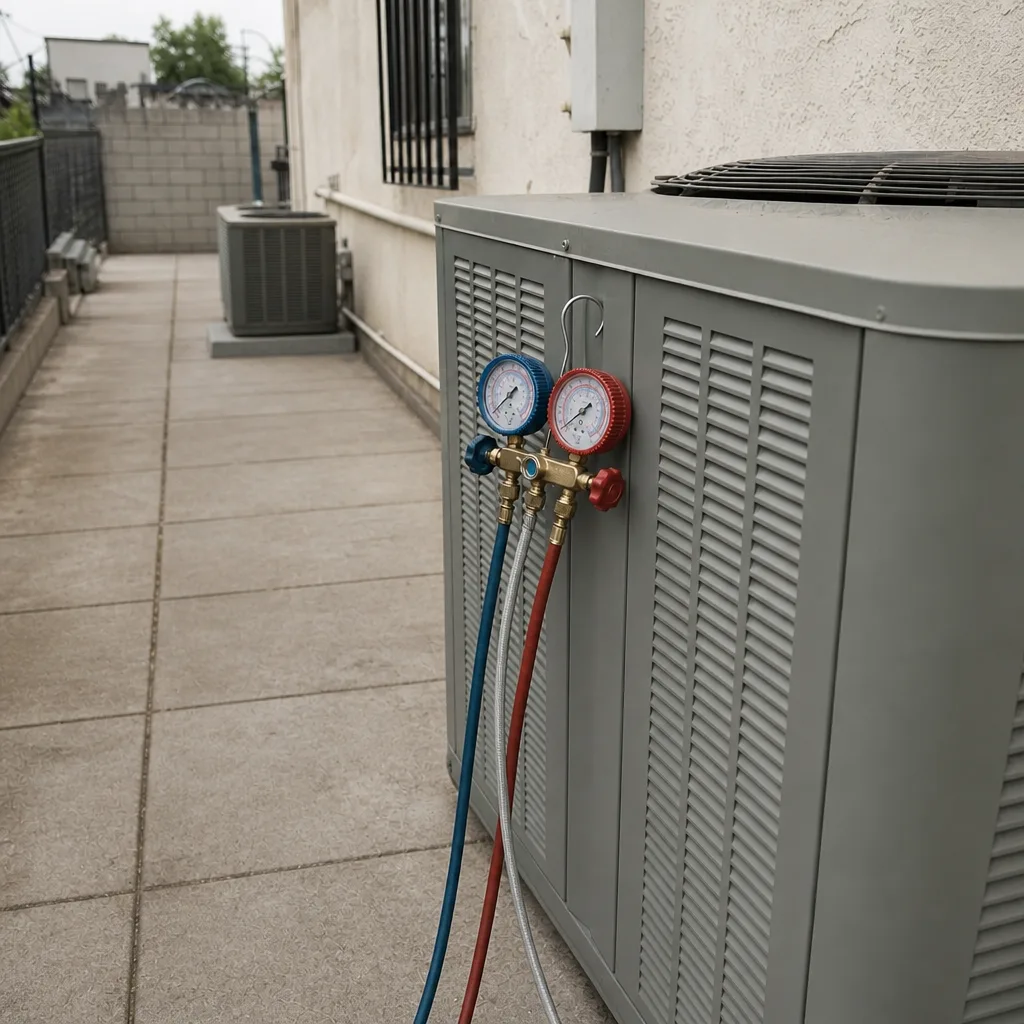
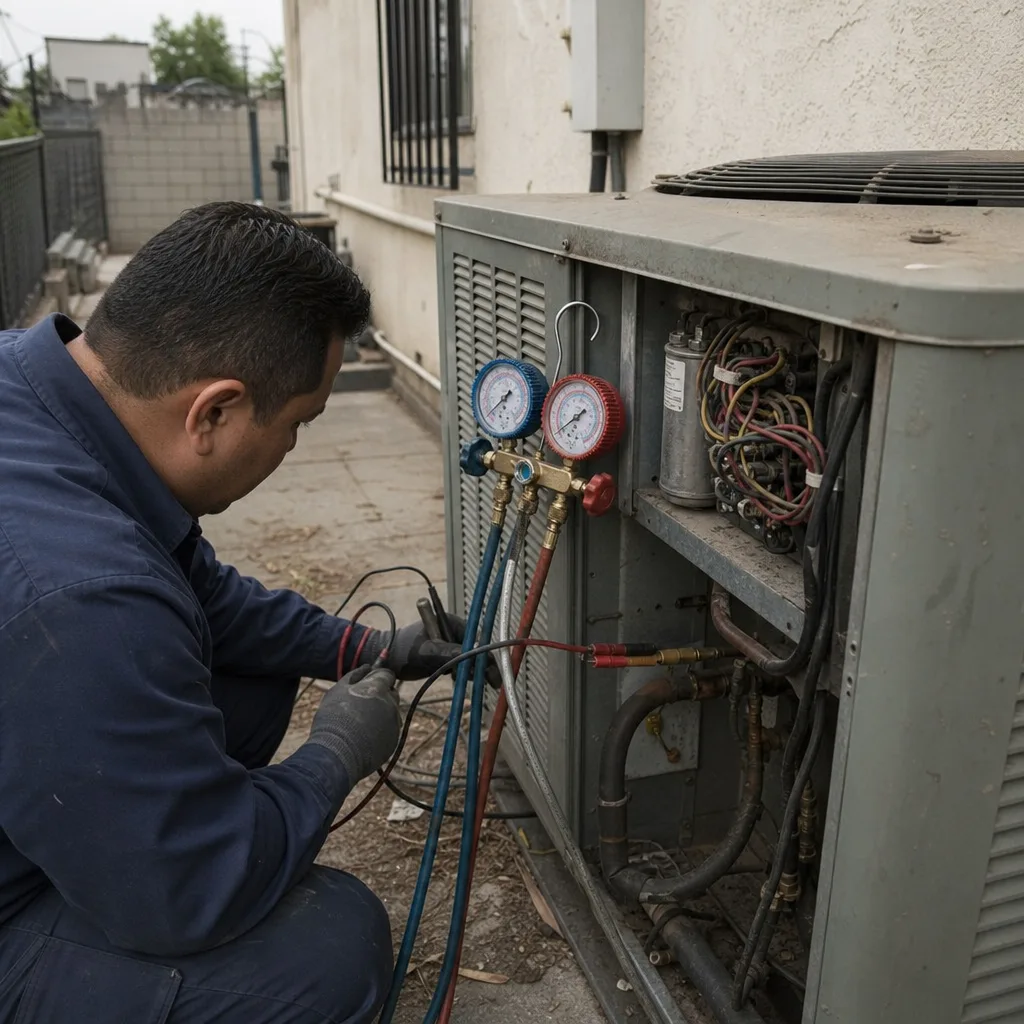 Before
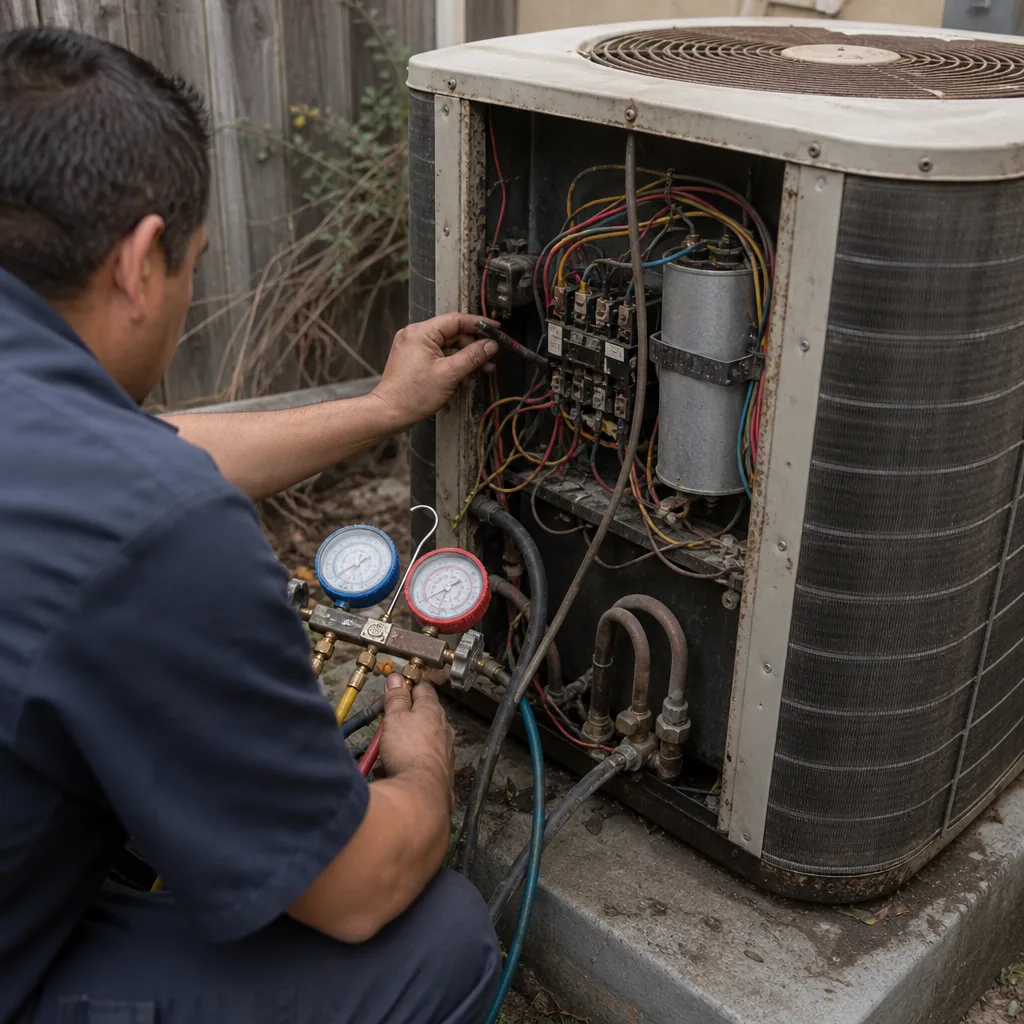
 After
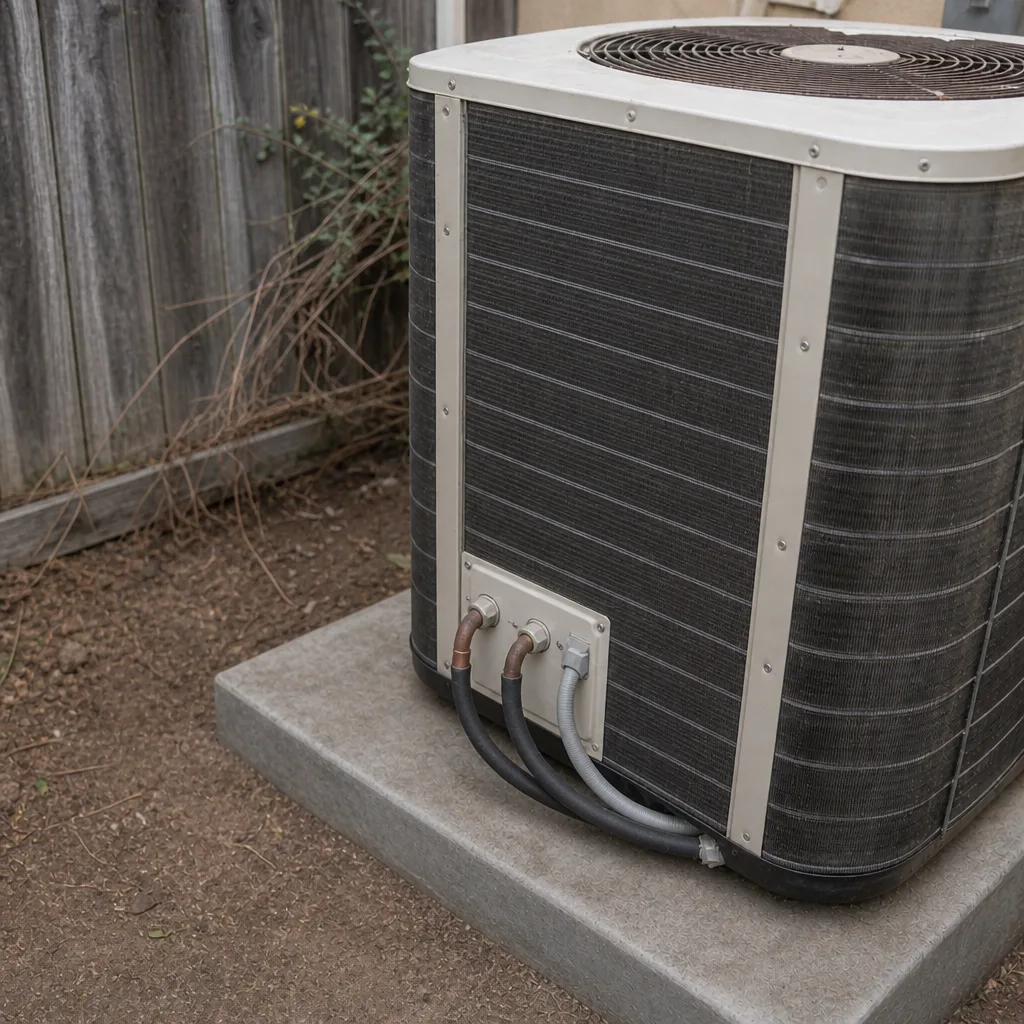
 Before
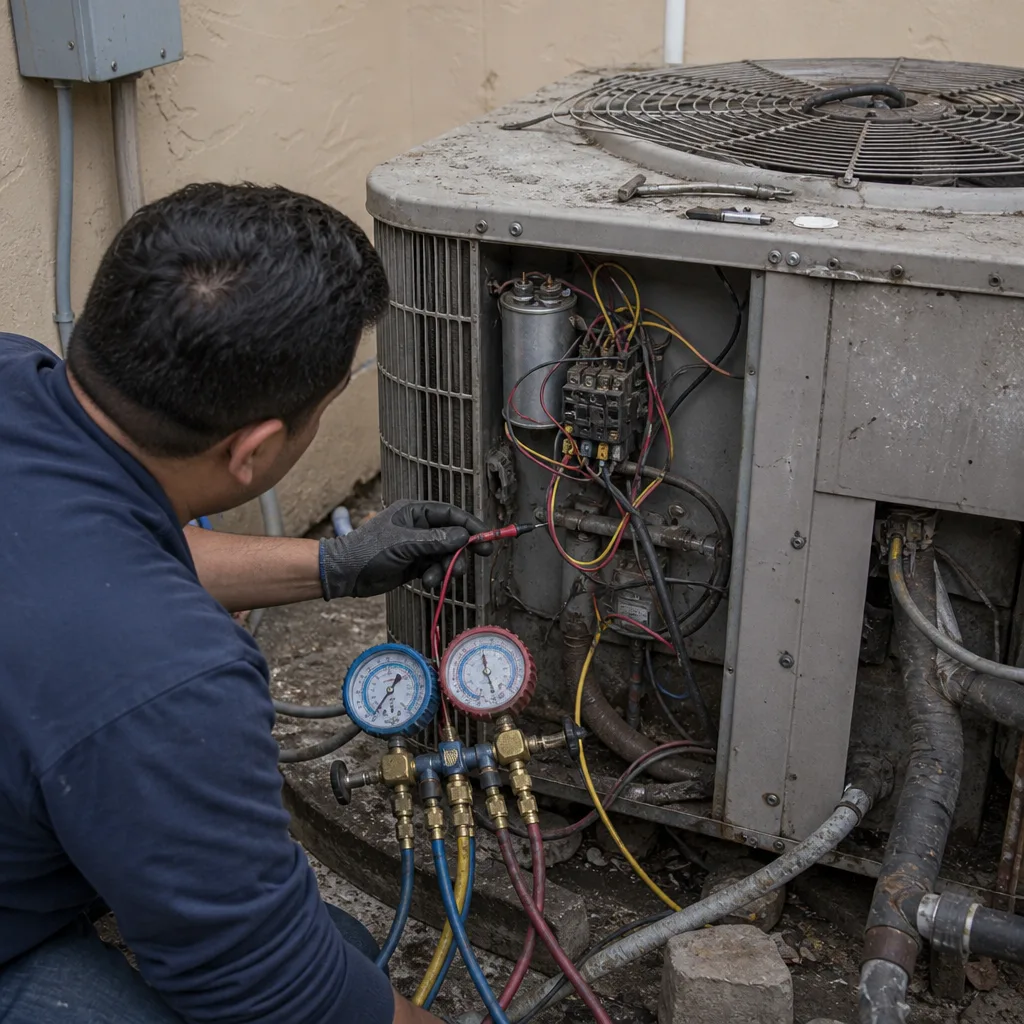
 After
 Before
 After
Repair or Replace: A Quick Comparison
When you’re evaluating estimates, the conversation usually comes down to two paths. Here’s how to think through each one so the decision is yours, not the salesperson’s.
- Repair makes sense when: the failed component is identified and available, the system is within its typical service life, the ducts are sound, and the repair cost is a clear fraction of the replacement cost. You’re not saving money by replacing a system that has a lot of service life left.
- Replacement makes sense when: the failure is a major component (compressor or heat exchanger), the system is at end of service life, parts aren’t easily sourced, or repeated failures point to a pattern. Replacement is the honest answer when it’s the honest answer.
- Replacement with duct work makes sense when: the ducts are undersized or leaking and the equipment is otherwise healthy. Sometimes you get a better outcome from fixing the ducts and keeping the equipment than from replacing equipment and ignoring the ducts.
We give the same answer regardless of which brand you own. If a repair is the right call, we’ll say so. If replacement is the right call, we’ll put the load calculation, the equipment options, and the duct recommendation in the estimate. That’s what brand-neutral diagnostics means in practice. It’s also what we focus on at Prestige AC Repair: repair what’s fixable, replace what isn’t, and document both.
Why East Los Angeles Homes Need a Different Conversation
The housing stock in East Los Angeles is not interchangeable with a new-build suburb. Older single-family homes, duplexes, and small multifamily properties often carry equipment that was installed decades after the building was constructed, with duct systems that were never designed for the current load. A contractor who shows up expecting a standard attic and a modern flex-duct run may misdiagnose the issue entirely.
That’s why the screening process in this guide leans hard on the diagnostic step. A contractor who follows the sequence in East Los Angeles – verify license, check brand coverage, enter the attic, inspect ducts, measure square footage, pull permits, write a scope of work – will find the actual problem. A contractor who skips those steps and jumps to replacement will tell you the system is “past its life” without evidence. Our technicians have up to 15 years of experience working across the mix of equipment you find in East Los Angeles, and we know that the neighborhood’s housing stock rewards a careful diagnostic. If you want to talk through a specific problem with us, we’ll do that without a sales script.
Frequently Asked Questions
Go to cslb.ca.gov and use the “Check a License” tool. Enter the license number or business name, then confirm the license says Active, the classification includes C-20, and the business name matches the estimate you were given. If any of those three don’t match, stop and ask why before proceeding. It takes under two minutes and it screens out the most common hiring mistake.
There’s no single right list, but the answer should be specific. A contractor who services multiple major brands will have an easier time diagnosing your existing equipment than one who only works on one manufacturer’s systems. Prestige AC Repair is certified across nine of the industry’s leading brands, including Carrier, Trane, Bryant, and American Standard. The list matters less than the specificity: a contractor who names brands readily usually has direct training on them.
Most HVAC replacements in East Los Angeles require a permit from the city’s building department, and the contractor performing the work is the party responsible for pulling it. Ask before the job begins whether a permit is needed, who is pulling it, and what documentation you will receive at the end. If a permit is not required for a specific repair, ask for that in writing so you have a record.
The price depends on the equipment, the size of your home, the duct condition, and whether electrical or gas work is included. The written estimate is what sets the final price. Get a load calculation and a duct inspection on the record before you sign anything. Call (833) 997-6067 for an exact quote – estimates are free.
It depends on the diagnosis. A failed capacitor, contactor, or blower motor on a system with remaining service life is a repair. A failed compressor or heat exchanger on a system at end of life is usually a replacement, especially if parts aren’t available. Ask your contractor for both numbers: repair cost today versus replacement cost plus expected service life. If the repair cost is a small fraction of the replacement cost, repair is usually the better call. If the failure pattern points to a larger problem, replacement is the honest answer.
Yes, same-day service is available for repair calls. Call (833) 997-6067. We answer 24/7. Fast dispatch from 7am to 7pm, Sunday through Friday. The technician will diagnose the system and give you a written estimate before any repair work begins. The price is set per job by that estimate, so you know the number before you approve the work.
The Bottom Line
Hiring an HVAC contractor in East Los Angeles comes down to a screening process, not a single decision. Verify the C-20 license on the CSLB. Ask which brands the technician knows. Insist on attic access, a duct inspection, and a proper square footage measurement. Require a written scope of work with a recurrence window and a change-order rule. Ask about permits before the work starts, not after. Get a real repair-vs-replace answer with both numbers in writing. Do those six things, and the third quote you compare will be easy to evaluate on substance rather than sales pressure. If a system is repairable, a qualified contractor will say so, and that’s the contractor worth hiring.
Prestige AC Repair connects homeowners in East Los Angeles with independent local professionals who handle both heating and cooling, across nine of the industry’s leading brands. From AC installation to furnace repair and end-of-life replacement, the same process applies: diagnose first, quote in writing, and let you decide. Call (833) 997-6067 for a free estimate. We answer 24/7. Fast dispatch from 7am to 7pm, Sunday through Friday.
Written by the team at Prestige AC Repair.