
Last updated November 16, 2026
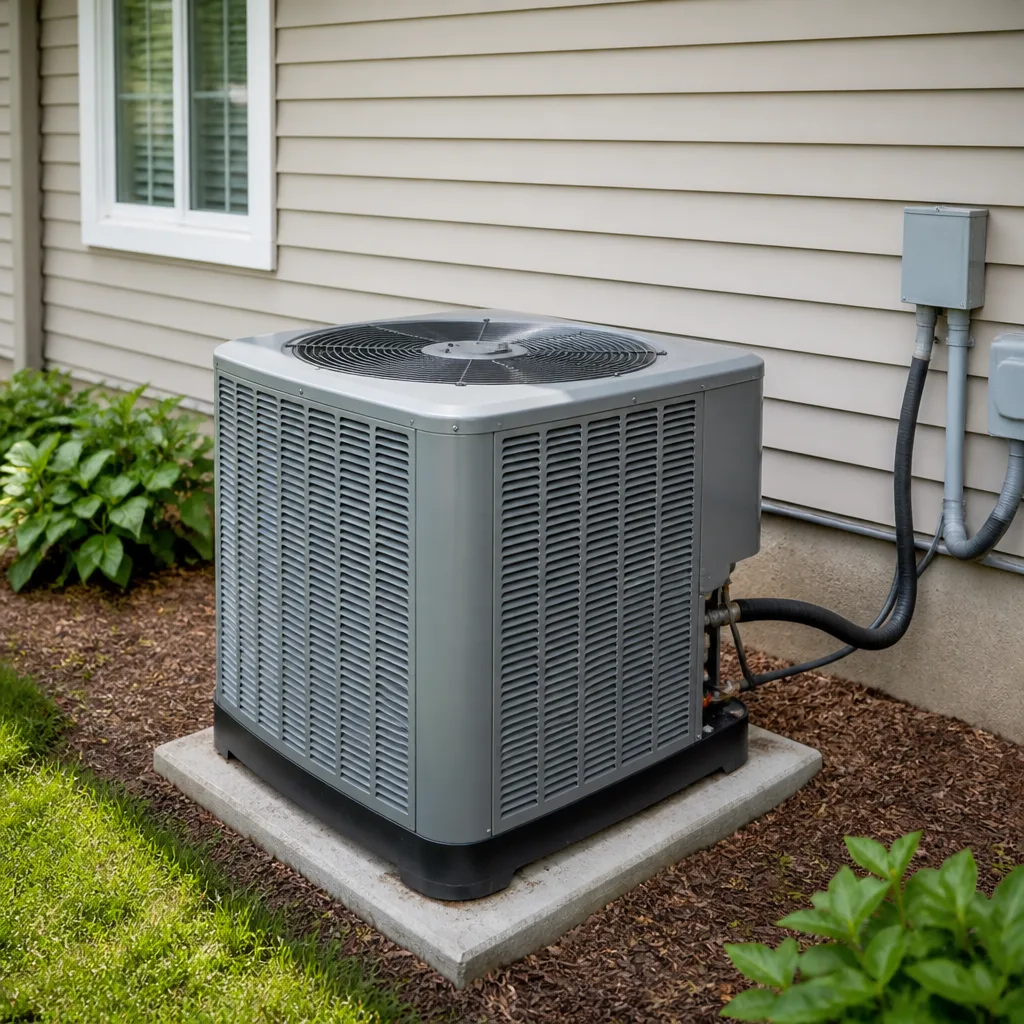 AC repair
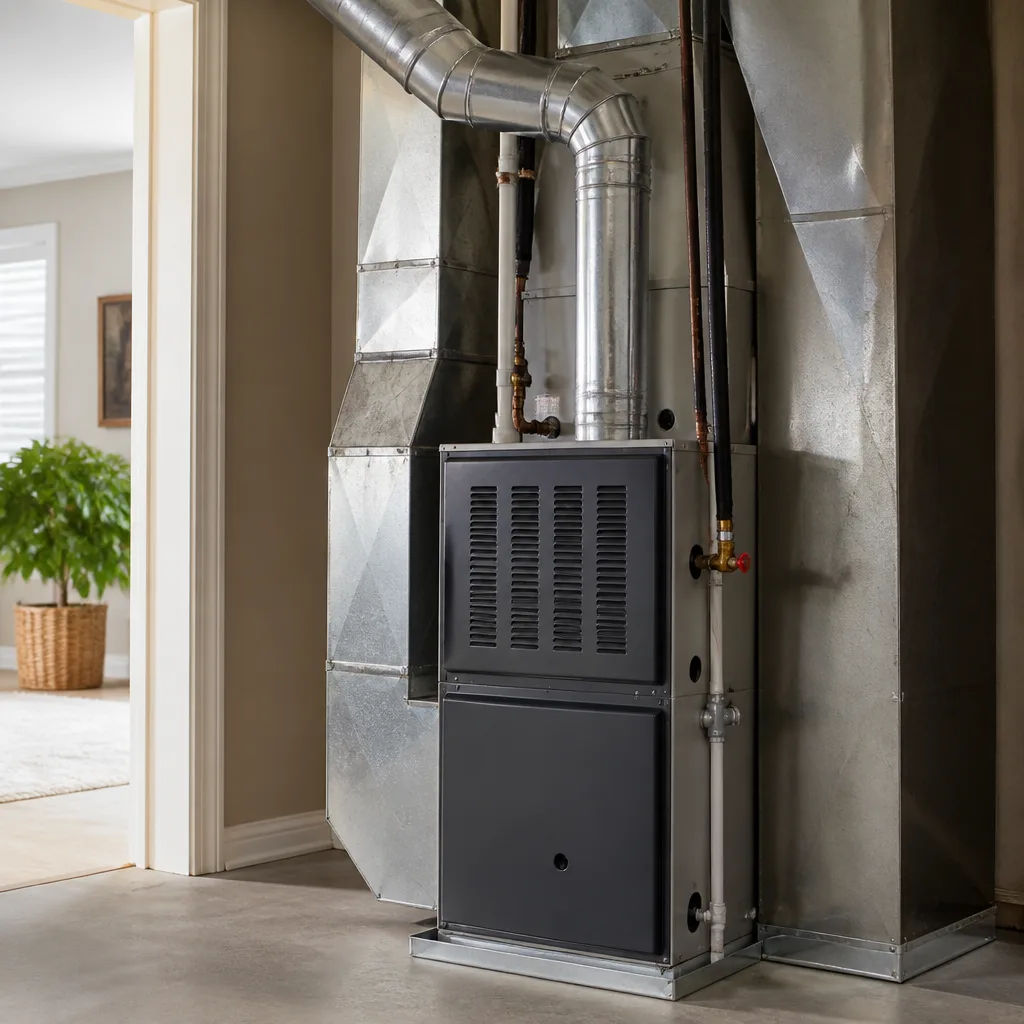 Furnace & heating
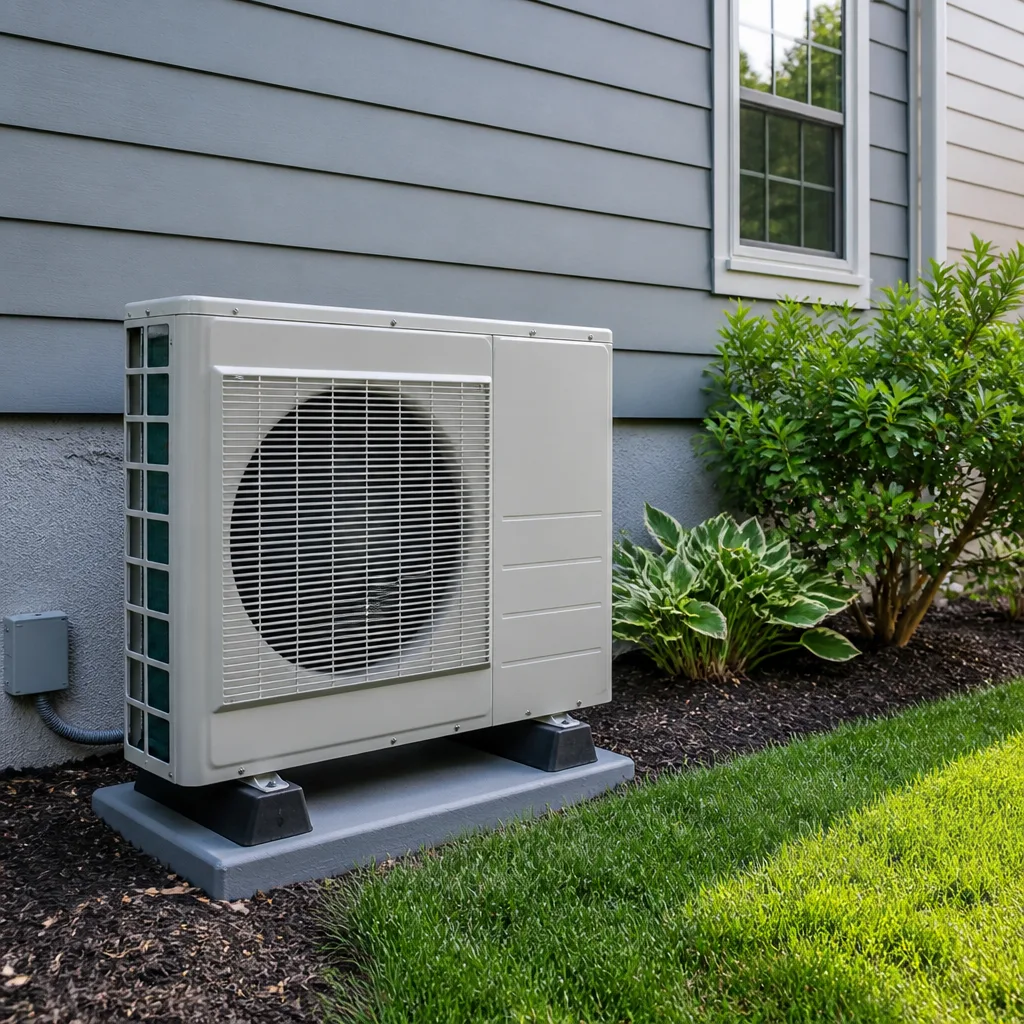 Heat pumps
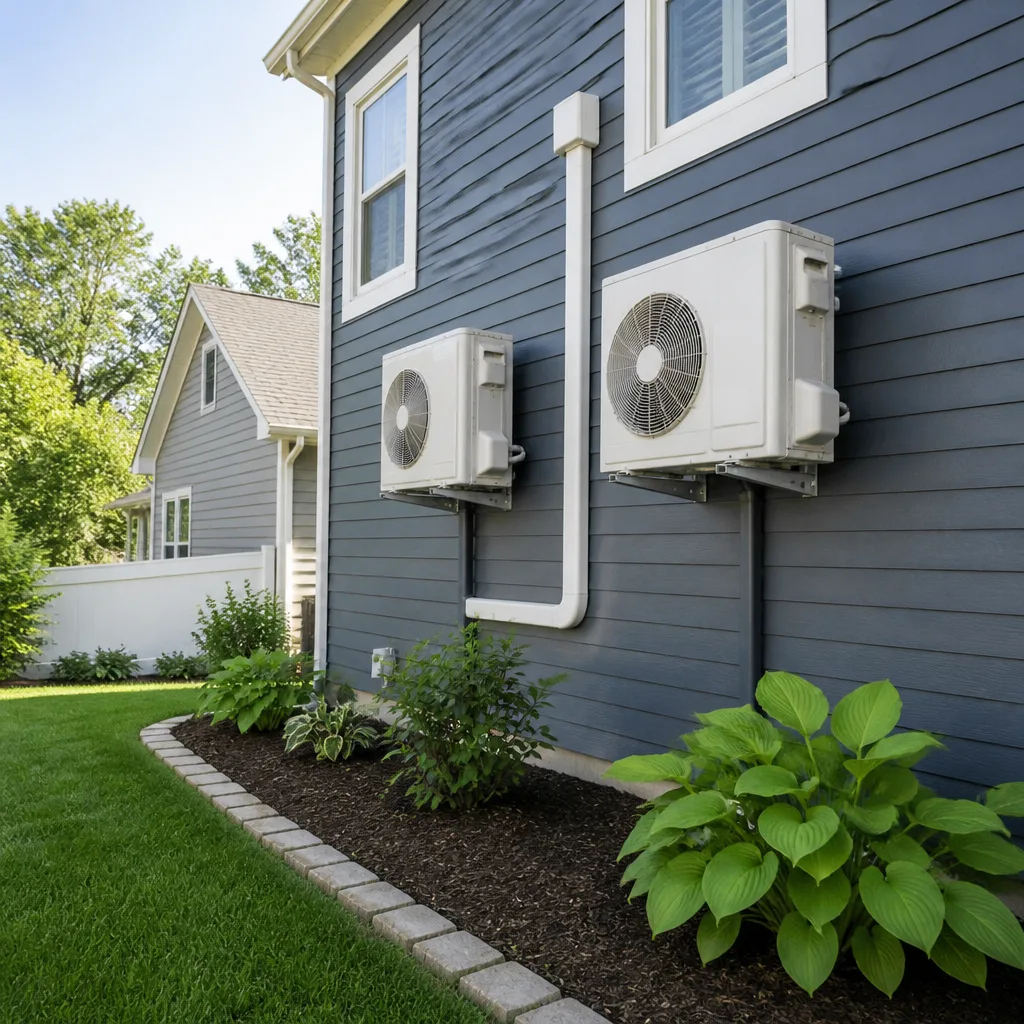 Ductless mini splits
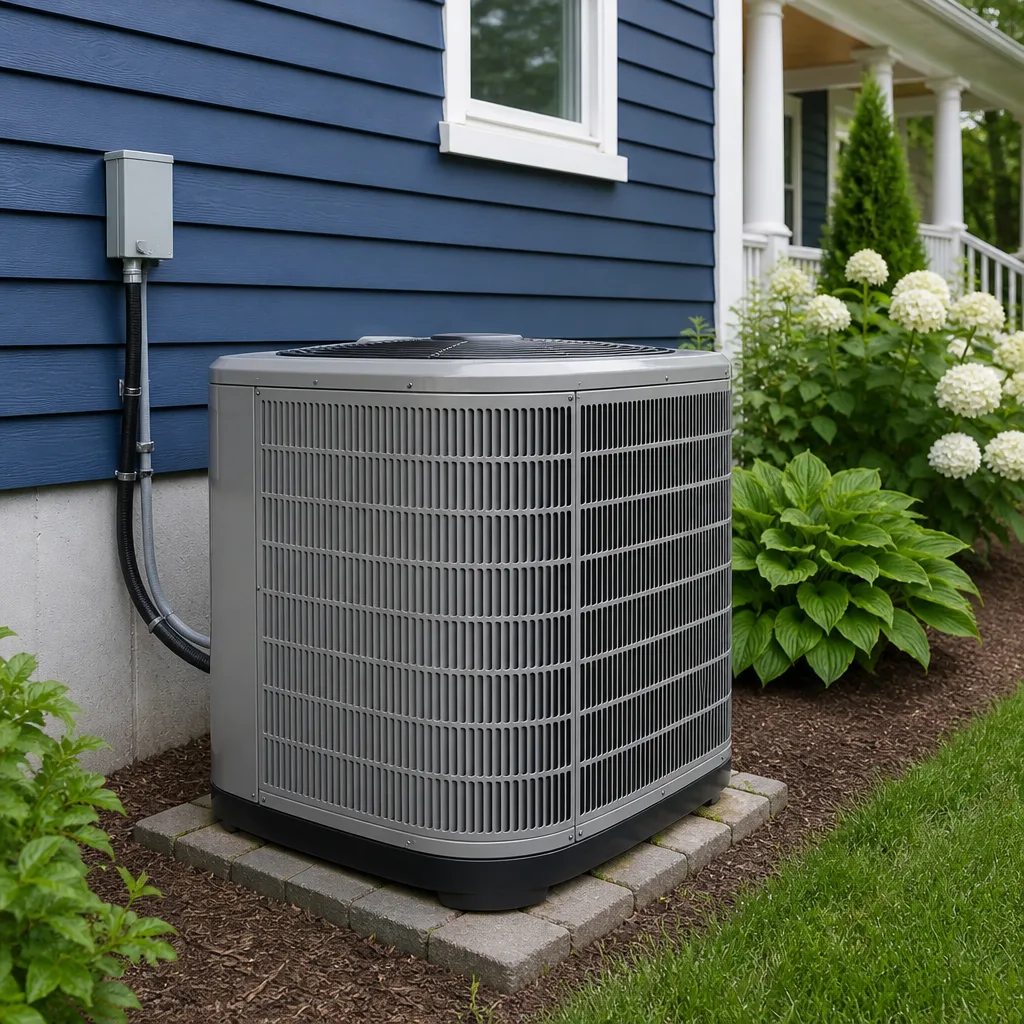 Carrier
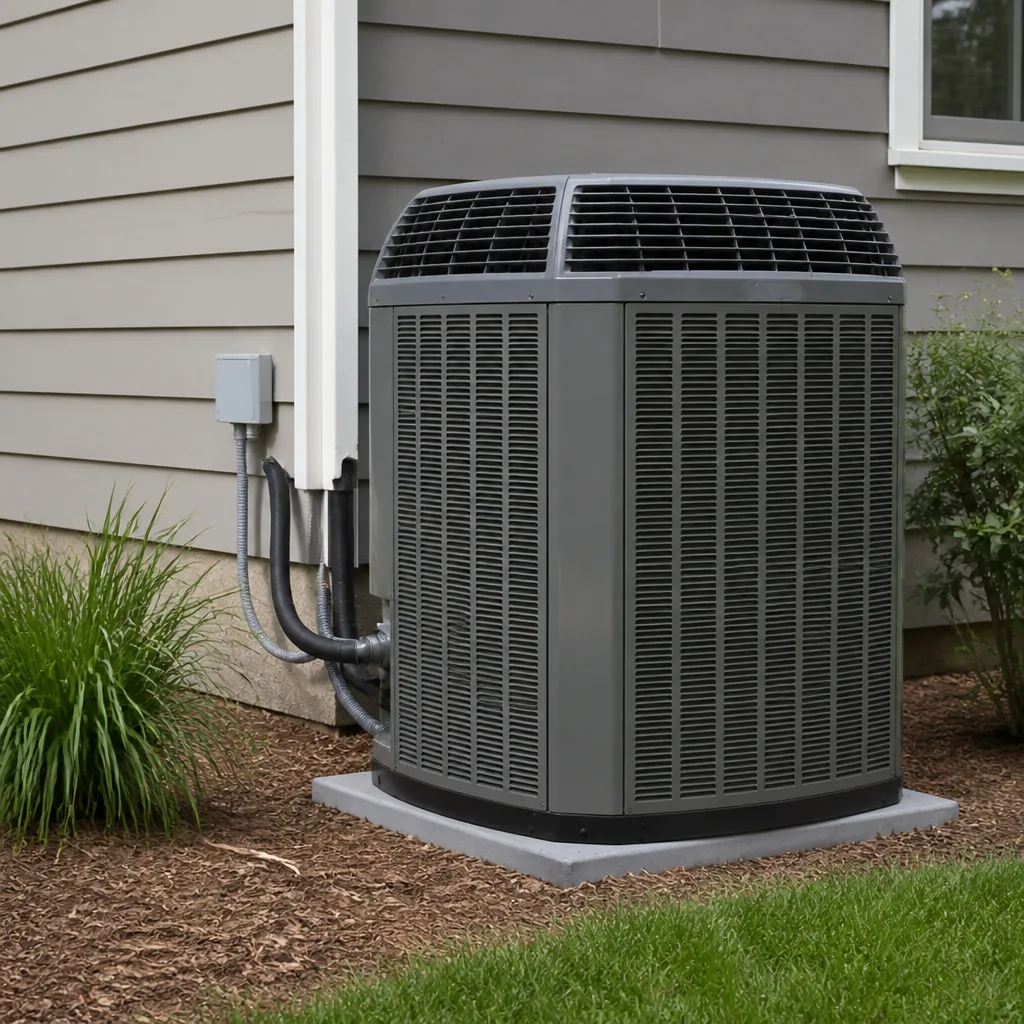 Trane
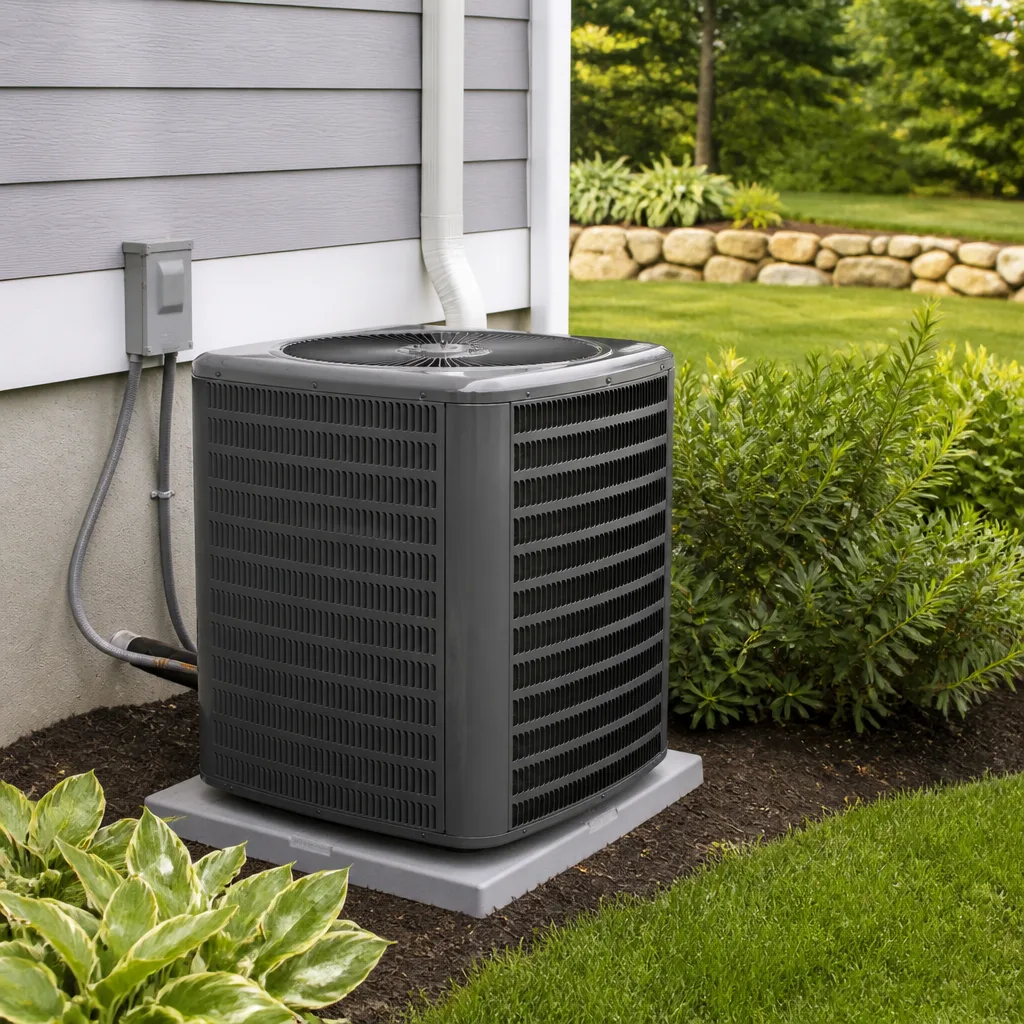 Goodman
Seasonal tune-up and full diagnostic on your Carrier, Trane, or Goodman system - readings shown to you before any repair is proposed
Diagnosis first, numbers second - you approve the repair price before a single part goes in.
Get your free estimateHVAC Emergency Preparedness Guide for East Los Angeles Homes
Most homeowners treat an HVAC failure like a surprise. It almost never is. Equipment gives warnings for weeks before it quits, and the homes that ride out a heat wave comfortably are the ones where someone wrote down a model number, cleared a condensate line, and knew where the shutoff switch was before the compressor stopped. In East Los Angeles, that preparation matters more than in most of the LA basin. Dense blocks, limited tree canopy, and stucco walls that hold heat long after sunset turn a dead condenser into a real health concern fast. This guide covers what to record, what to stock, what to check, and how to tell a dangerous failure from an inconvenient one.
Quick Answer
HVAC emergency preparedness in East Los Angeles comes down to three things: a written system profile (brand, model, refrigerant type, service history, shutoff location), a small kit of parts and cleaning supplies matched to your equipment, and a clear plan for slowing heat gain in a stucco home when the AC is down. Homes that have these ready get diagnosed and repaired faster because the technician isn’t spending the first visit identifying equipment and tracking down records.
Styles & brands we work with
- AC repair
- Furnace & heating
- Heat pumps
- Ductless mini splits
- Carrier
- Trane
- Goodman
Table of Contents
- Build a System Profile Before You Need One
- Which Failures Are Dangerous and Which Can Wait Until Morning
- Keeping a Stucco Home Livable Without AC
- What to Keep on Hand for a One-Visit Repair
- Same-Day Call or Next-Morning Appointment?
- Electrical and Refrigerant: Where Homeowners Should Stop
- A Seasonal Prep Routine for East Los Angeles Homes
Build a System Profile Before You Need One
When a system fails, the clock starts. Every minute a technician spends identifying equipment, hunting for a model plate, or guessing at refrigerant type is a minute your home keeps heating up. A one-page system profile removes that delay entirely. We’ve seen the difference on both sides: a homeowner who can hand over a clear sheet gets a faster diagnosis than one who says “it’s a Carrier, I think, maybe ten years old.”
Put the document somewhere physical and somewhere digital. A folder near the air handler is fine, but a photo on your phone is what actually travels with you when you’re standing in the yard on the phone with us.
Your profile should record:
- Brand and model number of both the outdoor condenser and the indoor air handler or furnace. The model plate is usually on the side or back of the outdoor unit.
- Serial number for each component. Manufacturers use it to confirm build date and available parts.
- Refrigerant type as printed on the unit’s rating plate. Older systems and newer ones take different refrigerants, and a technician needs to know before loading the right equipment.
- Service history – dates, what was found, what was replaced. Even a phone note is better than nothing.
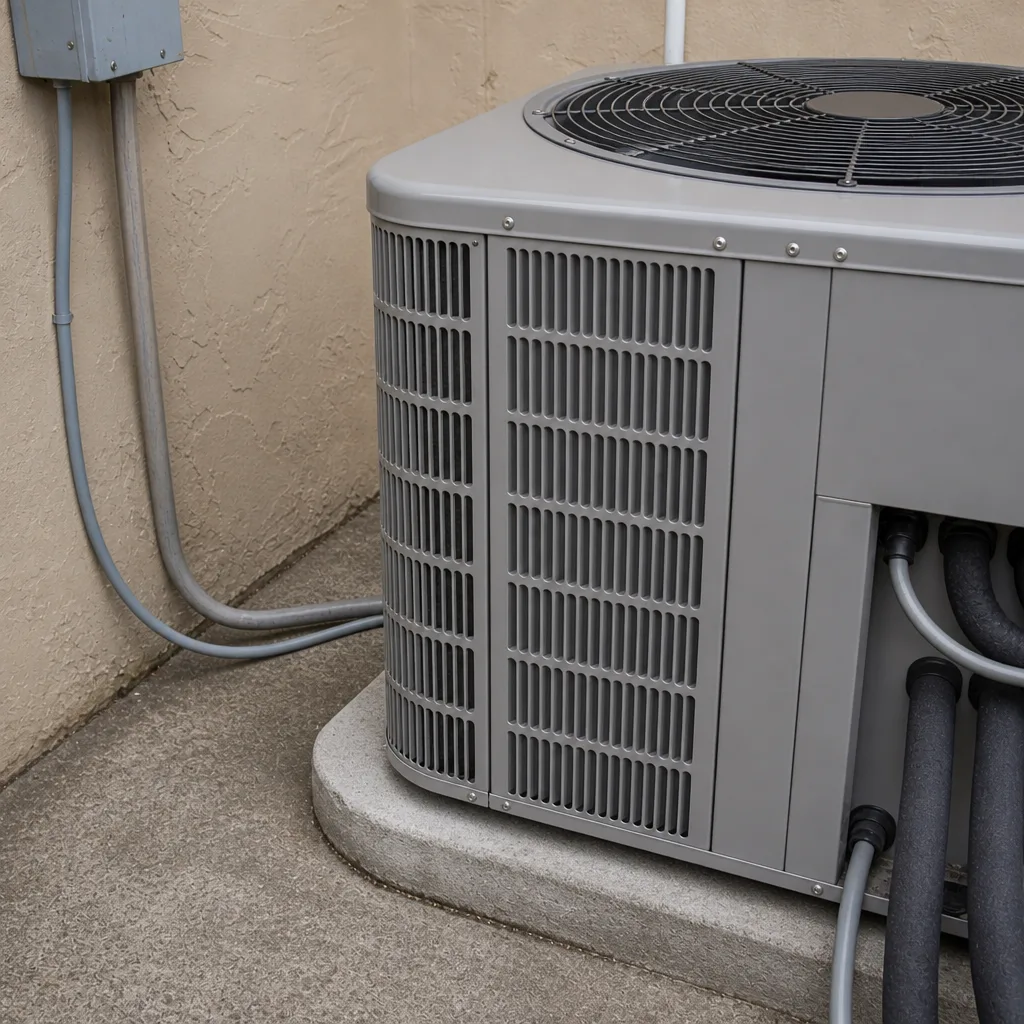
- Emergency shutoff location for both the furnace and the AC. The furnace switch is typically a standard toggle near the unit; the AC disconnect is a small box on the exterior wall near the condenser.
- Filter size and how often you change it.
- Thermostat make and model, plus any programming notes.
If you own a Bryant, American Standard, or Carrier system, the model plate will tell you the tonnage and refrigerant, which is exactly what a technician needs to load the right parts before arriving. If your equipment is from one of the brands we work on regularly, that profile cuts even more time. Prestige AC Repair is qualified to service Carrier, Trane, Lennox, Goodman, Rheem, York, Daikin, Bryant, and American Standard equipment, so in most East Los Angeles homes we already know the platform.
While you’re at it, walk the system with your phone and take three photos: the model plate, the furnace data tag, and the shutoff. Those three images will carry you through most phone diagnostics. Our technicians have up to 15 years of experience and can often tell you what’s likely wrong from those photos before anyone gets in a truck.
Which Failures Are Dangerous and Which Can Wait Until Morning
Not every HVAC failure is an emergency. Some are genuinely dangerous and require immediate professional attention, and some are urgent but safe to manage until the next dispatch window. Being able to tell them apart protects your family and keeps you from paying for a call you didn’t need.
Failures that need a technician now
- Burning or scorched smells from the furnace accompanied by a visible flame issue, discolored metal, or soot near the burner compartment. Shut the furnace off at the switch and call.
- A refrigerant leak near a gas appliance, water heater, or furnace with an open flame. Refrigerant breaks down into irritating compounds when it contacts flame, and that’s a health and safety problem, not a comfort problem.
- Repeated tripping of the furnace breaker or a breaker that won’t reset. That signals a fault in the electrical circuit, which is not a homeowner-level diagnosis.
- Any visible smoke, sparking, or arcing at the outdoor disconnect or at the air handler.
- Carbon monoxide alarms going off. Leave the house and call the fire department first, then us.
Failures that are urgent but usually safe to manage until morning
- AC running but not cooling. Often a capacitor, contactor, or low charge. Uncomfortable, not dangerous for healthy adults.
- Water pooling around the indoor unit. Usually a clogged condensate line or a failing drain pan. Shut the system off to prevent more water damage, then book service.
- Furnace blowing cool air in mild weather. Not a safety issue in an East Los Angeles winter.
- A thermostat that won’t respond. Check the batteries and the breaker before assuming the system is dead.
The dividing line is almost always open flame and electricity. If a failure could put refrigerant near flame or put voltage where it shouldn’t be, stop and call. That’s the reasoning we use on every call.
Keeping a Stucco Home Livable Without AC
East Los Angeles homes have a specific thermal problem. Stucco over wood frame absorbs heat through the day and releases it back into the rooms well after sunset. Add a marine layer that pushes humidity up along the basin edge, and the “open the windows” advice that works in dry climates stops working. You don’t want more humid air inside your house.
What actually works, in order of impact:
- Block heat before it enters. Close every window and pull the blinds on sun-facing walls by mid-morning. Once the stucco heats up, you can’t cool it back down quickly.
- Shut the house during daylight and cross-ventilate after sunset. Wait until the outside air temperature drops below the indoor temperature – usually well after dark – then open windows on opposite sides of the house. A box fan on one side pushing air out and a window open on the other pulling in will move air faster than ceiling fans alone.
- Run bath and kitchen exhaust fans sparingly. In high-humidity marine layer conditions, pulling damp outside air in makes the house feel worse, not better.
- Use wet cloths on the pulse points. Cool water on the wrists, neck, and behind the knees is more effective than cold showers when you’re trying to sleep.
- Move to the lowest floor during the hottest hours. Cool air settles, and in a two-story stucco build the difference between floors is meaningful.
- Know the warning signs of heat exhaustion: heavy sweating, weakness, cold clammy skin, nausea. If someone in the house shows these, get them cool and get help. Heat stroke – confusion, hot skin, no sweating – is a 911 call.
Households with infants, elderly residents, or anyone on medications that affect temperature regulation should be moved to a cooled location – a neighbor’s house, a library, a mall – rather than ridden out. Extreme heat is a genuine health risk in East Los Angeles, especially on blocks with limited tree cover or in older homes with poor insulation and single-pane windows. Don’t treat an AC failure as a discomfort problem if anyone in the home is vulnerable.
What to Keep on Hand for a One-Visit Repair
The single biggest driver of a two-visit repair is missing parts. The technician diagnoses correctly on visit one, then has to come back with the right capacitor, contactor, or piece of tubing. For common East Los Angeles equipment, you can shrink that gap substantially by having standard consumables ready. If you own an older Carrier or Trane condenser, the odds are good the technician already knows the platform – the question is whether the exact part is on the shelf.
What’s worth keeping:
- Spare run capacitor in your unit’s rated microfarad value. The rating is printed on the side of the existing capacitor (something like 35/5 µF or 45/5 µF for many residential condensers). Match the rating and voltage exactly. This is a common failure point and having the right one on hand shortens a repair to a single visit.
- Condensate line cleaning supplies: a wet/dry vacuum, a jug of distilled white vinegar, and a length of flexible brush. Clogged drain lines are among the most frequent calls we get in summer, and a homeowner who clears the line before the technician arrives saves a trip.
- Filter in the correct size. Check the size printed on the filter frame and keep two on hand. A clogged filter can mimic a failing system.
- A spare thermostat battery in whatever size your model takes. Most are AA or AAA, but check.
- A folded copy of the system profile from the first section of this guide, or the photos on your phone.
Don’t stock refrigerant, contactors, or fuses if you aren’t confident in matching specs. A wrong-value capacitor or an undersized contactor will fail and can damage the compressor. When in doubt, have the specs written down and let the technician bring the part.
Same-Day Call or Next-Morning Appointment?
You can’t always avoid a same-day call, but you can make the choice deliberately rather than out of panic. The question is not “how uncomfortable am I?” It’s “what’s the actual risk between now and tomorrow morning?”
Evaluate these factors:
- Who is in the house. Infants, elderly residents, anyone with heart or respiratory conditions, or anyone on medications that affect temperature regulation – call now. No further analysis needed.
- What the outdoor temperature will do overnight. If the overnight low is going to be in the 70s, a house with decent cross-ventilation can usually ride it out. If the overnight low stays in the 80s, that’s a much harder night.
- What’s actually failing. A no-cooling call on a healthy-looking system is usually a capacitor or contactor – a fast, well-understood repair. A system that’s been struggling for weeks with rising bills, short cycling, and inconsistent cooling may need more than a same-day patch.
- Whether there’s any safety signal. Burning smells, refrigerant near flame, sparking, breaker trips – call now, regardless of the hour.
- How the outdoor unit is behaving. A condenser fan not turning, a compressor that hums but doesn’t start, an ice buildup on the line set – all signs a technician can diagnose quickly. Cooling is repairable; the timing depends on the factors above.
If the situation is urgent but safe, call us and we’ll talk through it. Our phones are answered 24/7, and fast dispatch from 7am to 7pm gets a technician out during the next dispatch window. We book work outside those hours into the next opening, Sunday through Friday.
For a planning question – a unit that’s been weak all season, a thermostat upgrade, a full system assessment – a scheduled appointment is the better answer. That’s the same visit where you’d get a written estimate.
Electrical and Refrigerant: Where Homeowners Should Stop
HVAC systems contain two things that hurt people who aren’t trained: high-voltage electrical circuits and pressurized refrigerant. We say this without hedging. Some jobs are appropriate to try at home and these are not among them.
Electrical. The outdoor condenser is fed by a dedicated 240-volt circuit with a disconnect on the exterior wall. Capacitors hold a charge after power is off and will deliver a painful shock even when the unit appears dead. The air handler sits on a separate circuit. A tripped breaker that won’t reset, a contactor that’s arcing, a molex plug with burn marks – these are not things to inspect with a screwdriver. Shut the disconnect, shut the breaker, and call us.
Refrigerant. Refrigerant lines run at high pressure, and the refrigerant itself is a serious hazard if it contacts an open flame – which is exactly what’s sitting in a furnace or gas water heater compartment in many East Los Angeles homes. A slow leak that’s venting into the same space as a gas appliance needs professional handling, not a “top it off” answer. There’s also a federal requirement that technicians handle refrigerant recovery and charging; this isn’t a homeowner repair even when the diagnosis is correct.
Where homeowner prep stops and professional work begins:
- Safe: changing the filter, clearing a condensate line by hand, resetting a thermostat, checking the breaker, opening and closing registers, taking photos of model plates.
- Not safe: opening the electrical compartment, testing or replacing capacitors, handling refrigerant lines, adjusting gas pressure at the furnace valve, cleaning the outdoor coil with a pressure washer, or replacing a contactor.
Our technicians have up to 15 years of experience and handle these systems daily. If a homeowner calls us and describes a component that fails any of these tests, we’d rather diagnose it in person than coach them through a procedure that can go badly wrong.
A Seasonal Prep Routine for East Los Angeles Homes
Much of the value of HVAC prep comes from doing a few small things on a schedule rather than reacting to failures. In East Los Angeles, the year divides roughly into a short heating season and a long cooling season, with the transition months being the sweet spot for catching problems before they compound.
A workable routine:
- Early spring: change the filter, hose off the outdoor coil (garden hose on low pressure, from the inside out), check the condensate line for clogs, and confirm the outdoor disconnect is accessible. Book AC service before the first hot stretch.
- Late spring: test the thermostat through a full cooling cycle. Note any short cycling, weak airflow, or unusual noise.
- Early fall: book furnace repair if the system showed any symptoms last winter, otherwise have the furnace inspected and cleaned before the first cold night. Clear anything stored around the furnace or water heater – especially combustible material.
- Late fall: confirm the heat exchanger and venting are intact (a technician task), test the heating cycle, and check carbon monoxide alarm batteries. Replace if older than the manufacturer’s recommended interval.
- End of season: update your system profile with any service performed and any parts replaced.
If a condenser or furnace is nearing end of life – rising bills, repeated repairs, inconsistent temperatures, or a technician has flagged it – start the replacement conversation in the transition months, not in July or January. AC installation and furnace repair handled by the same company means you don’t need to line up a second contractor when the seasons turn. Replacement work is load-calculated and scheduled, not rushed, so having it planned in advance is a large part of what “prepared” actually looks like. If you’d like to know what a new system costs before you need one, we’ll put the numbers in writing.
Our service area covers the neighborhoods of East Los Angeles, and local homes frequently fall into a handful of predictable equipment patterns – mid-century single-family builds with original or replacement condensers, small apartment buildings with stacked systems, and renovated homes with newer high-efficiency equipment installed in the last decade. Knowing which is which is half the prep.
Common Mistakes to Avoid
- Waiting for a total failure before calling. A system that’s been running long cycles and struggling all season is telling you something. Calling on the day it stops working means you’re booking in the middle of a heat wave, when demand across the basin is highest.
- Opening the electrical compartment to “just take a look.” Capacitors hold a charge and the wiring is live even after the thermostat is off. This is a shock risk, not a diagnostic.
- Buying a capacitor without matching microfarads and voltage. A 35/5 µF capacitor replacement with a 45/5 µF unit, or vice versa, will fail fast and can strain the compressor. Match exactly what’s printed on the side of the existing part.
- Ignoring a clogged condensate line because “it’s just a little water.” Water near the air handler damages drywall, subfloor, and any wood framing it contacts. A clogged drain line is a small repair now and an expensive one later.
- Opening the windows all day for “airflow” during a heat event. In East Los Angeles, outside air is often hotter and more humid than inside air during the day. It feels fresher but heats the house faster.
- Continuing to run the system when you smell burning or see a spark. Shut the breaker and call immediately. A burning smell is a fire signal, not a comfort signal.
- Buying a thermostat upgrade as a fix for a cooling problem. A new thermostat won’t make a failing capacitor work. Get the diagnosis first, then decide what to upgrade.
See the difference
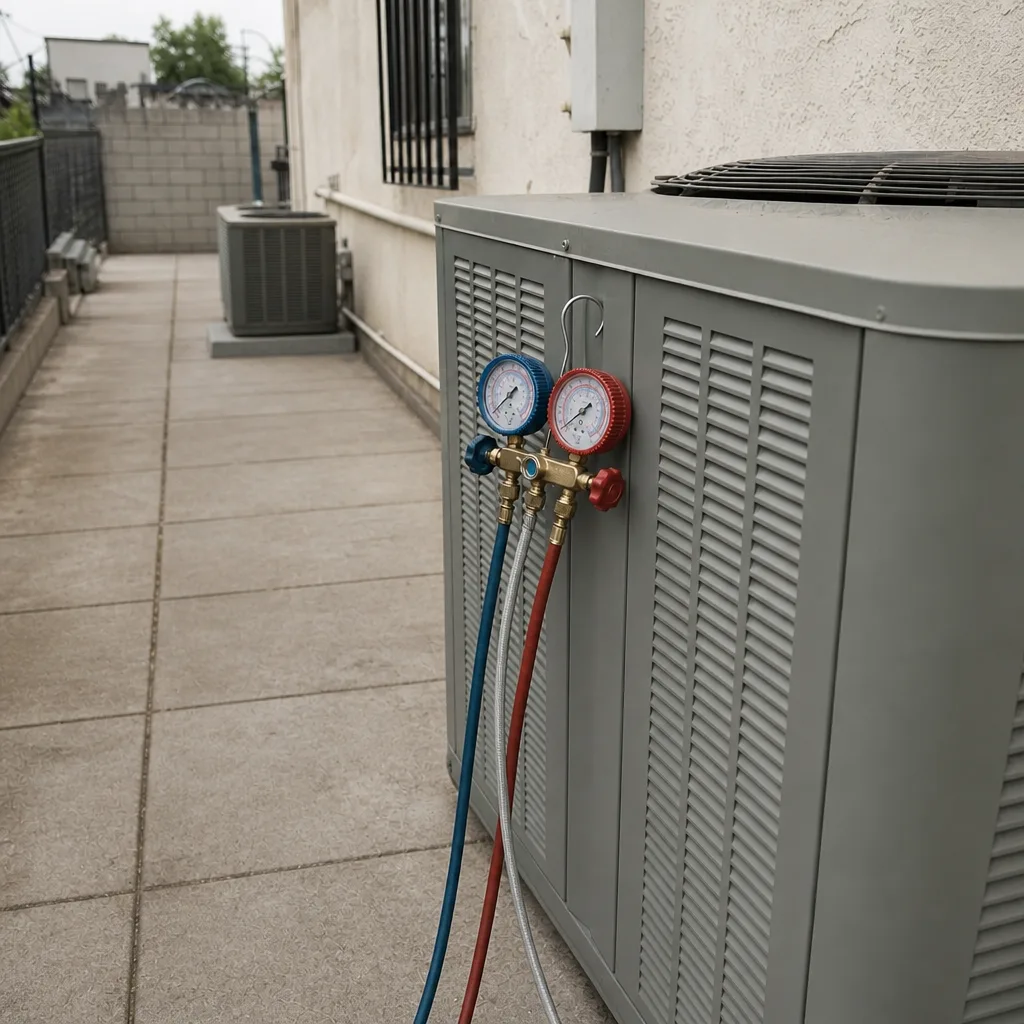
 Before
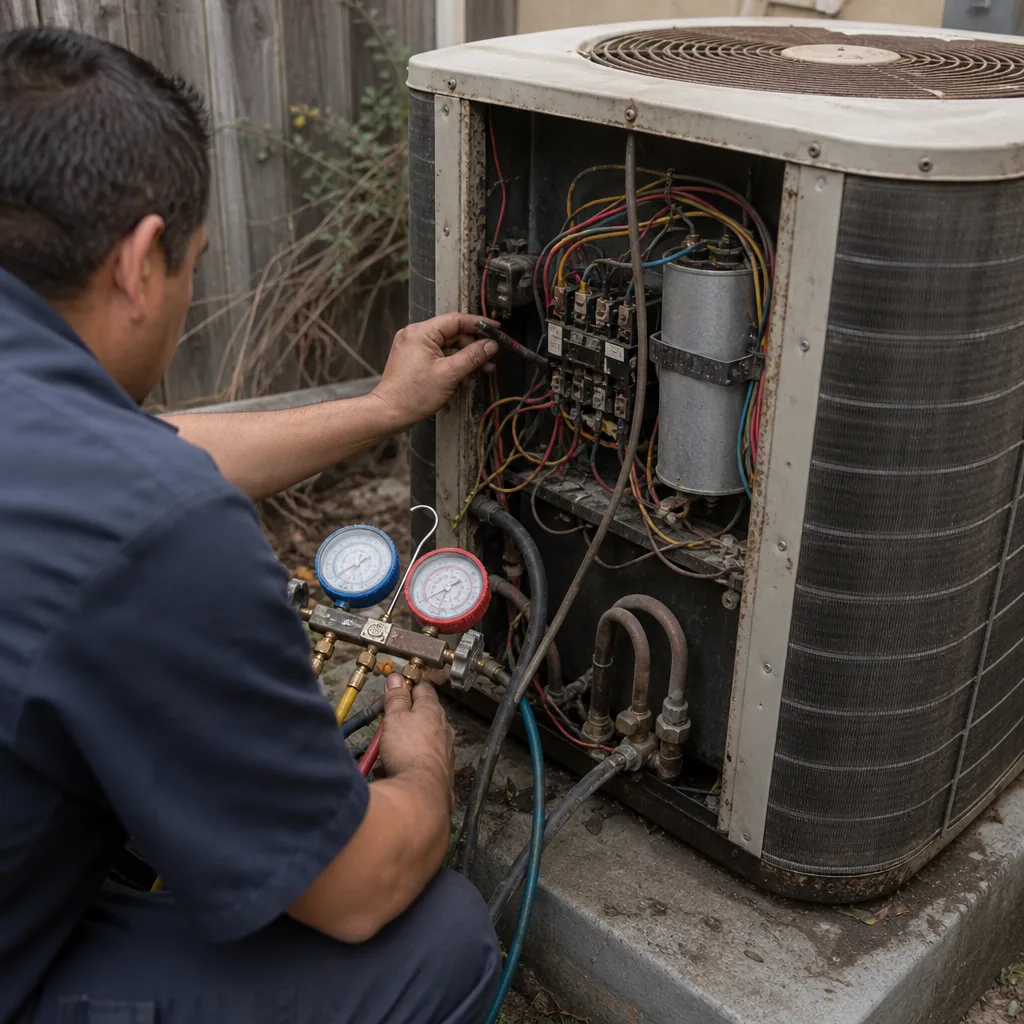
 After
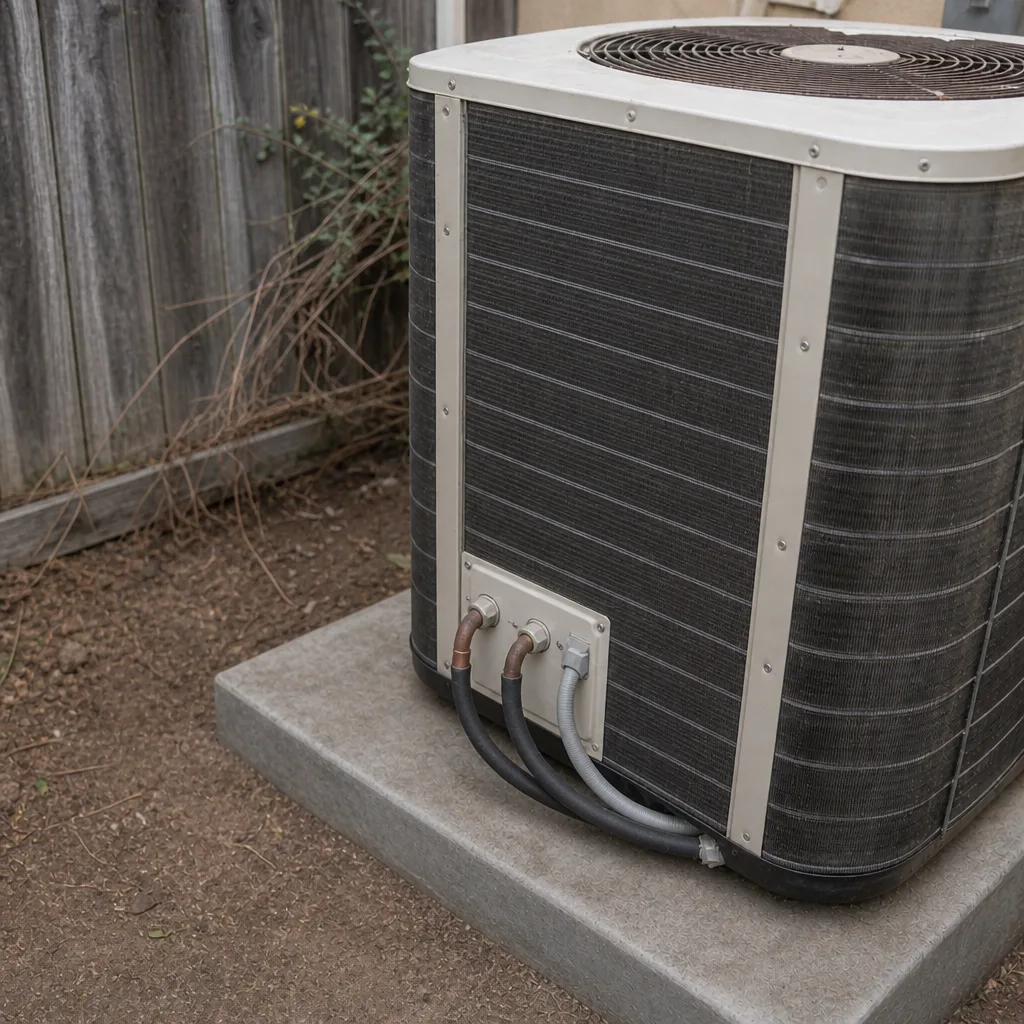
 Before
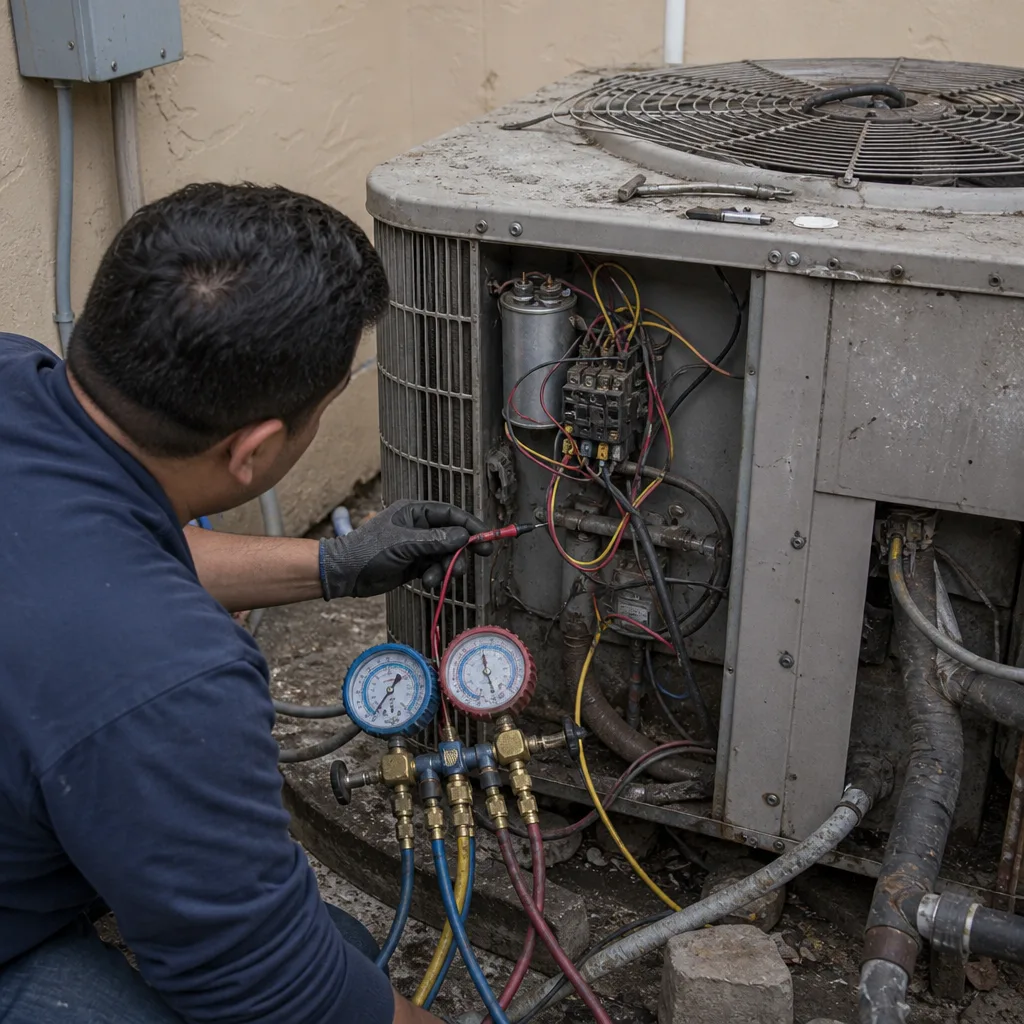
 After
 Before
 After
When to Call a Professional
Call us if any of the following apply: a burning smell at the furnace or air handler; a breaker that trips and won’t stay reset; refrigerant lines that are icing; water pooling around the indoor unit and no clear clog; a compressor that hums but doesn’t start; sparking at the outdoor disconnect; carbon monoxide alarms; or if anyone in the home is vulnerable and the system is down. Also call if the system has been struggling for weeks – rising bills, short cycling, weak airflow, uneven temperatures room to room – and you want to know the honest answer on repair versus replace before it fails in the worst month.
Prestige AC Repair offers free estimates in East Los Angeles. Call (833) 997-6067. We answer 24/7. Fast dispatch from 7am to 7pm, Sunday through Friday, closed Saturday. Our technicians are qualified to service Carrier, Trane, Lennox, Goodman, Rheem, York, Daikin, Bryant, and American Standard equipment, and they aren’t paid to steer you toward a replacement. If repair is the right answer, we’ll say so. If replacement is, we’ll show you why and put the price in writing.
Frequently Asked Questions
Change the filter, clear the condensate line, clean the outdoor coil with a garden hose on low pressure, and have the system inspected before the first hot stretch. Write down the brand, model, and refrigerant type in a system profile so a technician can load the right parts the first time. Book service in spring or early summer, not during a heat wave.
Refrigerant leaking near a gas fire – a furnace, water heater, or gas range – is the most dangerous common failure, because refrigerant breaks down into irritating compounds when it contacts flame. Electrical faults at the outdoor disconnect or air handler run a close second. Both require immediate professional handling. Shut the breaker and call.
No, and we’d strongly advise against attempting it. Capacitors hold a charge after power is removed and will deliver a severe shock, and a wrong-value replacement can damage the compressor. Matching the correct microfarad and voltage rating is a technician task. Have the existing rating written down for the visit instead of buying a part to install yourself.
The brand, model number, refrigerant type, and shutoff location for both the furnace and the AC. In East Los Angeles, that single page cuts diagnostic time because the technician arrives knowing the platform. For equipment from Carrier, Bryant, American Standard, Trane, Lennox, Goodman, Rheem, York, or Daikin, we’re qualified to work on it – the profile is what streamlines the visit.
Close the house and pull the blinds on sun-facing walls by mid-morning, wait until outside air drops below indoor air to cross-ventilate, use a box fan on one side of the house pushing air out, and move to the lowest floor during the hottest hours. Cool water on pulse points helps more than cold showers. Move vulnerable household members to cooled space rather than riding it out at home.
Same-day service is available when the situation calls for it – genuine safety risks, vulnerable household members, or high overnight temperatures. For urgent-but-safe failures, we recommend calling, discussing the situation, and booking the appropriate dispatch window. Call (833) 997-6067. We answer 24/7. Fast dispatch from 7am to 7pm, Sunday through Friday. Estimates are free.
The Bottom Line
An HVAC emergency in East Los Angeles rarely starts with the failure. It starts with the summer afternoon when the condenser stops and the house starts heating up. The work you do beforehand – a written system profile, a stocked kit that matches your equipment, a clear plan for slowing heat gain in a stucco home, and a habit of calling on early warning signs – is what actually determines how the week goes. Repair or replace, heating or cooling, we handle the equipment you own. Prestige AC Repair is built for that kind of coverage. If you’re planning ahead, call (833) 997-6067. We answer 24/7. Fast dispatch from 7am to 7pm, Sunday through Friday. Estimates are free.
Written by the team at Prestige AC Repair.