
Last updated November 16, 2026
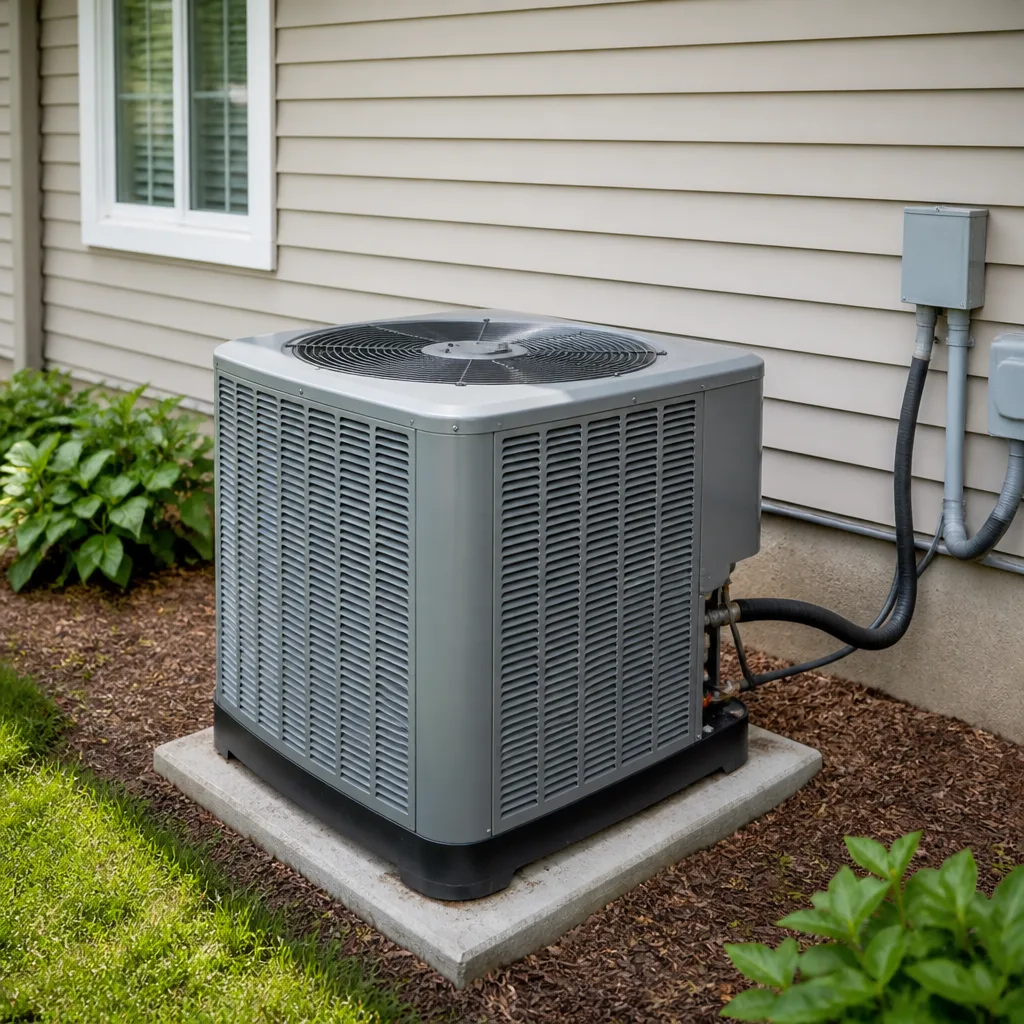 AC repair
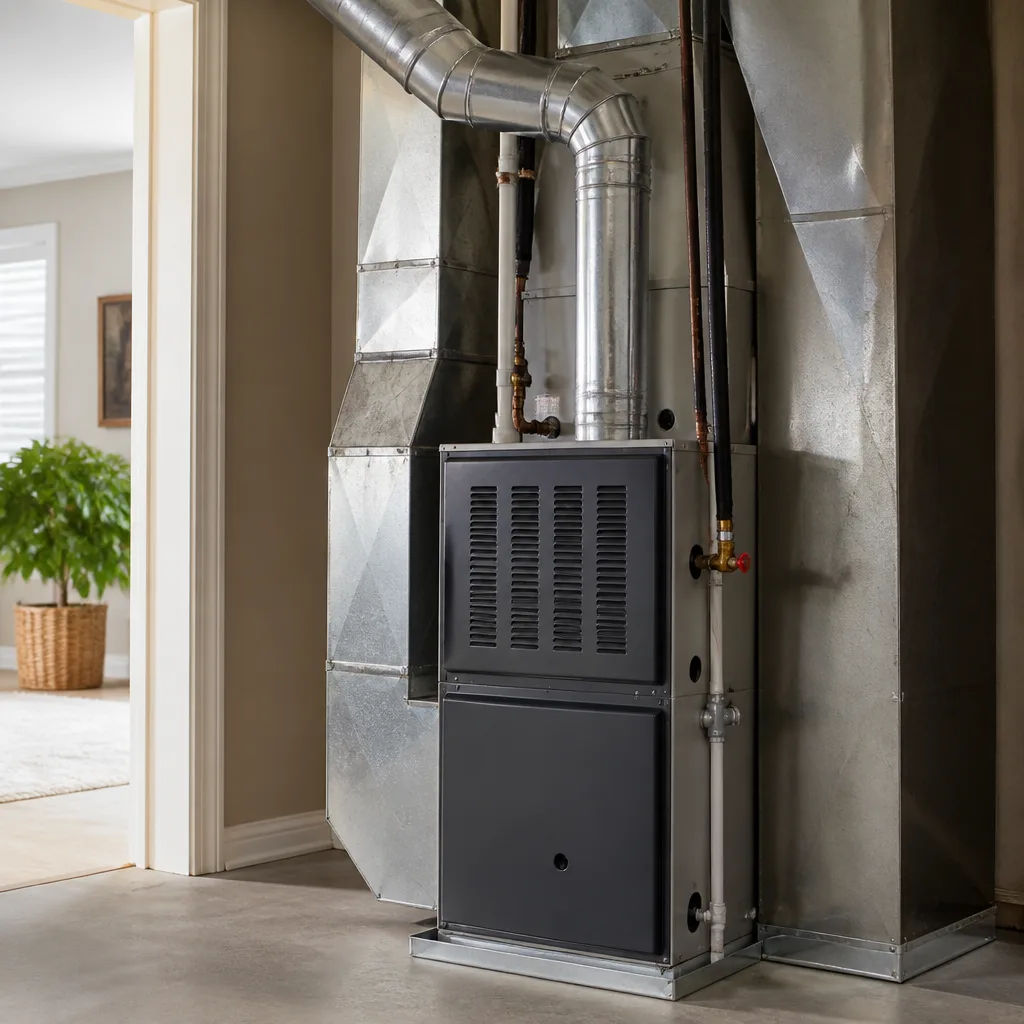 Furnace & heating
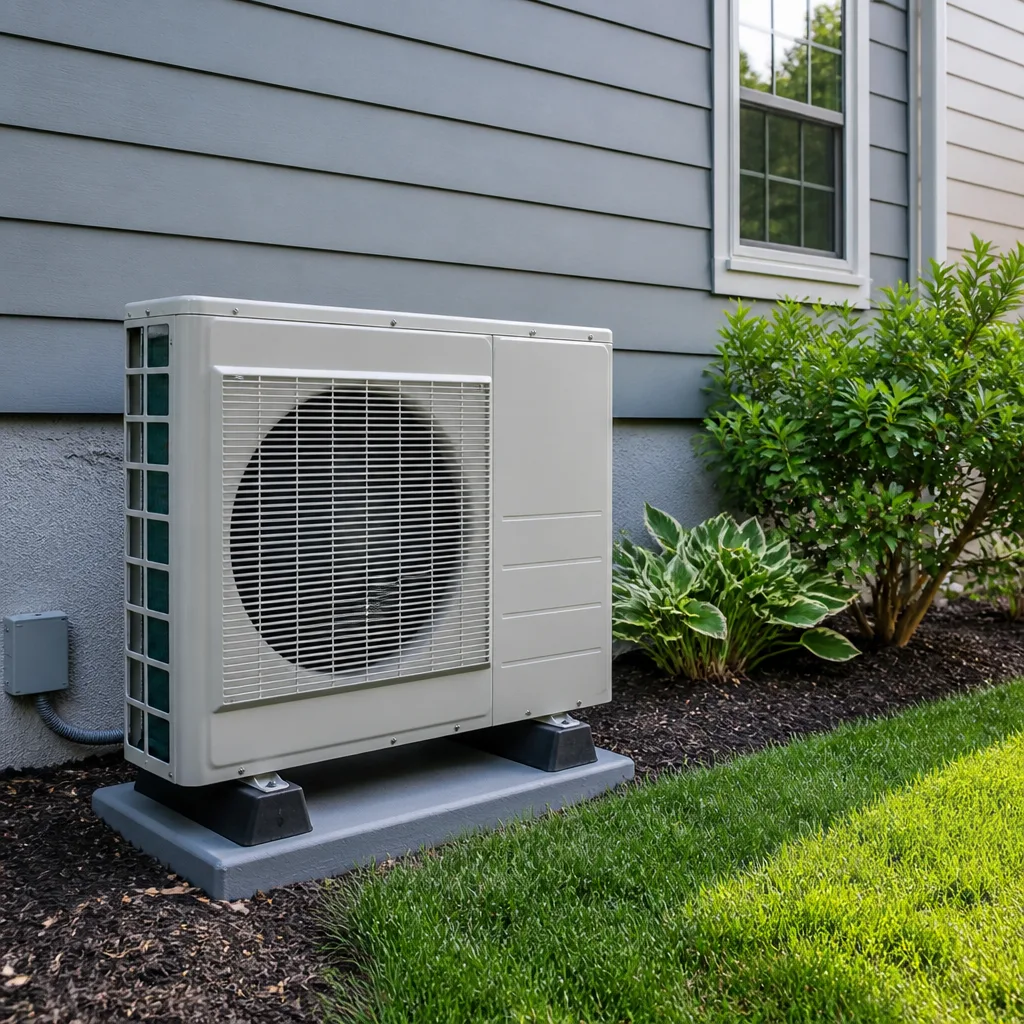 Heat pumps
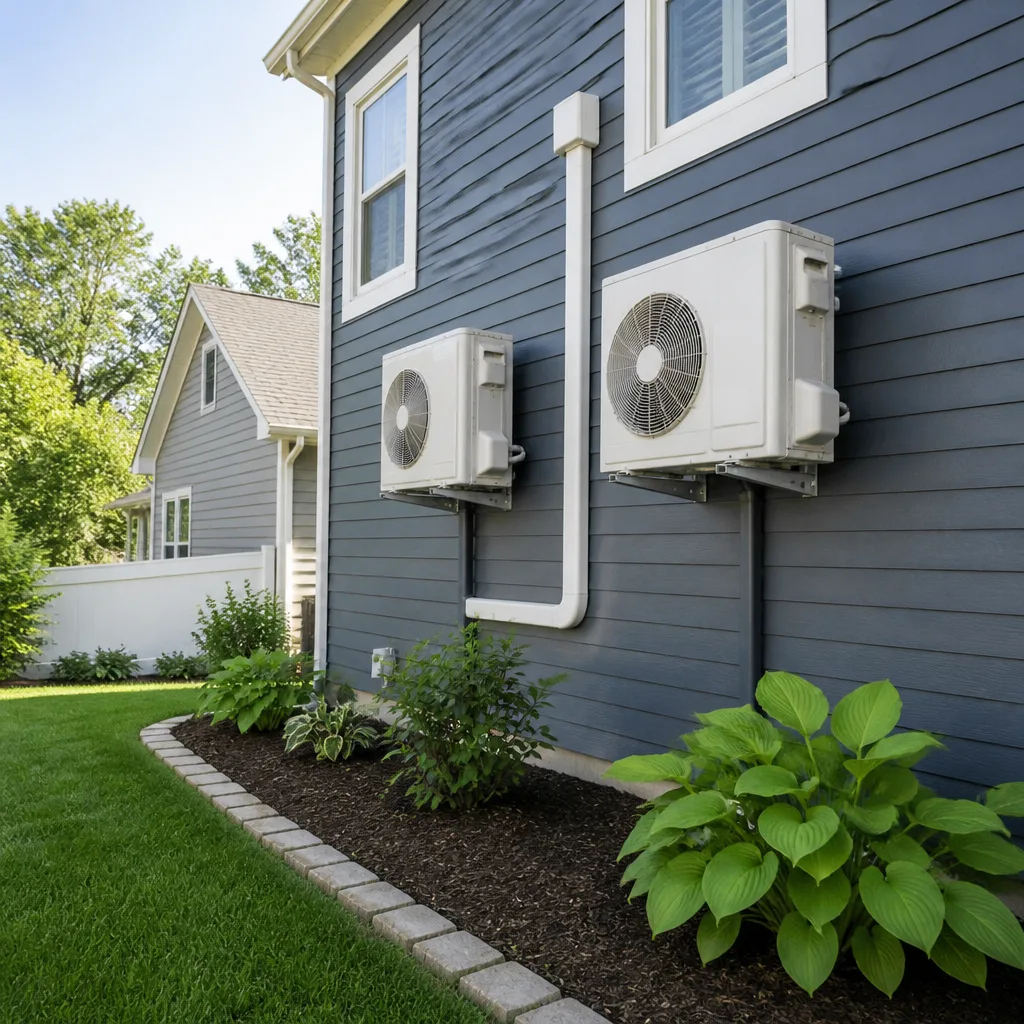 Ductless mini splits
 Carrier
 Trane
 Goodman
Seasonal tune-up and full diagnostic on your Carrier, Trane, or Goodman system - readings shown to you before any repair is proposed
Diagnosis first, numbers second - you approve the repair price before a single part goes in.
Get your free estimateAC Installation Troubleshooting in East Los Angeles: Common Problems and How to Fix Them
A brand-new air conditioner that short-cycles, blows warm air, or trips the breaker in its first week is almost always telling you about the installation, not the equipment. That distinction matters more than most homeowners realize: a defective unit falls under the manufacturer’s warranty, while an installation defect is the installing contractor’s responsibility to correct. Knowing which symptoms point to which mistake gives you the vocabulary to push back with the right questions instead of accepting a vague answer. This guide walks through the most common post-installation problems we see in East Los Angeles, how each one is verified, and what you can reasonably ask for when something feels off.
Quick Answer
Most AC installation problems in East Los Angeles trace back to a handful of correctable errors: an oversized system that short-cycles, a low refrigerant charge from an incomplete vacuum and charge, a thermostat misconfigured for the wrong system type, or condensate drainage routed without enough pitch on a flat lot. All of these are verifiable with gauges, a thermometer, and the installation paperwork, and all of them should be corrected by the installing contractor rather than billed to you as a new repair.
Styles & brands we work with
- AC repair
- Furnace & heating
- Heat pumps
- Ductless mini splits
- Carrier
- Trane
- Goodman
Table of Contents
- Short-Cycling After Installation: Oversizing, Charge, or Thermostat?
- Warm Air From a Brand-New System: Three Installation Errors
- Why Condensate Drainage Problems Show Up on Flat Lots
- How to Read Your Installation Permit Inspection Report
- What Warranty Coverage Actually Requires
- The First-Week Checklist: What to Watch For
- How to Push Back With the Right Questions
Short-Cycling After Installation: Oversizing, Charge, or Thermostat?
Short-cycling means the system turns on, runs for a short stretch, shuts off, and repeats. A new unit that does this in its first hot week is running a cycle it wasn’t designed for, and there are three usual causes. The first is oversizing: a system with too much capacity for the space cools the air quickly, satisfies the thermostat, and shuts off before it has run long enough to pull humidity out of the house. The second is a low refrigerant charge, usually from an incomplete evacuation or a charge that was never verified against the manufacturer’s spec. The third is a thermostat configured for the wrong system type or with a cycle rate that doesn’t match the equipment.
Here’s how a technician separates the three:
- Check the load calculation against the installed tonnage. If the unit is larger than the calculated load by a meaningful margin, oversizing is likely. Ask to see the load calculation that was used to size the system.
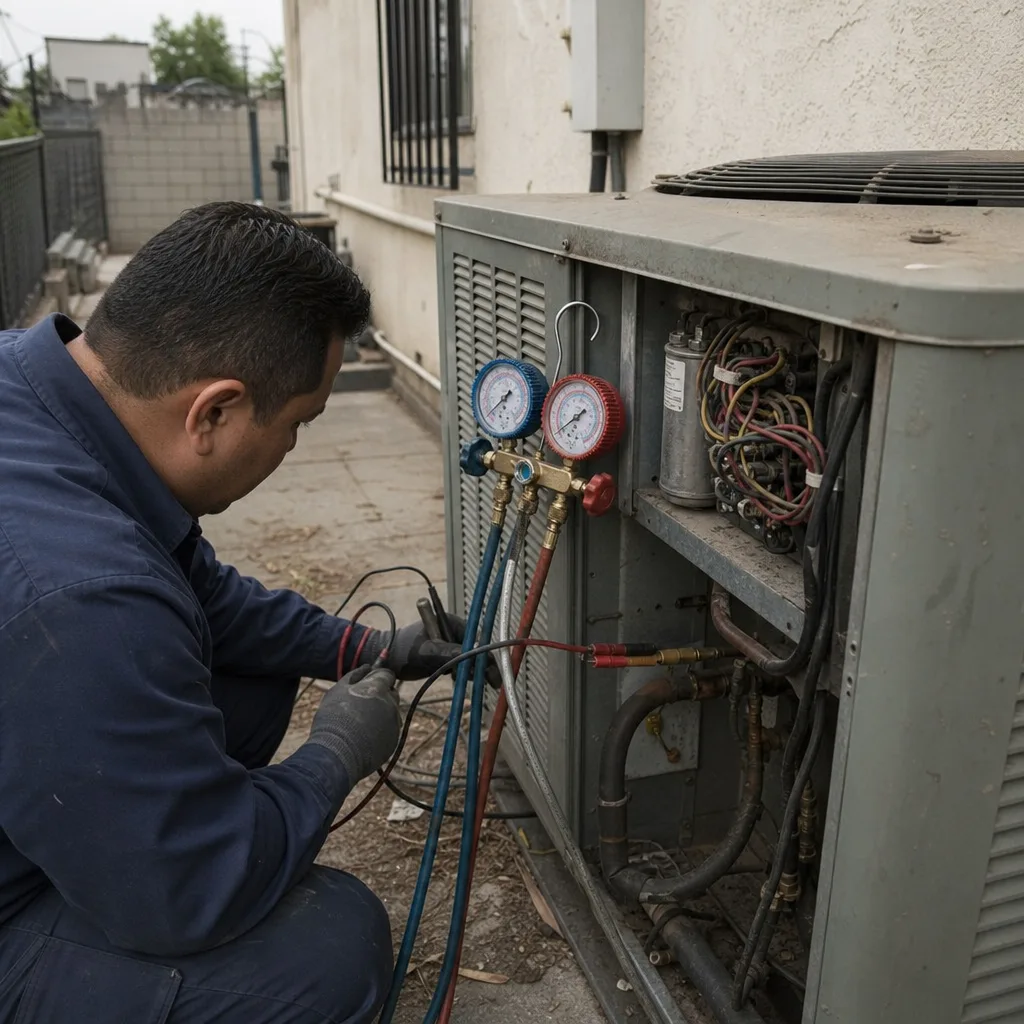
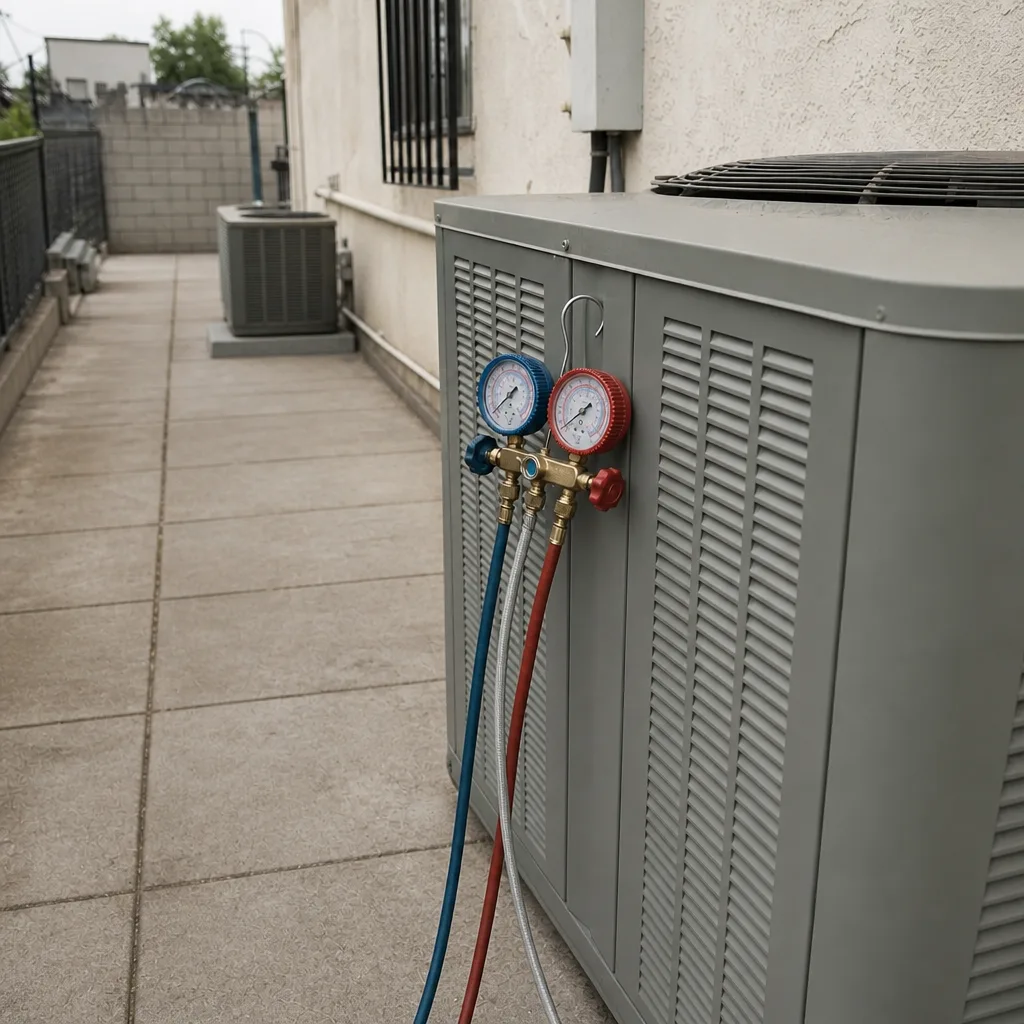
- Measure the refrigerant charge with gauges and compare to the manufacturer’s charging chart. Subcooling and superheat tell you whether the charge is correct; a thermometer alone doesn’t.
- Review the thermostat configuration. Cycle rate, system type (single-stage, two-stage, heat pump), and fan settings all need to match the equipment. A mismatch here is common after a replacement where the old thermostat was reused.
In our experience across East Los Angeles, oversizing is the most common of the three, and it’s also the one homeowners are least likely to be told about. A system that cools fast but leaves rooms clammy is cycling for capacity reasons, not comfort reasons, and no amount of thermostat adjustment fixes that. The right conversation is about the load calculation, not about adding another vent.
Warm Air From a Brand-New System: Three Installation Errors
Warm air from a newly installed system is the symptom homeowners notice first. Three installation errors cause it more than any others, and each is verified differently.
1. Refrigerant charge never verified. A system that was pumped down and charged without a proper evacuation can be undercharged, overcharged, or contaminated with moisture. The tell is a system that cools a little and then loses ground. Verification means gauges and a charging chart, not a hand on the line.
2. Airflow restriction in the ductwork or the return. A new air handler paired with an old, undersized return duct is a classic mismatch. The system is fine; it just can’t move enough air across the coil. Verification is a static pressure reading and a return-air check, and the fix may be ductwork rather than equipment.
3. Line set or coil issue from the install itself. A kinked line set, a brazed joint that wasn’t purged, or a coil that took on moisture during the install all show up as a system that underperforms. Verification is a pressure and temperature check at the coil combined with a visual inspection of the line routing.
If you have a Trane, Lennox, Goodman, or Rheem system installed recently and it’s blowing warm, the equipment brand is rarely the problem. The installation is where the answer sits, and the right move is to document the symptom and call the installing contractor before the season gets hotter. If you’d rather have a second set of eyes on it, our AC installation team can look at the install and tell you what’s actually going on.
Why Condensate Drainage Problems Show Up on Flat Lots
Condensate is the water your AC pulls out of the air, and it has to go somewhere. On a flat lot, that “somewhere” is often a bigger problem than it is on a hillside property, because gravity alone doesn’t give you much drop to work with. A condensate line that’s installed with shallow pitch, a trap that isn’t sized right, or a drain that discharges into a spot with no fall will back up and eventually trip the float switch or leave water where you don’t want it.
In East Los Angeles, much of the housing stock sits on level lots, and that changes how drainage needs to be planned. The installation has to do one of three things: give the line enough fall to reach a real drain, add a condensate pump to lift the water where gravity won’t, or route to a location that can actually take the volume. A hillside property often solves this by default because the grade does the work. A flat lot doesn’t.
- Float switch trip: the system shuts down because water is backing up. This is a safety feature, not a failure, and it points straight at the drain.
- Water at the base of the air handler: usually a trap issue or a line with too little pitch.
- Water outside in a bad location: the drain works but discharges where it shouldn’t. The fix is rerouting, not replacing the line.
If you’re seeing water after a recent install, that’s installation, not wear. Have it corrected before the next hot stretch, because a float switch that keeps tripping leaves you without cooling on the days you need it most. Our East Los Angeles service team handles drainage corrections regularly on flat-lot homes.
How to Read Your Installation Permit Inspection Report
Most AC replacements in East Los Angeles require a permit, and a permit means an inspection. The inspection report is one of the most useful documents you have after an installation, because it flags deficiencies while the contractor is still responsible for correcting them. Homeowners often file it away without reading it, which is a missed opportunity.
Here’s what to look for when you read the report:
- Correction items: anything the inspector flagged as needing correction before sign-off. These are the items the contractor is on the hook to fix, and they should be corrected before you consider the job closed.
- Verified items: what was actually inspected and passed. This tells you which parts of the install were checked against code.
- Equipment and permit numbers: the model and serial numbers on the report should match the unit on your wall or pad. A mismatch is worth a call to the contractor.
- Sign-off status: “finaled” or “approved” means the inspection closed. “Open” or “corrections required” means it didn’t, and that’s your leverage.
If your installer didn’t pull a permit, that’s a separate conversation, and it’s worth having. An unpermitted install can complicate a future sale and can void parts of the manufacturer’s warranty. If you want an independent read on whether the install was done correctly, we can help. Prestige AC Repair works on systems from Carrier, Trane, Lennox, Goodman, Rheem, York, Daikin, Bryant, and American Standard, and we’re happy to look at the paperwork alongside the equipment.
What Warranty Coverage Actually Requires
Manufacturer warranties don’t cover installation defects. They cover manufacturing defects in the equipment, and they typically require that the system was installed by a licensed contractor following the manufacturer’s installation instructions, with a proper startup and commissioning record. That means the paperwork matters as much as the part.
What you should expect from the installing contractor:
- Startup and commissioning record: the readings taken at startup (charge, airflow, static pressure, temperature split) filled in on the manufacturer’s startup sheet. Ask for a copy.
- Registration: many manufacturer warranties need the equipment registered within a set window after installation. The installer is usually the one who does this, and it’s worth confirming it happened.
- Written invoice with model and serial numbers: this is what ties your system to the warranty. Keep it where you can find it.
- Labor coverage that’s separate from parts: the manufacturer covers the part; the installing contractor covers the labor. Confirm what labor coverage you have in writing before you sign off on the job.
In our experience, most warranty disputes come down to a missing startup sheet or an unregistered system, not a defective part. Both are preventable at install time, and both are worth chasing down in the first month while the conversation is still easy.
The First-Week Checklist: What to Watch For
The first week after an installation is when installation defects show themselves. Run through this list once a day for the first several days and note anything that doesn’t feel right.
- Temperature split: measure the air at the return and at a supply register. A healthy split is what the installer recorded at startup; if the split narrows over the first week, something is off.
- Cycle behavior: the system should run in stretches, not in short bursts. If it turns on and off every few minutes, note the timing and call.
- Water at the air handler or outside: any water where it doesn’t belong points at the condensate drain.
- Breaker trips: a new system should not trip the breaker. A trip points at a wiring issue, a compressor problem, or a mismatch between the equipment and the circuit.
- Noise: a new rattle, whistle, or hum is worth a call. Often it’s a duct or a panel; occasionally it’s something the install didn’t catch.
- Thermostat behavior: the display should match the system type. If the thermostat thinks it’s controlling a heat pump and it’s controlling a straight cool, the behavior will be wrong in ways that aren’t obvious.
Write down what you see and when you see it. A technician can work from a list of symptoms far faster than from a vague “it doesn’t feel right,” and the documentation also protects you if the conversation with the installer gets difficult.
How to Push Back With the Right Questions
When something feels off after an install, the right questions get you further than a complaint. Here’s what to ask, in order:
- “Can I see the load calculation?” This is the sizing document. If there isn’t one, that’s a problem.
- “Was the charge verified with gauges against the manufacturer’s chart?” Yes or no, and if yes, ask for the readings.
- “Can I see the startup and commissioning sheet?” The installer should have filled this out at startup. It’s the record of what the system did on day one.
- “What’s the labor warranty, in writing?” Manufacturer parts coverage and installer labor coverage are two separate things, and homeowners often conflate them.
- “Was the permit pulled and finaled?” The inspection report will tell you, and the contractor should know the status.
If the answers are vague or the contractor is slow to respond, that’s when a second opinion earns its keep. A brand-neutral diagnostic through our furnace repair and cooling team gives you readings you can take back to the installer, and we don’t steer the recommendation based on which brand you own. We diagnose what’s actually happening, and we put it in writing.
Common Mistakes to Avoid
- Accepting “it just needs to break in.” A new system doesn’t have a break-in period that hides warm air or short cycling. If it’s not performing in the first week, something is wrong and it’s worth a service call, not patience.
- Letting the installer reuse the old thermostat without checking it. A thermostat configured for the wrong system type will run the equipment incorrectly, and it’s one of the cheapest problems to fix once it’s identified.
- Skipping the permit to save a step. Unpermitted installs can complicate a future sale, and they can complicate warranty coverage. The permit is your protection, not the contractor’s.
- Filing the startup sheet without reading it. The startup sheet is the record of what the system did on day one. If the numbers are missing, ask why.
- Signing off before the inspection is finaled. Sign off on the job once the inspection closes, not when the installer hands you an invoice.
- Assuming the brand is the problem. Trane, Lennox, Goodman, and Rheem all build equipment that performs when it’s installed correctly. When a system underperforms in week one, look at the install, not the badge on the unit.
- Ignoring water on a flat lot. A drain that works on a test day may back up in a hot week. If you see water near the air handler, call before the float switch does it for you.
See the difference
 Before
 After
 Before
 After
 Before
 After
When to Call a Professional
Call a licensed technician if the system is blowing warm air, short-cycling daily, tripping the breaker, or leaving water where it shouldn’t be. Call sooner rather than later if the system is brand-new, because the installing contractor, the manufacturer, and the permit inspection all have timetables that get harder to work with after the first month. Call immediately if you smell burning at the air handler or the breaker won’t reset, because that’s an electrical safety issue, not a comfort one. Prestige AC Repair offers free estimates in East Los Angeles. Call (833) 997-6067. We answer 24/7. Fast dispatch from 7am to 7pm, Sunday through Friday.
Frequently Asked Questions
Short-cycling on a new system is almost always an installation issue, most often oversizing, a low refrigerant charge, or a thermostat configured for the wrong system type. The fix is a load calculation review, a charge verification with gauges, and a thermostat configuration check. Call (833) 997-6067 for a free estimate – we’ll document what we find so you can take it back to the installer if it’s their responsibility.
Manufacturer warranties cover the equipment, not the install, so if the warm air is caused by an installation error, the installing contractor is responsible for correcting it. The manufacturer’s warranty will generally not cover it because the equipment itself isn’t defective. A brand-neutral diagnostic gives you the readings you need to have that conversation.
Flat lots give condensate drainage less natural fall to work with, so the installer has to plan the drain with a pump, a proper trap, and a discharge location that can take the volume. Hillside properties often solve this by grade alone; flat-lot homes don’t, and drainage is the most common post-install callback in East Los Angeles for exactly that reason.
Most cities require a permit for an AC replacement, so ask your city’s building department to confirm what applies to your address. The permit matters because it triggers an inspection and a sign-off, which is your record that the install was checked. Keep the inspection report.
The manufacturer’s warranty covers parts; the installing contractor’s labor warranty covers the labor to replace them. They’re two separate documents, and both should be in writing before you sign off on the job. Ask for both and keep them with the invoice and the startup sheet.
You can document symptoms, check the thermostat settings, and look at the condensate drain, but anything involving refrigerant, electrical connections at the air handler, or the compressor needs a licensed technician. Refrigerant handling is regulated, and the diagnostic equipment needed to verify a charge isn’t something a homeowner can substitute for with a thermometer. Call (833) 997-6067 for an exact quote – estimates are free.
The Bottom Line
Post-installation problems in East Los Angeles are usually installation problems, not equipment problems, and the difference determines who pays. Watch for short cycling, warm air, water at the air handler, and breaker trips in the first week, and document what you see. Ask for the load calculation, the startup sheet, the permit inspection report, and the labor warranty in writing. If the installer is slow to respond, get a brand-neutral second opinion so you’re working from readings rather than a feeling. Call (833) 997-6067 for a free estimate. We answer 24/7. Fast dispatch from 7am to 7pm, Sunday through Friday.
Written by the team at Prestige AC Repair.