
Last updated November 16, 2026
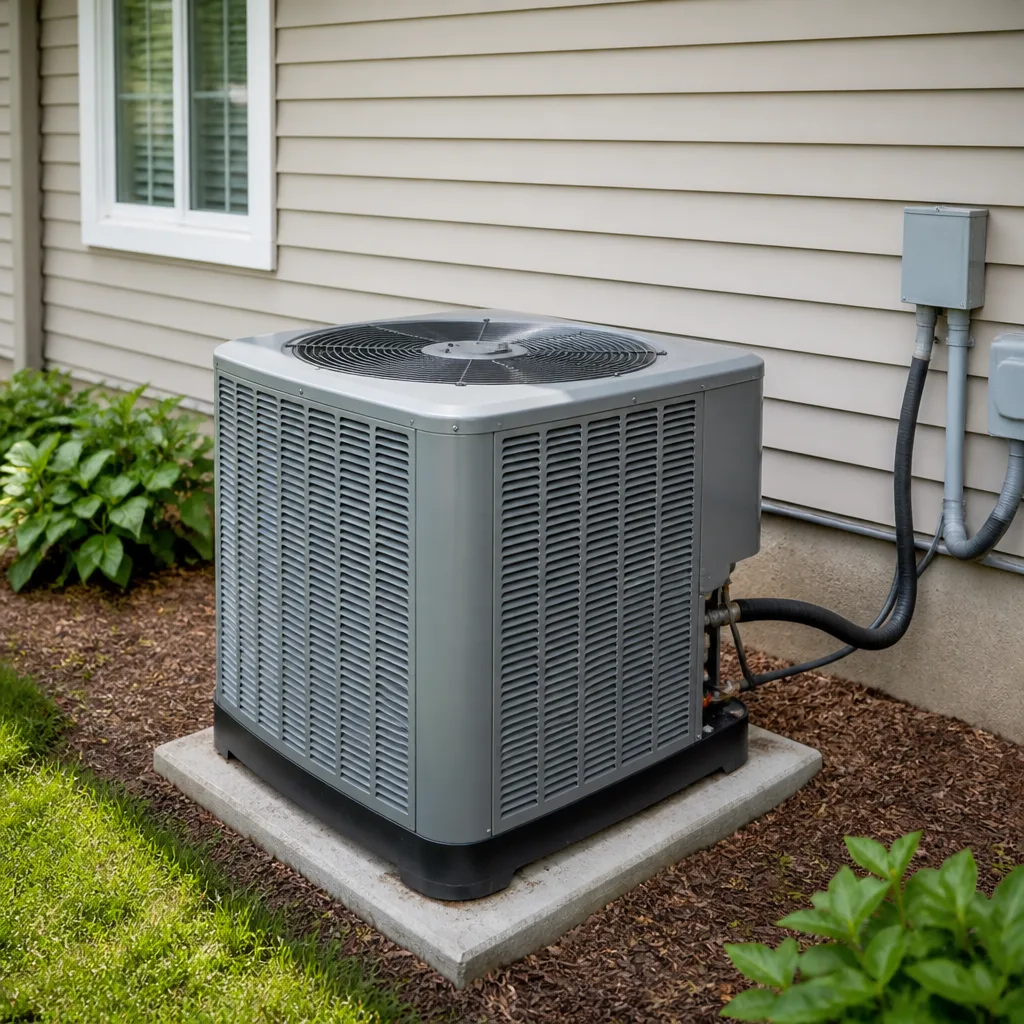 AC repair
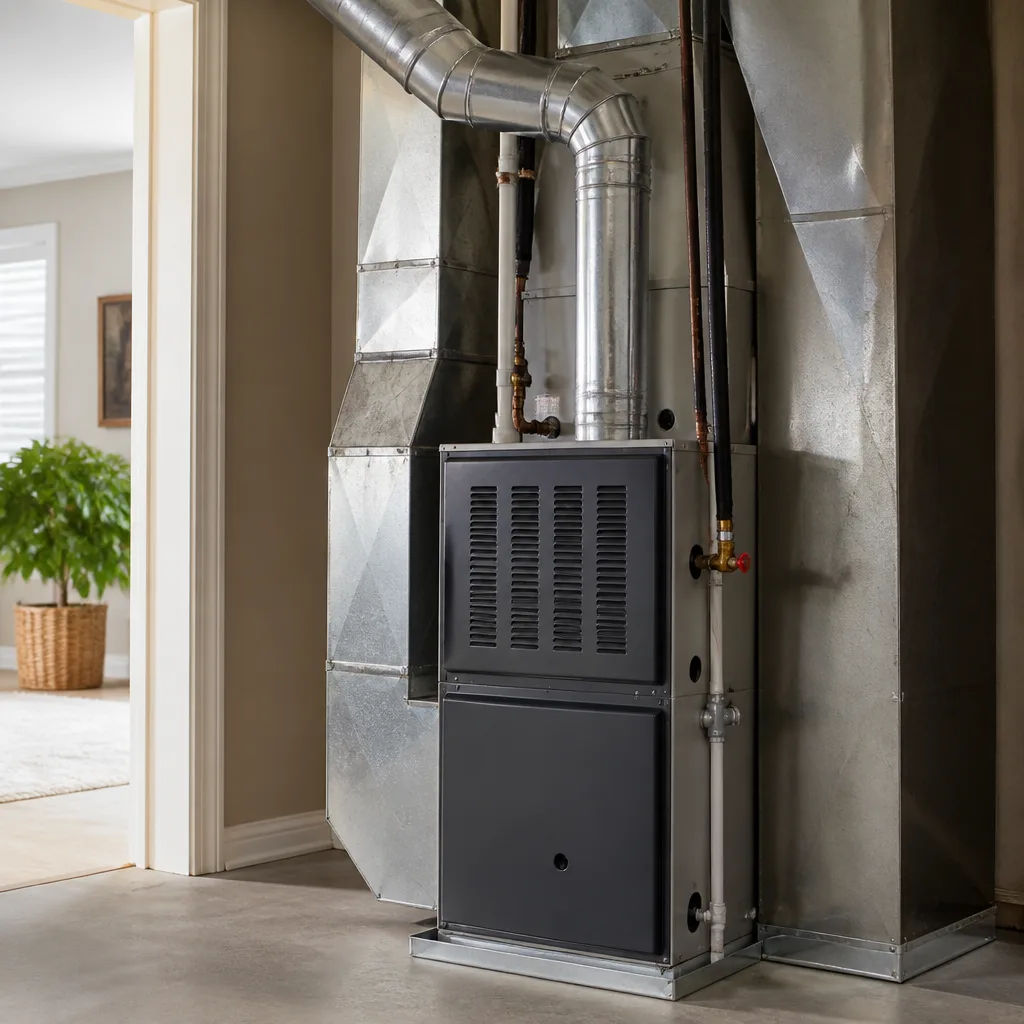 Furnace & heating
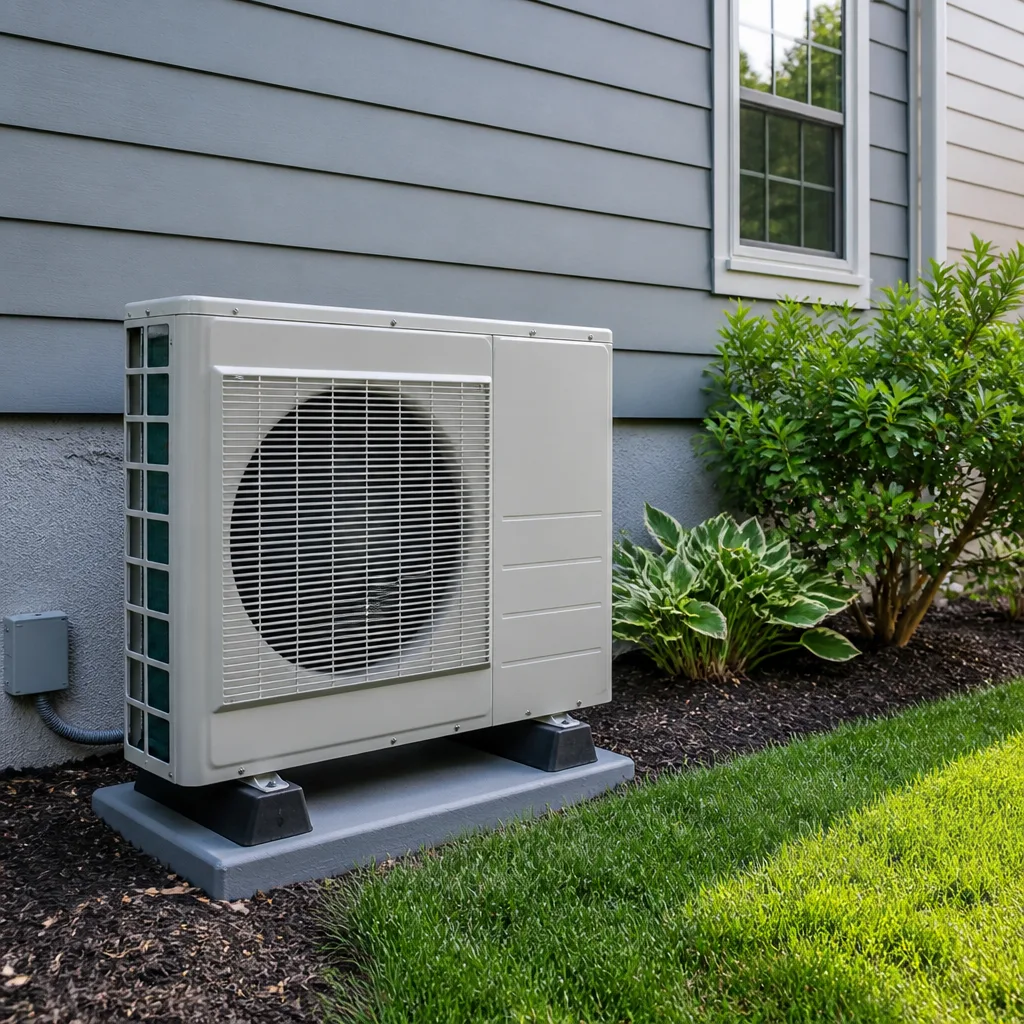 Heat pumps
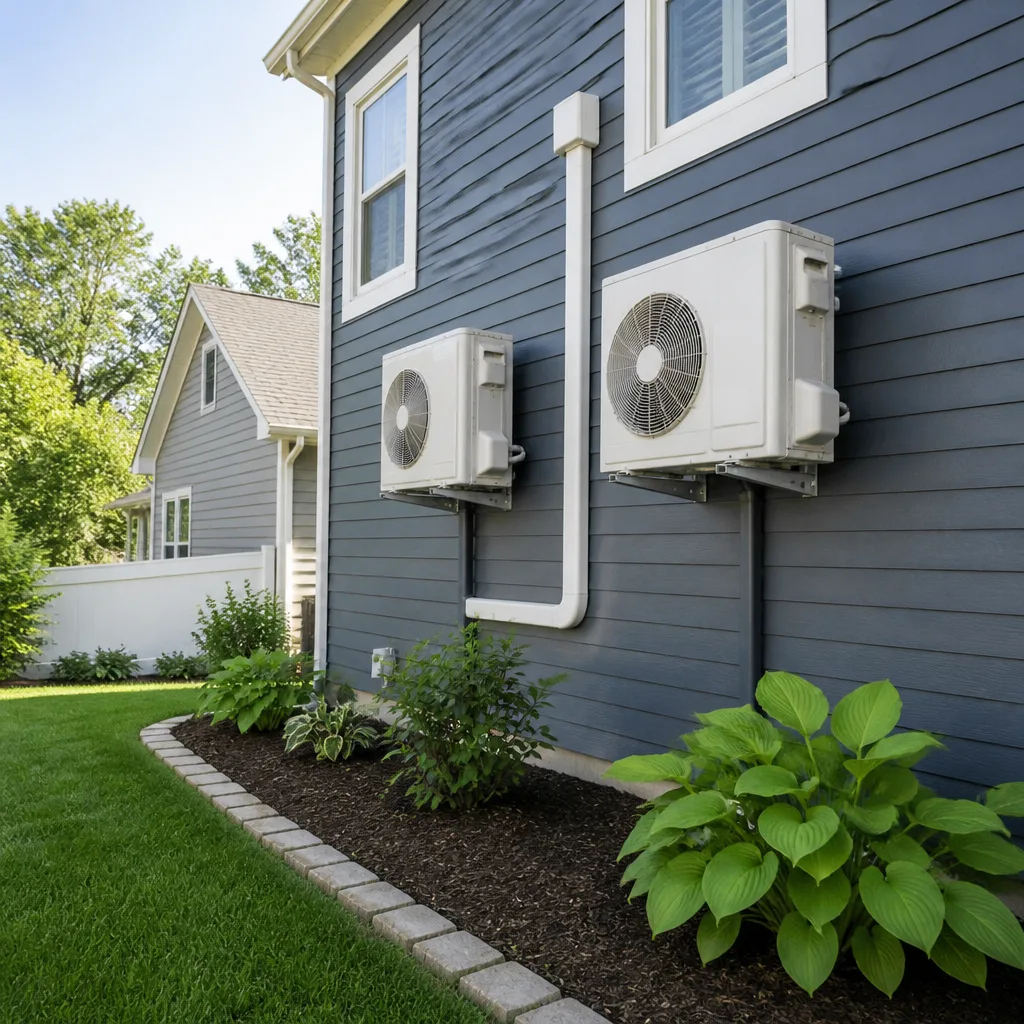 Ductless mini splits
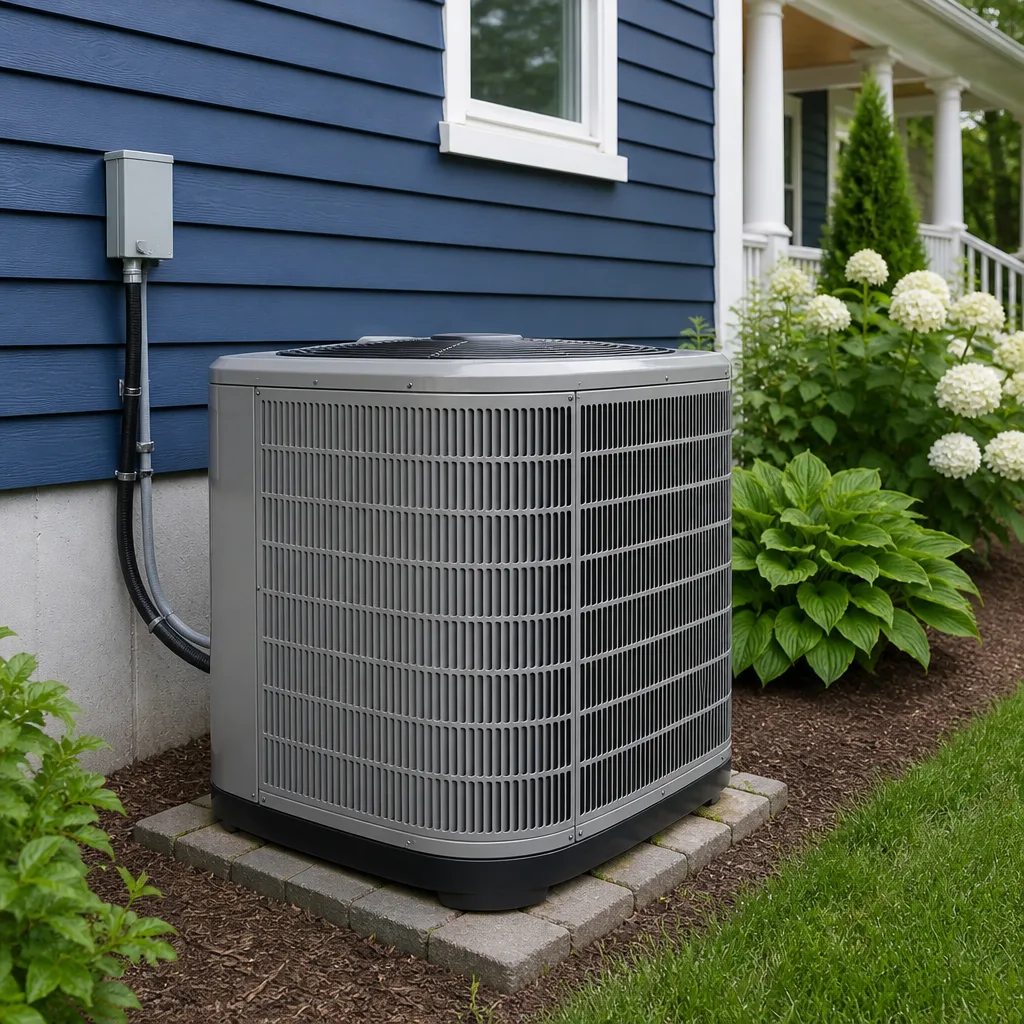 Carrier
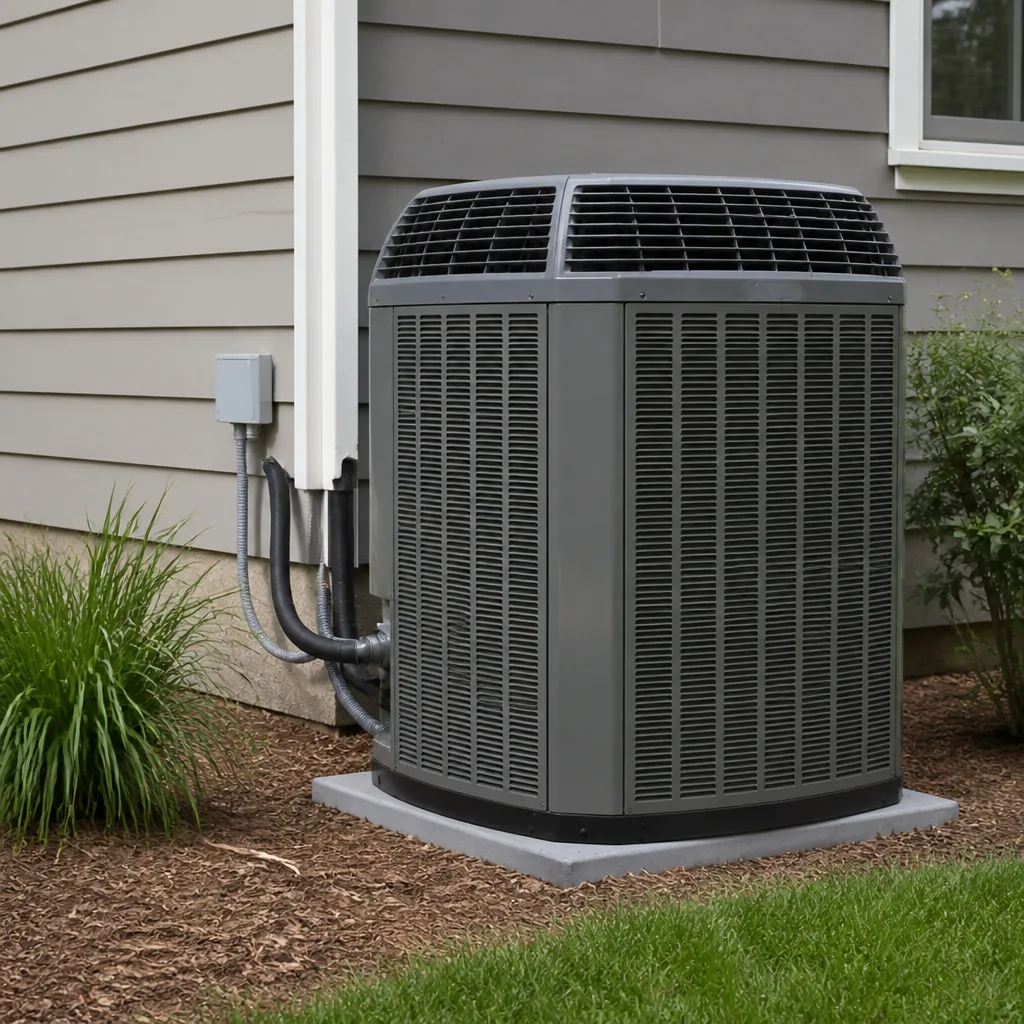 Trane
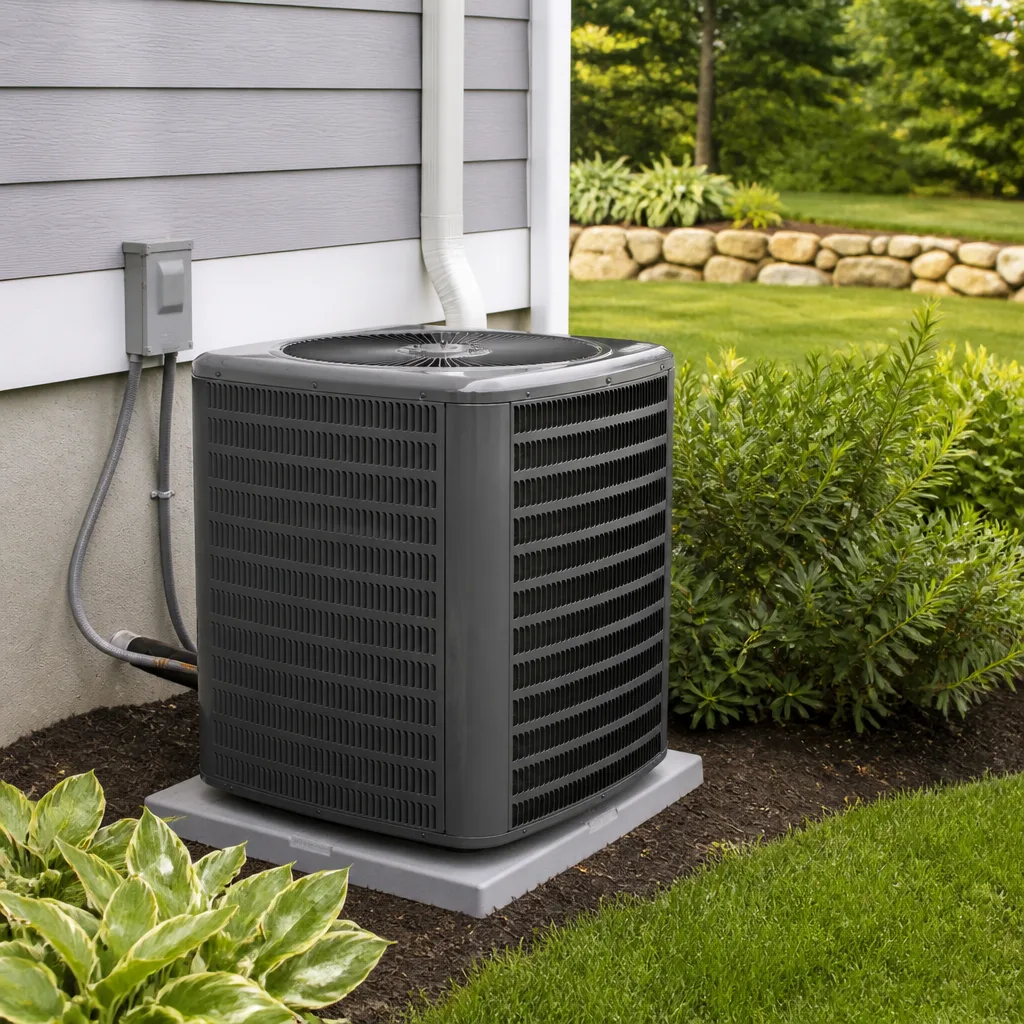 Goodman
Seasonal tune-up and full diagnostic on your Carrier, Trane, or Goodman system - readings shown to you before any repair is proposed
Diagnosis first, numbers second - you approve the repair price before a single part goes in.
Get your free estimateSeasonal HVAC Care for East Los Angeles: Year-Round Homeowner’s Guide
Most East Los Angeles homeowners treat HVAC care like an even four-part calendar: a little spring cleaning, a little fall prep, then coast. That’s backwards for this climate. East Los Angeles doesn’t get four equal seasons. It gets a long, hard cooling run, a short but genuine heating stretch, and a shoulder period in between that most people skip and that quietly decides whether your system makes it through July. The single most useful shift you can make is to stop thinking of maintenance as a fall ritual and start treating late winter and early spring as the real prep window. This guide walks through what to do in each part of the year here, and which tasks actually matter.
Quick Answer
For East Los Angeles, the highest-value HVAC maintenance happens in the March through May window, before the cooling season starts, not in October after it ends. Priority tasks are a full AC tune-up and coil cleaning, clearing the condensate drain, checking refrigerant charge, testing the furnace before its first cold start, and setting a seasonal thermostat schedule that matches our mild winters and hot, dry summers. Skipping the shoulder season is the most common reason a system fails in the middle of a heat wave.
Styles & brands we work with
- AC repair
- Furnace & heating
- Heat pumps
- Ductless mini splits
- Carrier
- Trane
- Goodman
Table of Contents
- Why Seasonal Care in East Los Angeles Isn’t Evenly Distributed
- The March – May Window: Your Highest-Leverage Maintenance Period
- Getting the Cooling System Ready for a Long Heat Season
- The Marine Layer, Overnight Humidity, and Coil Moisture
- The Heating Window: Why Dormant Furnaces Fail on the First Cold Call
- Seasonal Thermostat Scheduling for Our Temperature Swings
- The One Maintenance Item Almost Everyone Skips
- Common Mistakes to Avoid
- When to Call a Professional
Why Seasonal Care in East Los Angeles Isn’t Evenly Distributed
Walk the blocks around Whittier Boulevard or up into El Sereno and you’ll notice the same thing: air conditioners that run hard from late spring into October, furnaces that sit untouched for most of the year, and a six-to-eight week stretch in between when neither system gets much thought. That’s the shape of the year here. If you plan maintenance as if all four seasons carry equal weight, you’ll spend your attention in the wrong place.
The practical consequence is simple. A cooling system that runs at high load for months has no margin. If it enters that run with a dirty coil, a slightly low charge, or a clogged drain, it doesn’t get a break in August to recover. The failure happens during the worst possible stretch, when every technician in East Los Angeles is booked and the house is unbearable. A system that gets serviced in the shoulder months enters the heat season with capacity to spare.
Heating matters too, just on a shorter timeline. East Los Angeles winters are mild by national standards, but they’re real: cold nights, morning chill, and a stretch where a working furnace is genuinely needed. A furnace that’s been dormant for nine months is exactly the appliance most likely to fail on the first cold morning of the year.
So the right frame is weighted. Put most of your effort into the pre-cooling-season prep. Put a smaller but specific effort into the pre-heating-season check. And don’t ignore the shoulder months, because that’s where the leverage lives.
The March – May Window: Your Highest-Leverage Maintenance Period
If you do one thing for your HVAC this year, do it before June. The March through May window is when preventive work actually prevents failures here, because a neglected system running at full load in July has no recovery window. Schedule this work in spring, not fall.
Here’s what belongs in that window, in roughly the order it should happen:
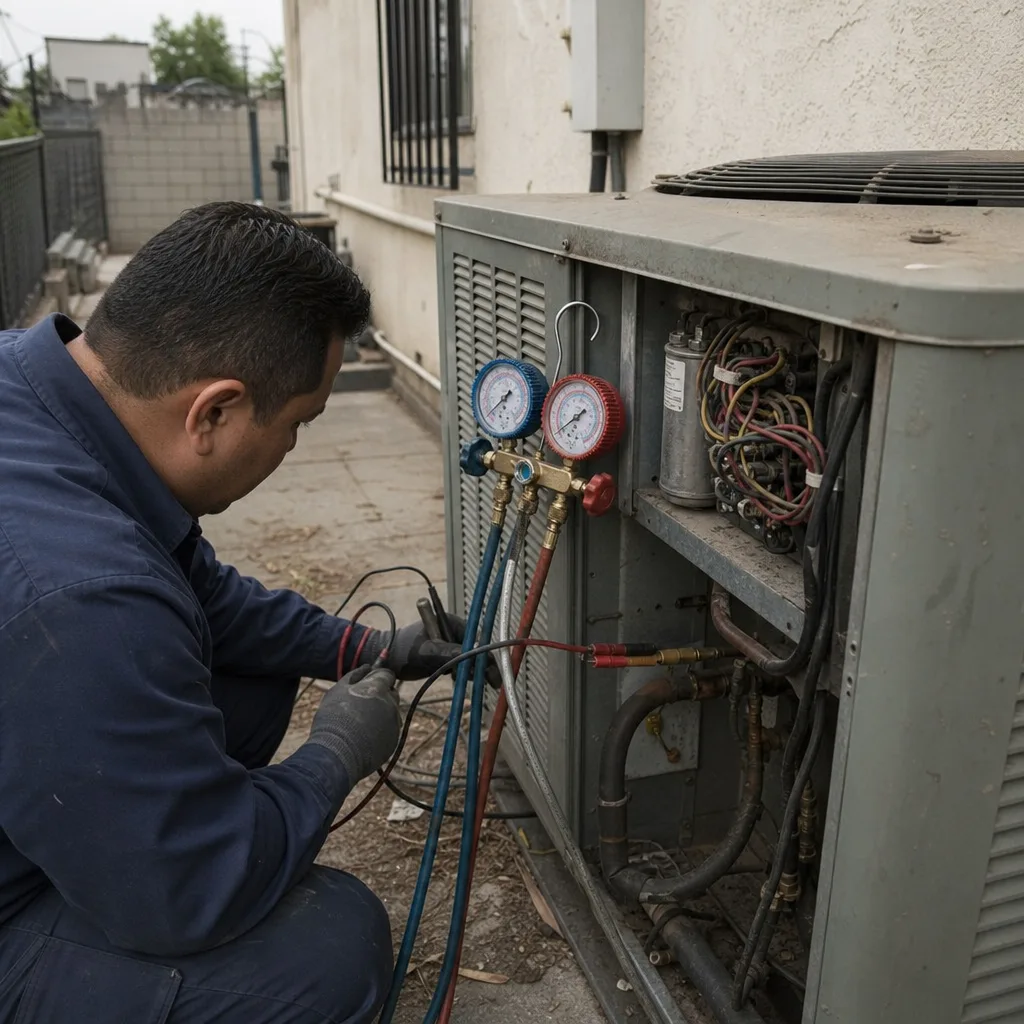
- Full cooling tune-up. A technician checks the system end to end: refrigerant charge, electrical connections, capacitor condition, blower operation, and airflow. This is the single appointment that catches most problems while they’re cheap to fix.
- Coil cleaning. Dust and debris on the evaporator and condenser coils force the system to work harder for the same cooling. In a dry, dusty climate like ours, coils load up faster than homeowners expect.
- Condensate drain clearing. Covered in detail below, but it belongs on the spring list, not as an afterthought.
- Filter replacement. Do this before the season, then on a schedule through it. A clogged filter is the most common and most preventable cause of a frozen coil.
- Outdoor unit clearance. Clear leaves, debris, and stored items from around the condenser so it can shed heat.
- Furnace test run. Even in spring, run the furnace briefly to confirm it lights and heats. Catching a dormant issue in April is far better than discovering it in December.
- Thermostat schedule review. Adjust the program to match the coming season instead of carrying last year’s settings forward.
That list takes one service visit plus a bit of homeowner housekeeping. In East Los Angeles, where the cooling season is long and unforgiving, that’s the highest return on effort you’ll get all year.
Getting the Cooling System Ready for a Long Heat Season
Our cooling season is the main event, and the equipment bears the brunt of it. Preparing for it well means thinking about load, airflow, and the parts that wear out quietly.
Airflow first. A system that can’t move air can’t cool. That starts at the filter and continues through the return ducts and the blower. Restricted airflow drives up runtime, freezes coils, and shortens the life of the compressor. Change the filter before the season and check it monthly through the summer.
Charge and electrical. Refrigerant charge needs to be verified, not guessed at. Undercharged or overcharged systems run inefficiently and wear components prematurely. Capacitors and contactors are the small electrical parts that tend to fail on hot days, and they’re inexpensive to check and replace before they strand you.
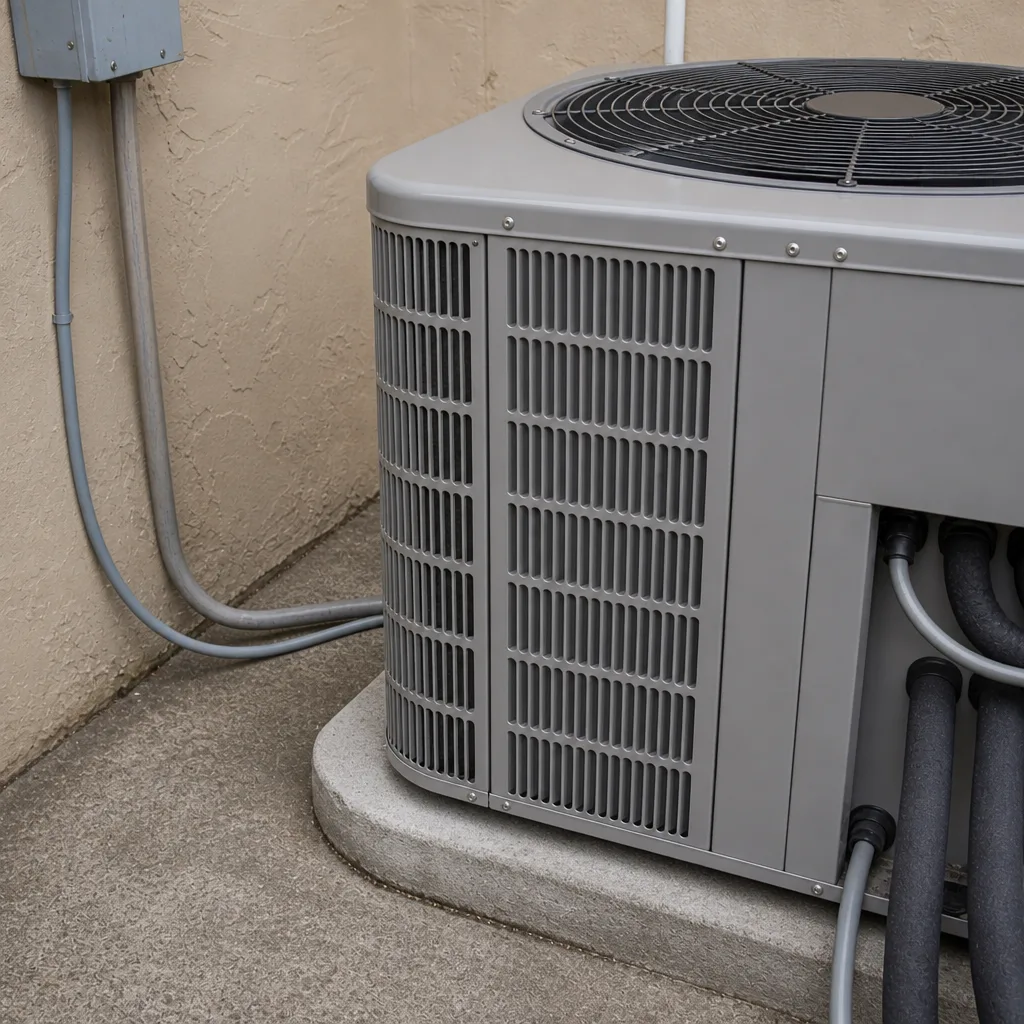
Condenser condition. The outdoor unit sheds heat, and it can only do that if the coil is clean and there’s clearance around it. In a dry climate, dust and yard debris settle into the fins. A rinse and clearance check before the season goes a long way.
Duct and register check. Leaky ducts dump cooled air into attics and crawlspaces. A quick pass to confirm registers are open and ducts aren’t disconnected is worth doing every spring.
If your system is older and the tune-up keeps surfacing the same problems, it may be time to have a straight conversation about replacement rather than another patch. We handle AC installation and repair under the same roof, so you get an honest read on which makes sense for your equipment instead of a one-size answer. We service Carrier, Trane, Lennox, Goodman, Rheem, York, Daikin, Bryant, and American Standard, so whatever you own, we work on your system, not a brand we’d prefer to sell.
The Marine Layer, Overnight Humidity, and Coil Moisture
East Los Angeles sits in a basin where the marine layer rolls in overnight and burns off during the day. That daily swing does something homeowners don’t always connect to their HVAC: it drives humidity up and down, and the cooling coil is where that moisture lands.
Here’s the mechanism. An air conditioner removes heat and moisture as air passes over the cold evaporator coil. During a humid overnight stretch, more moisture condenses on the coil and drains into the condensate pan. If the drain is clear, that’s fine. If it’s partially clogged, water sits. Standing water in a dark, warm cabinet is a good environment for biological growth on the coil and in the drain pan. That growth reduces airflow, contributes to musty odors, and over time damages components.
What to watch for:
- Musty or damp smells when the system starts up
- Visible moisture or water stains near the indoor air handler or furnace cabinet
- Rust or standing water in the condensate pan
- Reduced airflow that returns after a filter change
During the shoulder period, when the system runs less, moisture has more time to sit. That’s another argument for the spring maintenance window. Cleaning the coil and clearing the drain before the season removes the conditions for growth instead of reacting to them later. A technician can also confirm the drain is pitched correctly and the trap is functioning, which matters more than most homeowners realize.
The Heating Window: Why Dormant Furnaces Fail on the First Cold Call
East Los Angeles winters are mild, but they’re not imaginary. There are cold mornings, and there’s a stretch where a heating system earns its keep. The problem is that the furnace sits idle for most of the year, and idle equipment doesn’t stay healthy by default.
Dormant gas furnaces tend to fail on the first cold call of the season for a few predictable reasons:
- Dust on the burners and in the cabinet. Months of sitting collect dust that interferes with ignition.
- Pilot or igniter issues. Components that haven’t cycled in months can fail on the first demand.
- Flame sensor buildup. A dirty flame sensor is one of the most common no-heat causes and one of the easiest to correct.
- Airflow problems. A clogged filter or blocked return can cause the furnace to overheat and shut down on a safety limit.
- Condensate issues on high-efficiency units. Some furnaces produce condensate, and a blocked line can trip a safety switch.
The fix is simple: test the furnace before you need it. Running it briefly in the shoulder months confirms it lights and heats, and gives you time to schedule furnace repair without a cold house and a long wait. If your furnace is older and the same problems keep coming back, we offer replacement as well as repair, so the decision is genuinely yours.
A safety note on gas furnaces: gas lines, burners, and heat exchangers are not a homeowner repair. A cracked heat exchanger can allow combustion gases into the living space, and that’s a serious hazard. If you smell gas or suspect a problem with the heat exchanger, stop using the furnace and have it checked by a qualified technician. This is one of the areas where an expert eye matters most.
Seasonal Thermostat Scheduling for Our Temperature Swings
Thermostat scheduling in East Los Angeles is a different exercise than it is in places with strong, stable seasons. Our days can swing widely, especially during the shoulder months, and a schedule that makes sense in July can leave you uncomfortable in April.
A few principles to apply:
- Start from the schedule, not the setting. Pick a cooling setpoint and a heating setpoint you can live with, then let the thermostat shift between them as the day warms and cools.
- Widen the dead band. Give the system five to eight degrees of room between heating and cooling targets so it doesn’t short-cycle when temperatures bounce.
- Adjust for the shoulder season. In the spring and fall, favor setbacks during the day when nobody is home and bring things back before arrival, rather than running equipment all day.
- Cool the house before the hottest part of the day. Pre-cooling during cheaper, cooler hours reduces the work the system has to do during peak heat.
- Turn off schedules when you don’t need them. If a mild week means no cooling and no heating are needed, let the system rest.
- Check the fan setting. Running the fan in “auto” instead of “on” reduces runtime and humidity re-evaporation when the system isn’t actively conditioning. “On” can be useful for a short period to help with air distribution, but it shouldn’t be the default.
A programmable or smart thermostat makes all of this easier, but the underlying logic is the same on any model. The goal is to reduce runtime without sacrificing comfort, and to match the schedule to the actual season rather than leaving one schedule running all year.
The One Maintenance Item Almost Everyone Skips
If we could pick only one habit to change for East Los Angeles homeowners, it would be this: check the condensate drain. It’s the most skipped maintenance item in mild climates, and it causes the most preventable water damage to HVAC systems here.
Why it gets skipped: in climate zones with obvious freezing and heavy weather, homeowners are conditioned to think about their system in the shoulder seasons. Here, the mild winter means the system can be quiet for months, and the drain is out of sight. When it clogs, the result isn’t dramatic noise or a clear failure; it’s water where water shouldn’t be.
What a clogged drain does:
- Overflows the pan, damaging ceilings, walls, and floors near the air handler
- Shuts the system down on a float switch (if you have one)
- Creates an environment for biological growth on the coil and in the cabinet
- Causes musty odors that persist after the clog is cleared unless the coil is cleaned
The fix is a routine visit. During a spring tune-up, the technician should clear the drain line, inspect the pan, and confirm the condensate management is working. Homeowners can do a simple visual check between visits: look for water in the pan or around the cabinet when the system has been running.
This task fits naturally with a full spring service. If you’re having Prestige AC Repair out for a tune-up, ask for the drain to be cleared and the pan inspected, so it’s not left to chance.
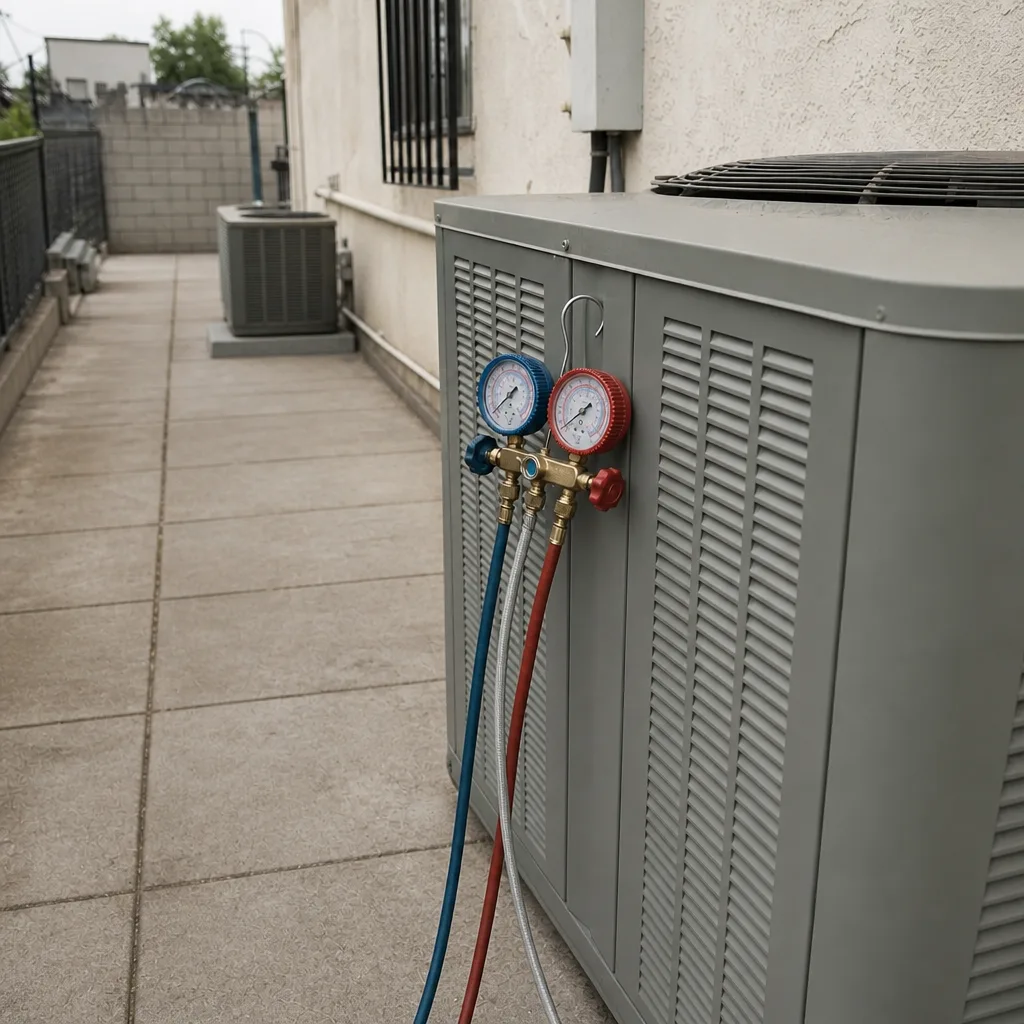
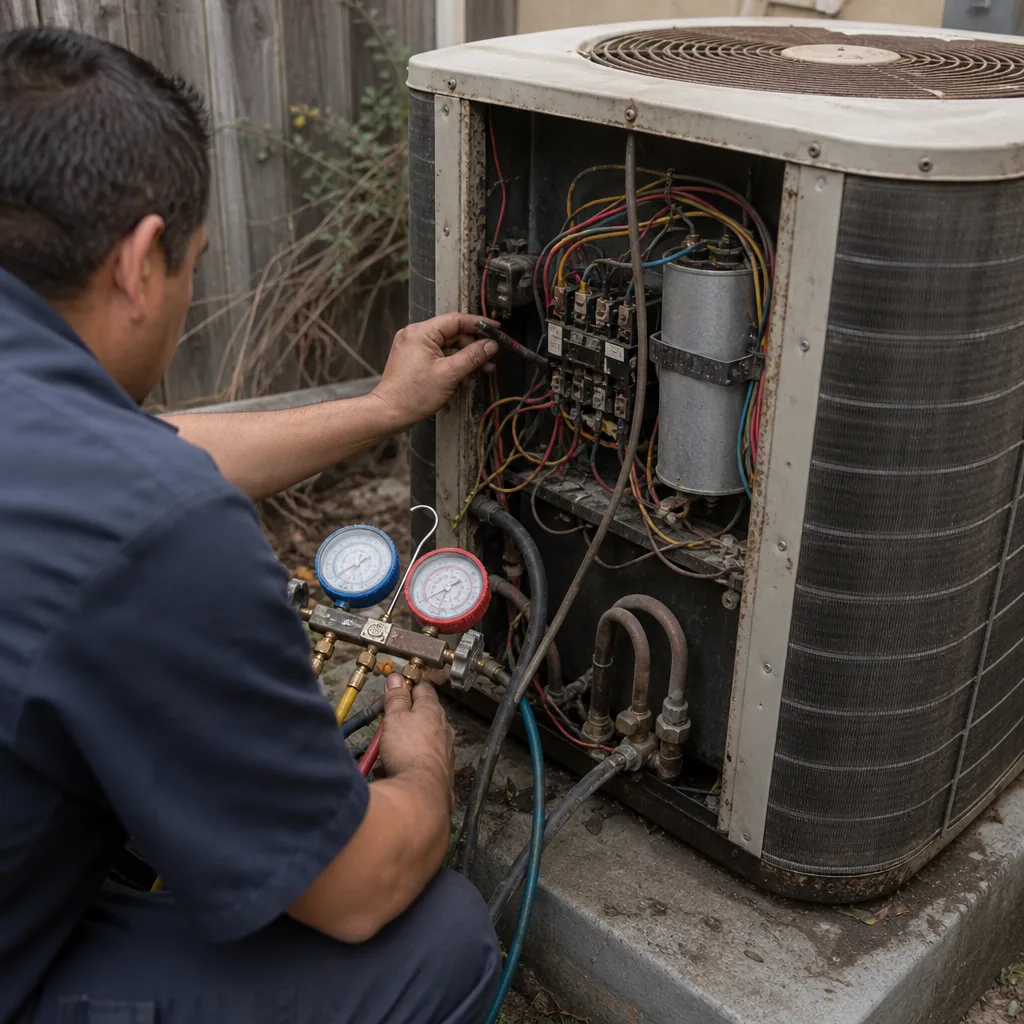
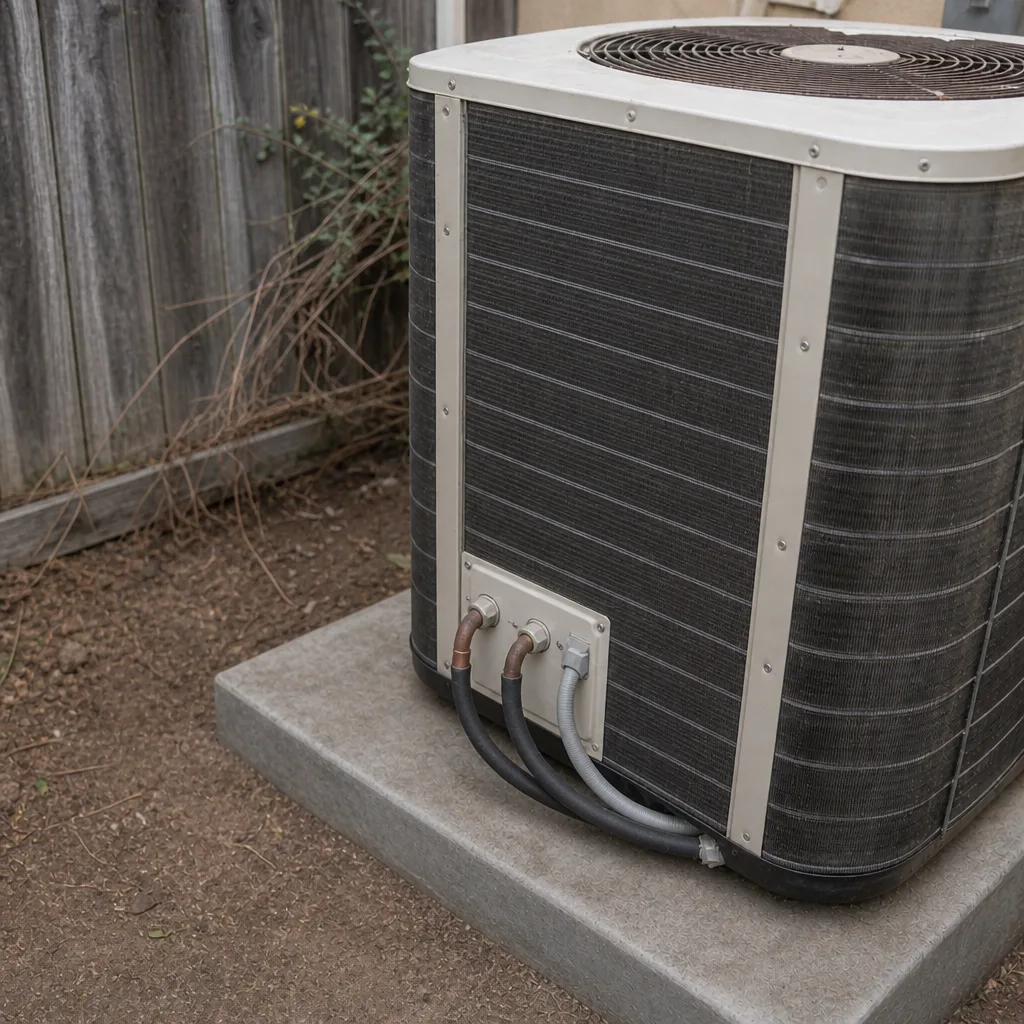
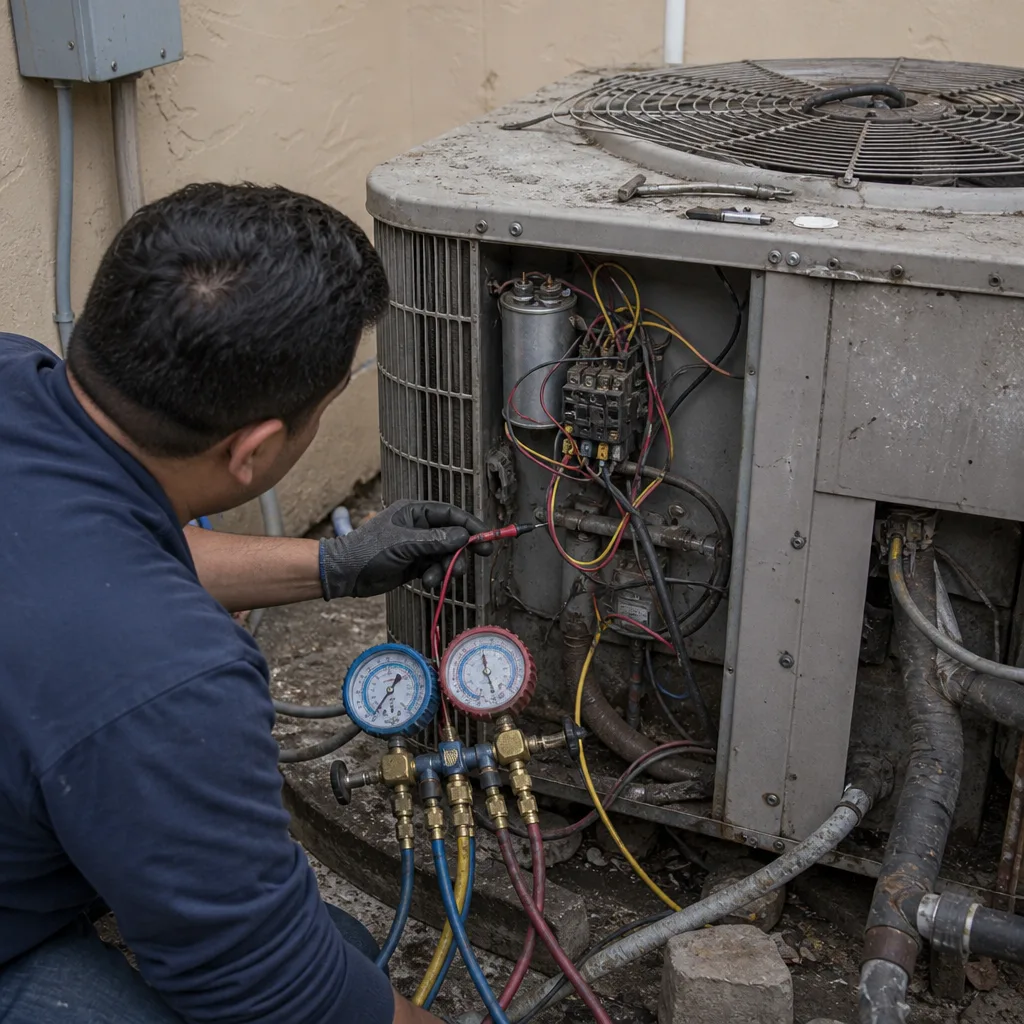
See the difference
 Before
 After
 Before
 After
 Before
 After
What Happens When You Call
We keep the process simple and predictable, whether it’s a routine tune-up or a no-cooling emergency. Call (833) 997-6067 and we answer 24/7. Fast dispatch from 7am to 7pm, Sunday through Friday. When a technician arrives, they diagnose what’s actually wrong with your system and give you a clear explanation and a written estimate for any work needed. The estimate is free, and the price is set per job by the written estimate. No surprise fees, no upselling toward a replacement you don’t need.
If your system is at end of life, we’ll tell you plainly. We work on Carrier, Trane, Lennox, Goodman, Rheem, York, Daikin, Bryant, and American Standard, so we’re not steering you toward a brand we prefer. Repair or replace, we’ll give you the honest answer.
Common Mistakes to Avoid
- Servicing the AC in the fall instead of the spring. The October tune-up is too late for the season that just ended and too early to make a real difference. The March through May window is when it counts.
- Leaving one thermostat schedule running all year. A single program can’t handle both a hot, dry summer and a cooler, humid shoulder season. Adjust seasonally.
- Skipping the condensate drain because the system “seems fine.” This is the most common preventable cause of water damage from an HVAC system in this climate. Check it every spring.
- Ignoring the furnace until the first cold morning. A gas furnace that hasn’t run in months can fail on demand. Test it before you need it, and schedule a service check if it hesitates.
- Neglecting the filter. A clogged filter drives up runtime, freezes coils, and strains the blower. Change it before the season and check it monthly through the summer.
- Assuming the marine layer is harmless. Overnight humidity swings put moisture on the coil every day. Without a clean drain and coil, that moisture creates problems.
- Letting the same small problems recur every year. If your system needs the same repair every spring, ask for a straight fix-versus-replace conversation. Another patch may not be the answer.
When to Call a Professional
Some tasks are homeowner-friendly: changing filters, clearing debris around the outdoor unit, adjusting the thermostat schedule. Others genuinely need a trained technician. Call a professional if your system won’t cool or heat, if you hear grinding or see ice on the refrigerant lines, if there’s water around the indoor unit, if the furnace won’t light, or if you smell gas. Refrigerant handling and electrical diagnostics aren’t DIY work, and a gas furnace should never be opened up by a homeowner. A qualified technician has the tools to check charge, test electrical components, and inspect a heat exchanger safely. When you’re in doubt, call.
Prestige AC Repair is a fully licensed HVAC contractor serving East Los Angeles and the surrounding neighborhoods. Our technicians have up to 15 years of experience, and we service both heating and cooling under one company. If your system needs a spring tune-up, a repair, or a replacement, call (833) 997-6067 for a free estimate.
Frequently Asked Questions
March through May is the best window, before the cooling season starts. A spring tune-up gets your system ready for months of hard running and catches problems while they’re still small. Fall maintenance is useful too, mainly to confirm the furnace is ready for the heating season, but it comes after the season that does the most wear.
Call (833) 997-6067 to schedule a service appointment. Estimates are free.
Change it before the cooling season and check it monthly through the summer. Our dry, dusty climate loads filters faster than people expect, and a clogged filter is one of the most common causes of a frozen coil and high runtime. Replace it more often if you have pets or if your system runs almost continuously.
If you’re not sure your filter is the right size or type for your system, call (833) 997-6067 and we’ll help you sort it out.
Because it’s been sitting idle for months. Dust accumulates on burners and the flame sensor, and electrical components that haven’t cycled can fail on the first demand. Testing the furnace in the spring or fall, before you need it, prevents a cold morning surprise. Never try to diagnose or repair a gas furnace yourself.
Call (833) 997-6067 if your furnace hesitates or won’t light. Estimates are free.
Yes, but indirectly. Overnight humidity from the marine layer condenses on your cooling coil, and that moisture has to drain properly. If the drain is clogged or the coil is dirty, moisture sits and creates musty odors and growth. Spring maintenance addresses both.
Call (833) 997-6067 to schedule a tune-up and drain check. Estimates are free.
It depends on the age of the equipment, the size of the repair, and how often it has needed service. As a general rule, an older system with a recurring problem is a candidate for replacement, while a newer system with a single repair is usually worth fixing. We offer both, and our recommendation is based on the system’s condition, not brand affiliation.
Call (833) 997-6067 for a straight answer and a free estimate.
You can handle filter changes, thermostat scheduling, and clearing debris around the outdoor unit. Coil cleaning, refrigerant checks, electrical diagnostics, and anything involving a gas furnace need a trained technician. If you’re not sure, it’s worth a call rather than a guess.
Call (833) 997-6067 to book a professional tune-up. Estimates are free.
The Bottom Line
Seasonal HVAC care in East Los Angeles is weighted, not evenly distributed. The March through May shoulder window is the highest-leverage period of the year, and it’s where a spring tune-up, coil cleaning, and a cleared condensate drain pay for themselves. Prepare the cooling system for the long heat season, test the furnace before the first cold morning, and adjust the thermostat schedule as the season shifts. The marine layer and overnight humidity make coil moisture and drain maintenance more important here than in many climates. And if something needs repair or replacement, get a straight answer. Whether you’re in El Sereno or near Whittier Boulevard, we work on your system, whatever brand it is: Carrier, Trane, Lennox, Goodman, Rheem, York, Daikin, Bryant, or American Standard.
Call (833) 997-6067. We answer 24/7. Fast dispatch from 7am to 7pm, Sunday through Friday. Estimates are free.
Written by the team at Prestige AC Repair.