
Last updated November 16, 2026
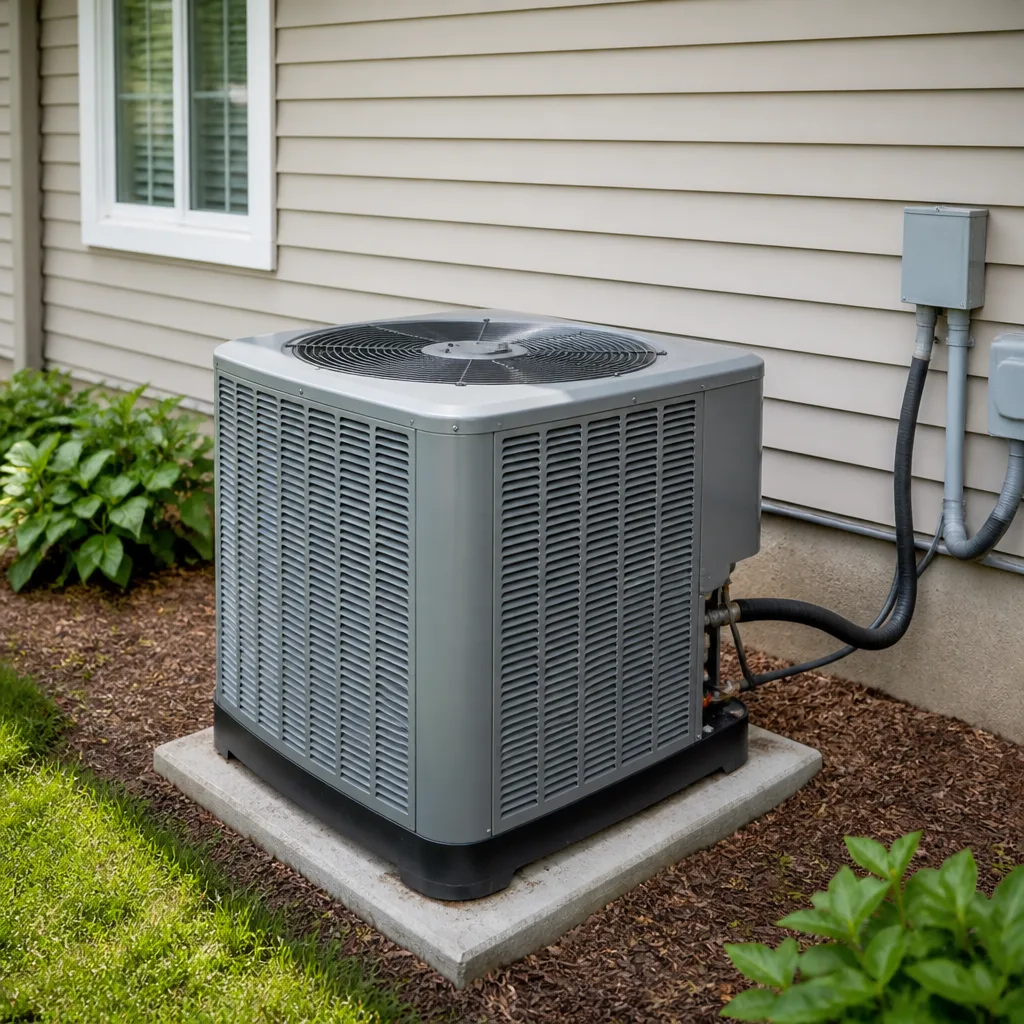 AC repair
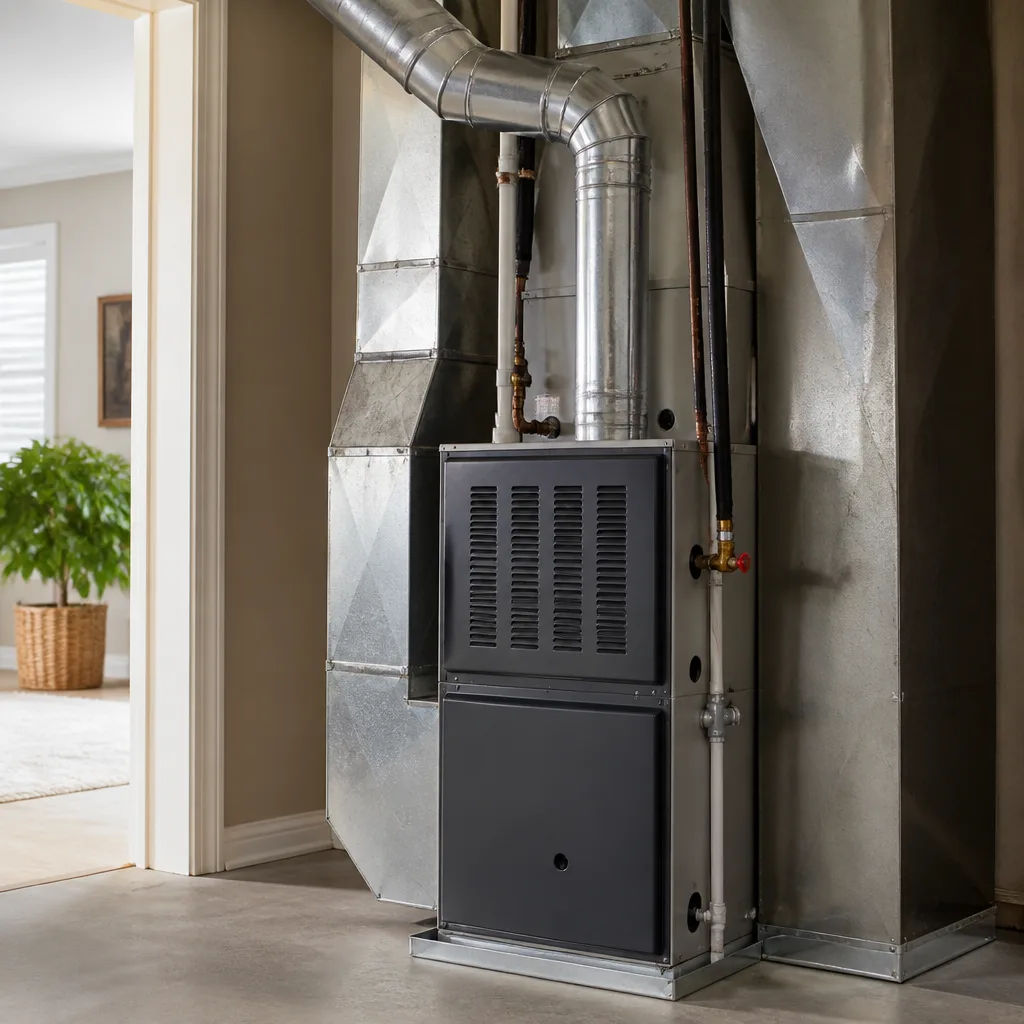 Furnace & heating
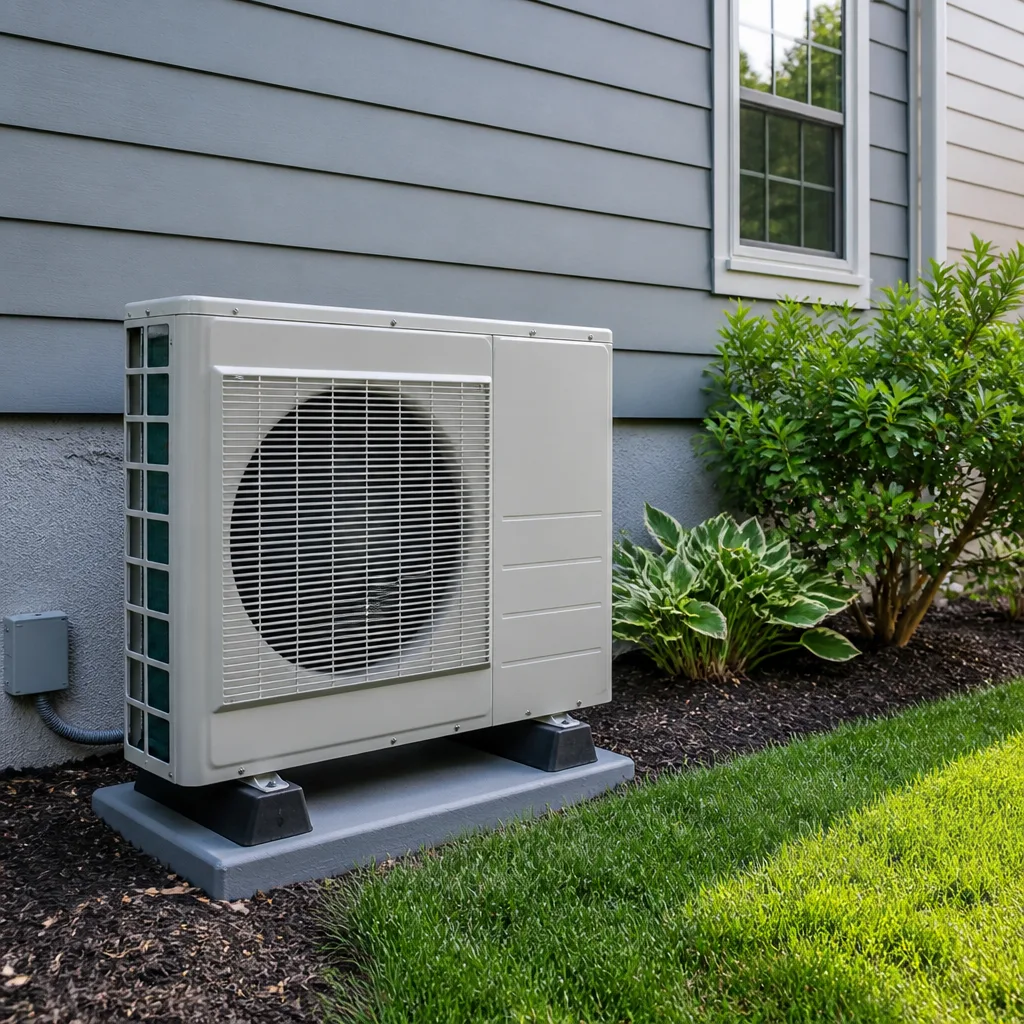 Heat pumps
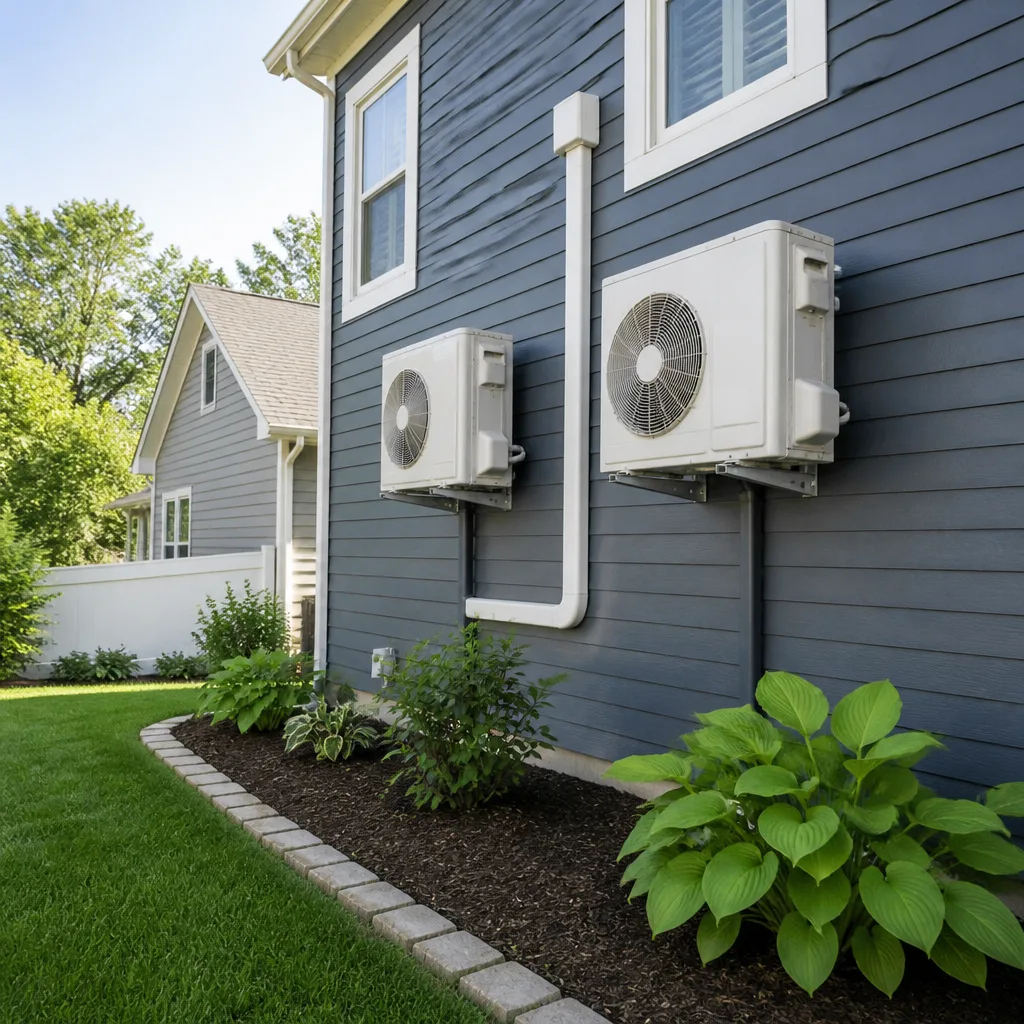 Ductless mini splits
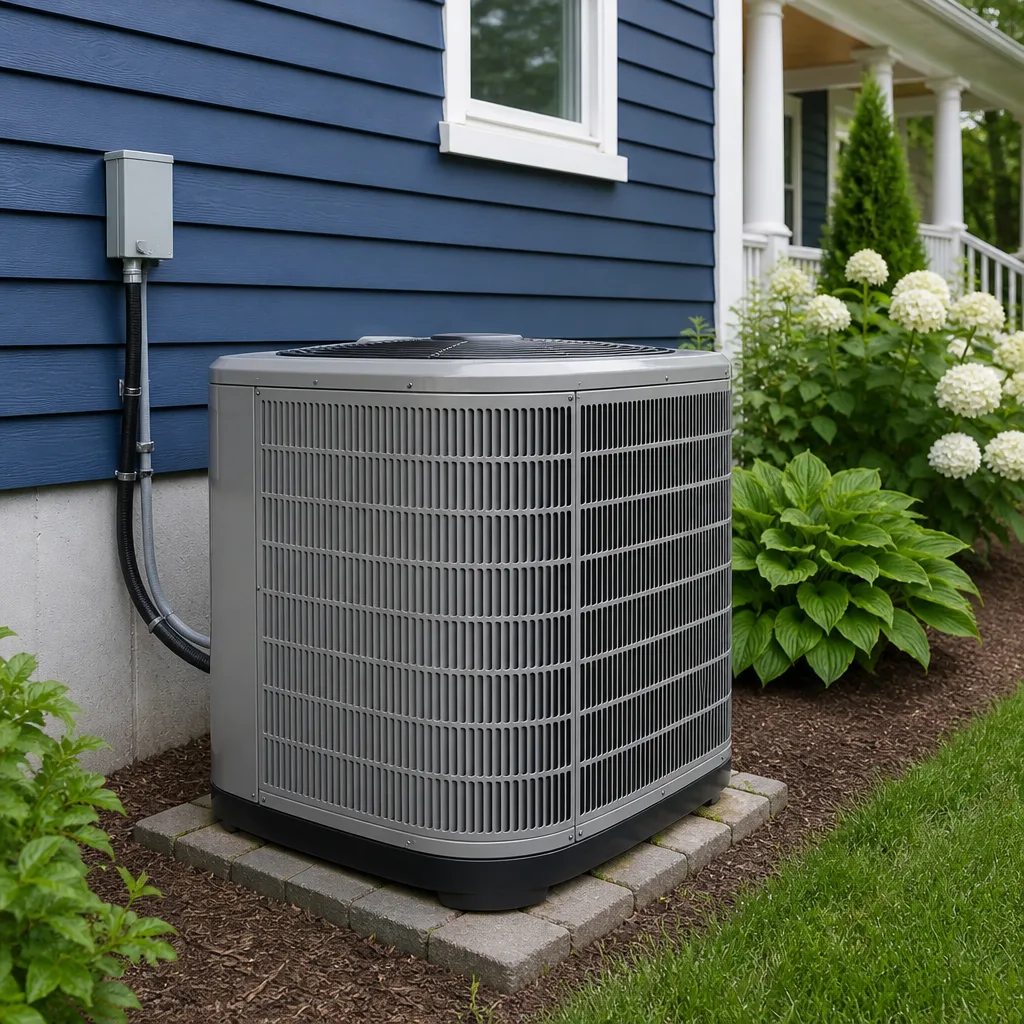 Carrier
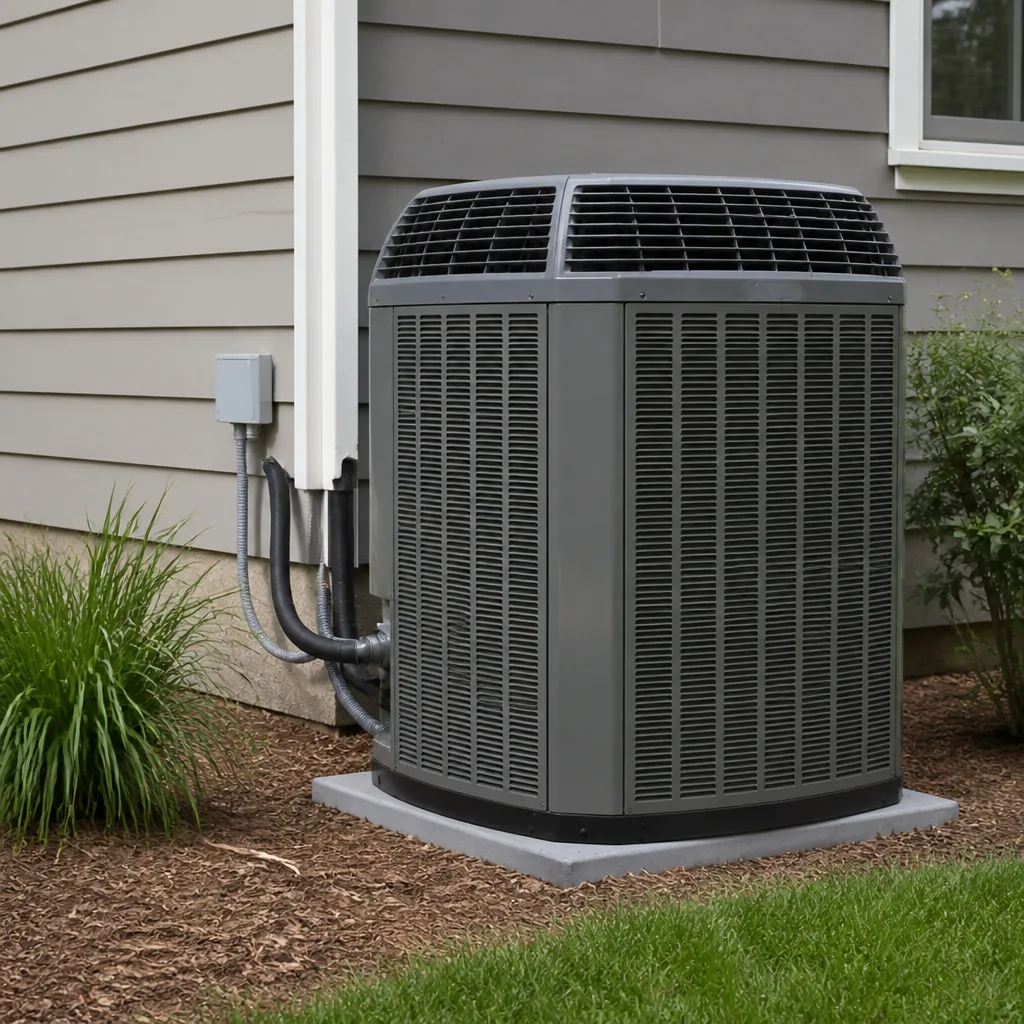 Trane
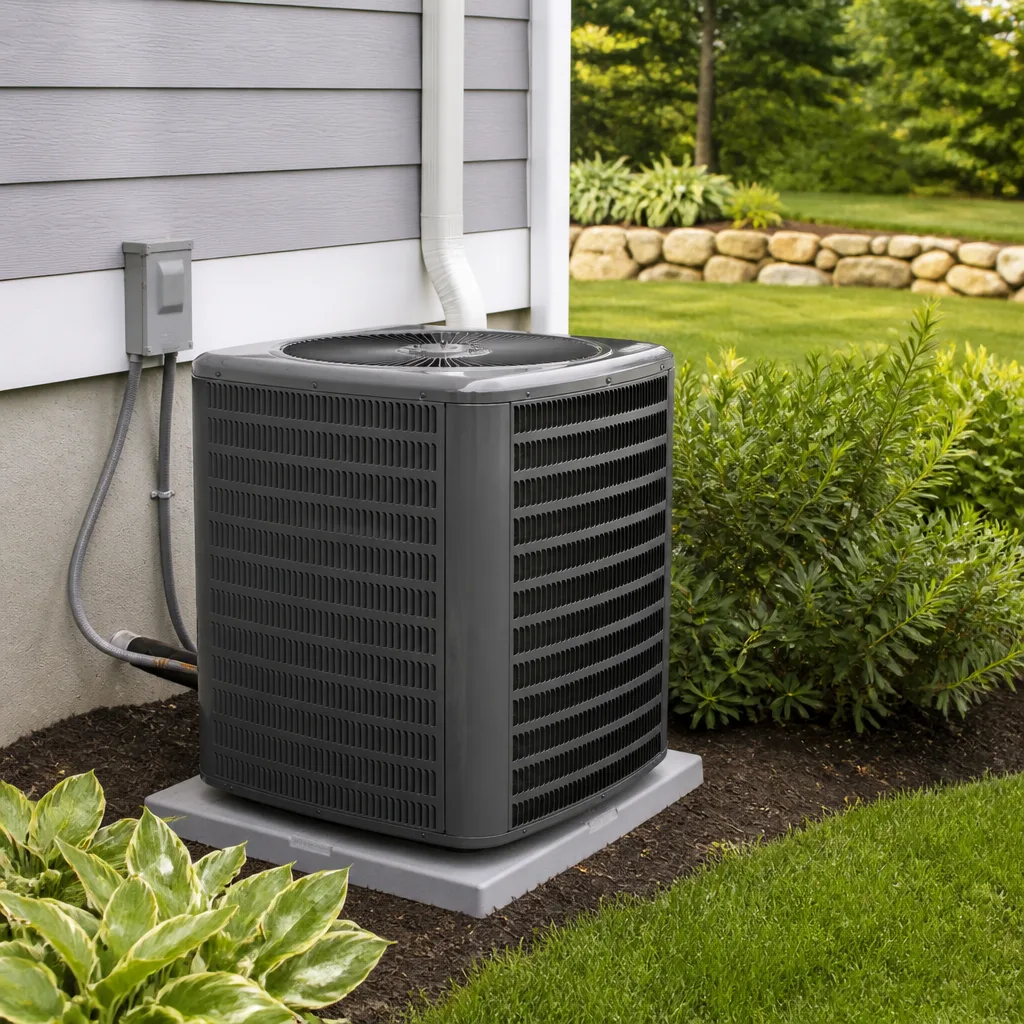 Goodman
Seasonal tune-up and full diagnostic on your Carrier, Trane, or Goodman system - readings shown to you before any repair is proposed
Diagnosis first, numbers second - you approve the repair price before a single part goes in.
Get your free estimateAC Installation Maintenance Checklist for East Los Angeles Homeowners
A system installed correctly on paper can still underperform by 20-30% if the setup after installation ignores local air quality. That’s the gap most checklists miss. Most AC maintenance guides are written for places with one hot season and one cold one, where equipment gets a long winter rest. East Los Angeles doesn’t work that way. Units here run through most of the year, pull in steady particulate load from traffic and dust, and get baked on flat rooftops through long dry spells. This guide covers what to verify at installation and what to do afterward so your system actually delivers what you paid for.
Quick Answer
AC installation maintenance in East Los Angeles starts at commissioning, not at the first service visit. You need the right MERV filter for our air quality, verified airflow before the technician leaves, insulated refrigerant lines rated for direct rooftop sun, and a written record of equipment brand, model, and refrigerant type. From there, maintenance intervals should be shorter than the national default because your system runs nearly year-round.
Styles & brands we work with
- AC repair
- Furnace & heating
- Heat pumps
- Ductless mini splits
- Carrier
- Trane
- Goodman
Table of Contents
- Why East Los Angeles Air Quality Should Set Your Filter MERV Rating
- Refrigerant Line Insulation on Flat-Roof East Los Angeles Homes
- Post-Installation Airflow Verification You Can Confirm Yourself
- Documenting Brand, Model, and Refrigerant Type at Installation
- Maintenance Intervals for Near-Year-Round Runtime
- Seasonal Checks for East Los Angeles Heat and Winter Mildness
- What Falls Under Installation vs. Routine Maintenance
- Common Mistakes to Avoid
Why East Los Angeles Air Quality Should Set Your Filter MERV Rating
Your filter’s MERV rating is decided at installation, and the brand default is often wrong for East Los Angeles. Most manufacturers ship equipment expecting a moderate filter because that’s what works across the country. In a dense urban area with heavy traffic corridors, that default lets through far more particulate than a home here should tolerate.
MERV, or Minimum Efficiency Reporting Value, runs on a scale where higher numbers capture smaller particles. The trade-off is real: a very high MERV filter restricts airflow, and restricted airflow stresses the blower and evaporator coil. The right answer is the highest MERV your specific system’s static pressure can handle. That’s why the choice belongs with the installer, not the box the filter came in.
Here’s how we approach it on an AC installation in East Los Angeles:
- Check the equipment’s rated maximum filter resistance before choosing a MERV rating.
- Match the filter slot dimensions exactly. A loose filter lets air bypass the media entirely.
- Consider a thicker media cabinet if the return duct can accept one, which gives higher filtration with less airflow penalty.
- Write the filter size and MERV rating on a label inside the air handler door so the next person doesn’t guess.
- Leave the homeowner a written filter schedule tied to local conditions, not the manufacturer’s generic interval.
Particulate levels in East Los Angeles mean most filters are due well before a manufacturer’s recommended interval would suggest. Check monthly by holding the filter to a light. If you can’t see through it, replace it. Homes near major boulevards and freeway edges will go through filters faster than homes on quieter residential blocks.
Refrigerant Line Insulation on Flat-Roof East Los Angeles Homes
Rooftop refrigerant line runs on flat-roof homes take direct sun for hours, and standard insulation degrades fast under that exposure. When the line set loses insulation, the system loses capacity before it ever reaches the coil. This is one of the most common hidden efficiency drains we find on East Los Angeles rooftops.
The line set carries two lines: a larger suction line and a smaller liquid line. The suction line must be insulated along its full length. Sun exposure breaks down standard foam insulation through UV degradation, and once it cracks, the exposed copper absorbs heat that the system then has to remove.
What to look for on your installation:
- UV-rated insulation on exterior runs, not interior-grade foam.
- Sun-resistant jacketing or a protective wrap over the insulation on any line exposed to open sky.
- Continuous coverage with no gaps at fittings, bends, or where the line enters the wall.
- Support spacing that keeps the line off hot roof surfaces rather than resting on them.
- Wall penetration sealed so hot attic or exterior air doesn’t leak back along the line.
On flat-roof homes, lines often run long distances across the roof before dropping to the interior unit. Every extra foot of exposed, under-insulated line costs capacity. If you’re installing new equipment on a flat-roof home in East Los Angeles, ask the installer how the exterior run will be protected. A Rheem or York system rated for full capacity won’t hit that number if the lines are losing heat to the sun before the refrigerant gets inside.
Post-Installation Airflow Verification You Can Confirm Yourself
Airflow verification should happen before the technician packs up, and you can confirm most of it without any tools. A system that cools but never feels like it’s moving enough air is usually a system with an airflow problem that was never checked. Static pressure, duct sizing, and register balance all matter, and a good installer verifies them.
Here’s the walkthrough we recommend once the work is finished:
- Feel every supply register. Each one should push a steady, even stream of air. A weak register means a balance or duct problem.
- Check the return grille. It should draw strongly. A weak return chokes the whole system.
- Listen at the air handler. You should hear steady airflow, not a strained or whistling sound.
- Watch the temperature split. After the system runs for a while, the air coming out of the registers should feel distinctly colder than room air.
- Open and close every interior door. If a door sticks or a room goes warm when closed, the return path is undersized.
- Ask for the static pressure reading. The installer should have measured it and can tell you whether it’s in range.
If any of these feel off, raise it before the installer leaves. Adjusting a damper or rebalancing registers is a quick fix at commissioning and a frustrating service call later. In East Los Angeles, where many homes have been reconfigured over the years with added rooms and modified duct layouts, register balance matters even more than it does in newer construction.
Documenting Brand, Model, and Refrigerant Type at Installation
Write down the equipment details at installation, because you’ll need them sooner than you think. Every future service call starts with identifying what’s actually installed, and missing information means time spent on the phone or in the attic instead of on the repair.
Keep a single folder or photo album with these facts:
- Equipment brand and model number for both the outdoor condenser and indoor air handler or coil.
- Refrigerant type the system was charged with. This matters for service and for any future refrigerant transition work.
- Serial numbers for warranty registration and claims.
- Installation date and the name of the installing contractor.
- Filter size and MERV rating.
- Thermostat model and any programming notes.
- Duct layout notes or a simple diagram if the installer provided one.
Take a photo of the data plate on the outdoor unit and the air handler. That single photo covers model, serial, and refrigerant type in most cases. Keep it in your phone and in a cloud folder.
This matters in East Los Angeles because the housing stock varies widely, and equipment gets swapped or added over the years. A technician arriving to a home with a Bryant condenser and a mismatched indoor coil needs to know both model numbers to diagnose correctly. Our technicians have up to 15 years of experience across the major brands, and even with that background, the data plate is the starting point for every accurate diagnosis.
Maintenance Intervals for Near-Year-Round Runtime
National maintenance schedules assume a system that rests for months. East Los Angeles cooling equipment often runs most of the year, which means wear accumulates faster than a seasonal calendar predicts. Shorten the intervals accordingly.
A practical schedule for East Los Angeles:
- Filter check: monthly. Replace when you can’t see light through it.
- Outdoor coil rinse: as needed during dust season, often several times a year. Rinse from the inside out with a garden hose when the unit is off.
- Full system check: once a year at minimum, and twice a year if the system runs heavily. A spring check before peak heat is the most useful single visit.
- Drain line clearing: at every full check, plus a visual check by the homeowner during the hottest months when condensate volume is highest.
- Thermostat battery replacement: annually, before the cooling season.
- Duct inspection: every few years, or any time a room stops cooling like the others.
The logic is simple. A system that runs 10 months a year accumulates 10 months of dirt, vibration, and electrical wear. The generic national interval is built around a climate where the system sits idle half the year. East Los Angeles doesn’t offer that rest, so treat the manufacturer’s interval as a ceiling, not a target.
Seasonal Checks for East Los Angeles Heat and Winter Mildness
Winter here is mild enough that heating equipment gets light use, which creates its own problem: a furnace that runs rarely can sit unnoticed until the one cold week when you need it. The seasonal checklist splits cleanly into a cooling side and a heating side.
Cooling season checks
- Clear vegetation and debris at least a couple of feet from the outdoor unit. Restricted airflow raises head pressure and shortens compressor life.
- Rinse the outdoor coil when it’s visibly dusty. In East Los Angeles, dust settles fast on rooftop and ground-level units alike.
- Confirm the condensate drain flows freely. A clogged drain in a hot attic or closet can cause water damage before you notice a problem.
- Check the thermostat against a separate thermometer to confirm it’s reading accurately.
- Listen for new sounds at startup: grinding, rattling, or a hard start are all worth a call.
Heating season checks
Before the first cold stretch, run the furnace for a short cycle just to confirm it starts. If you smell gas, hear unusual noises, or the system won’t light, stop and call a professional. Gas and combustion work is not a homeowner task, and a furnace that hasn’t run in months deserves a professional inspection rather than a DIY attempt. We handle furnace repair alongside cooling work, so a single company can cover both sides of the year.
The compressed dry spell followed by cooler, damper stretches that East Los Angeles gets means dust accumulates quickly during the dry months and then gets pulled into the system when conditions change. A filter check right after the first cool snap is worth the two minutes.
What Falls Under Installation vs. Routine Maintenance
Knowing which tasks belong to installation and which belong to ongoing maintenance keeps you from paying twice or missing something. Installation sets the foundation. Maintenance preserves it.
- Installation: equipment sizing and load calculation, refrigerant line routing and insulation, duct design and sealing, filter cabinet selection and MERV choice, airflow verification, refrigerant charge, thermostat setup, and documentation.
- Maintenance: filter replacement, coil cleaning, drain clearing, electrical connection checks, refrigerant charge verification, thermostat calibration, and visual inspection of ducts and insulation.
If airflow was never verified at installation, no amount of maintenance fixes it. That’s why we treat commissioning as part of the installation job, not an optional add-on. If you’re weighing a new system against keeping what you have, a proper load calculation and honest condition assessment should drive the decision, not a sales script.
Common Mistakes to Avoid
- Using the highest MERV filter you can find. A filter that’s too restrictive starves the system of airflow and can freeze the coil. Choose the rating your equipment can handle, not the biggest number on the shelf.
- Skipping the filter check because the calendar says it’s not due. In East Los Angeles, particulate load shortens filter life well past what a manufacturer’s interval assumes. Check monthly.
- Letting rooftop line insulation degrade in the sun. Exposed copper on a flat roof loses capacity quietly. Inspect the exterior run each cooling season.
- Filing the manual and losing the data plate photo. The model, serial, and refrigerant type are what every future service call needs. Photograph them while the unit is new.
- Assuming an annual check is enough in a near-year-round climate. Heavy runtime means faster wear on the blower, contactor, and capacitor. A spring check plus a fall check is a better fit here.
- Trying to service gas or combustion components yourself. Furnace work involves gas and combustion, and a mistake can be dangerous. Leave it to a licensed technician.
- Blocking the outdoor unit with storage or plants. Restricted airflow around the condenser raises pressure and shortens equipment life. Keep the area clear.
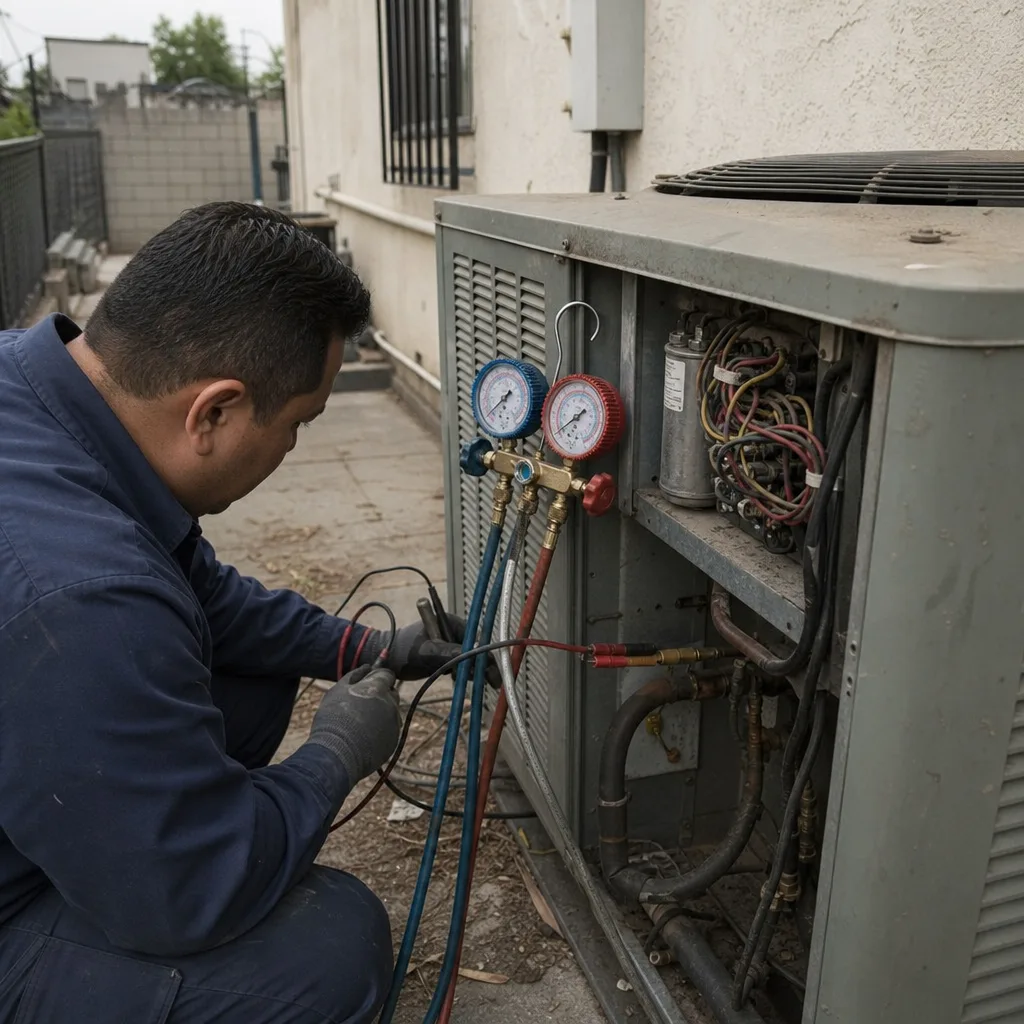
See the difference
 Before
 After
 Before
 After
 Before
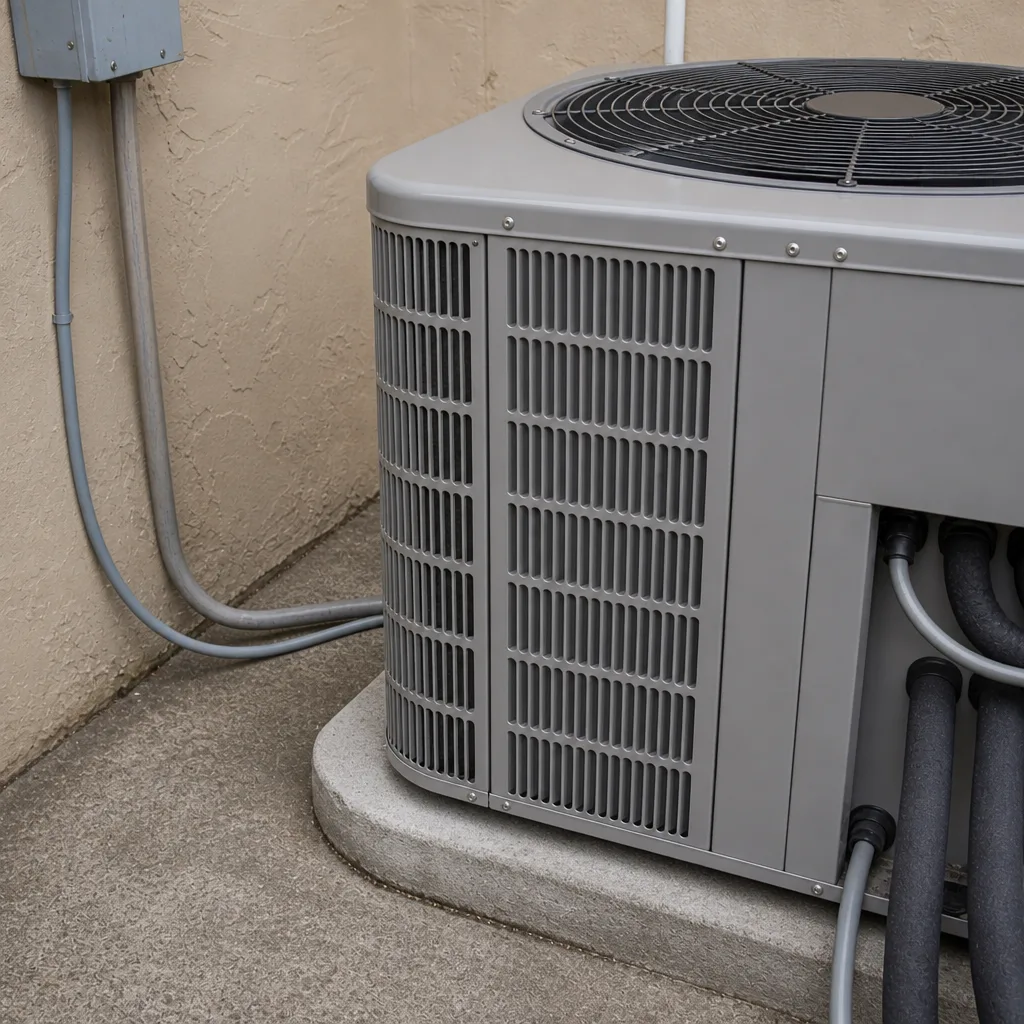 After
When to Call a Professional
Call a licensed technician when the system won’t start, when a breaker trips repeatedly after being reset, when there’s any gas smell near a furnace, or when water is pooling around the indoor unit. Call when a room stops cooling while others are fine, when the outdoor unit makes grinding or screeching sounds, or when the system runs constantly and never reaches the set temperature. These point to problems that need proper diagnosis, not guesswork.
If you’re unsure whether the issue is your equipment or your expectations, a professional assessment is the honest way to find out. We work on your system, whatever brand it is, and we recommend repair or replacement based on the system’s actual condition rather than a preferred label. Prestige AC Repair offers free estimates in East Los Angeles. Call (833) 997-6067. We answer 24/7, with fast dispatch from 7am to 7pm, Sunday through Friday.
Frequently Asked Questions
Use the highest MERV rating your specific system can handle without restricting airflow, which is typically determined by the equipment’s rated filter resistance and your return duct design. East Los Angeles air quality justifies more filtration than a manufacturer’s default, but the right number comes from your system, not a general rule. Call (833) 997-6067 for an exact recommendation on your equipment.
Check it monthly and replace it when you can’t see light through it, which in East Los Angeles often comes sooner than the manufacturer’s interval suggests. Homes near busy boulevards and freeway edges go through filters faster than homes on quieter blocks. Call (833) 997-6067 if you want a filter schedule built for your home.
The most common cause is an airflow problem that was never verified at installation, including an undersized return, unbalanced registers, or an overly restrictive filter. Refrigerant charge issues and rooftop line insulation failure are the next most likely. Call (833) 997-6067 to have it diagnosed properly.
Yes. Rooftop runs on flat-roof East Los Angeles homes take direct sun for hours, and standard foam insulation breaks down under UV exposure. Use UV-rated insulation with sun-resistant jacketing and continuous coverage at every fitting. Call (833) 997-6067 to have an existing run inspected.
Once a year at minimum, and twice a year if your system runs heavily, because East Los Angeles cooling equipment accumulates wear faster than a seasonal climate would suggest. Filter checks should happen monthly. Call (833) 997-6067 to set up a system check before peak heat.
That depends on the system’s actual condition, its age relative to expected service life, and the cost of the fix against a replacement. A brand-neutral diagnosis gives you a straight answer instead of a sales pitch. We handle repair and full replacement, including AC installation, on the same call. Call (833) 997-6067 for a free estimate.
The Bottom Line
AC maintenance in East Los Angeles starts at installation and never stops, because the equipment here runs nearly all year and pulls in real particulate load. The essentials: choose a MERV rating your system can handle, protect rooftop line insulation from the sun, verify airflow before the technician leaves, photograph the data plate, and shorten your maintenance intervals to match actual runtime. A correctly installed system that gets the right care delivers close to its rated capacity. One that skips these steps quietly loses it. If you want the work done right the first time on the equipment you already own, that’s the standard we hold.
Call (833) 997-6067 for a free estimate. We answer 24/7, with fast dispatch from 7am to 7pm, Sunday through Friday.
For a closer look at our home city and what HVAC work involves block by block, see East Los Angeles. You can also read more about Prestige AC Repair and how we work on your system, whatever brand it is.
Written by the team at Prestige AC Repair.